
Dropshipping to Europe: The Market, the Rules, and One Clarification
On the same Monday night, orders land in your store from Manchester, Lyon, and Milan. Three countries, three currencies of customer expectation, one question behind all of them: where will this parcel actually come from? Search “dropshipping europe” and the results page seems to have answered already. Most of what ranks is run by companies with warehouses inside Europe, promising two-day delivery and effortless compliance. The implication is quiet but total: to sell into Europe, your supplier needs to be in Europe.
That implication is wrong, and it is the single most expensive confusion in this market. Selling into Europe is legal from anywhere. What the results page actually shows is one supply route advertising itself, not the limits of the possible. Three routes into Europe exist side by side: direct shipping from Chinese marketplaces, European warehouse platforms, and China-based agents running dedicated DDP lines. Each one is legal. Each one is used by working stores today. They differ in what they cost, what breaks, and who absorbs the damage when something does.
The demand side is not in question. 78% of EU internet users bought goods or services online in 2025, up from 62% a decade ago (Eurostat, 2026), and European B2C e-commerce turnover grew 7% in 2024 to around €842 billion (Ecommerce Europe, 2025). The recurring “dropshipping is dead” debate measures marketing skill, not market size. The market rewards entrants; the supply structure decides whether a specific store survives its first thousand orders.
The compliance baseline is shorter than the results page implies, and it follows the seller on every route. Since July 2021 there has been no VAT exemption for low-value imports, so VAT is owed on parcels of any value. Since 13 December 2024, the General Product Safety Regulation requires a responsible economic operator inside the EU for consumer products (European Commission, 2024). None of this changes depending on where your supplier sits. The minimal startup sequence is the same for every route: register for VAT where required, open the store, pick a supply route with your eyes open, and set a delivery promise you can keep. The third step is where this article stays.
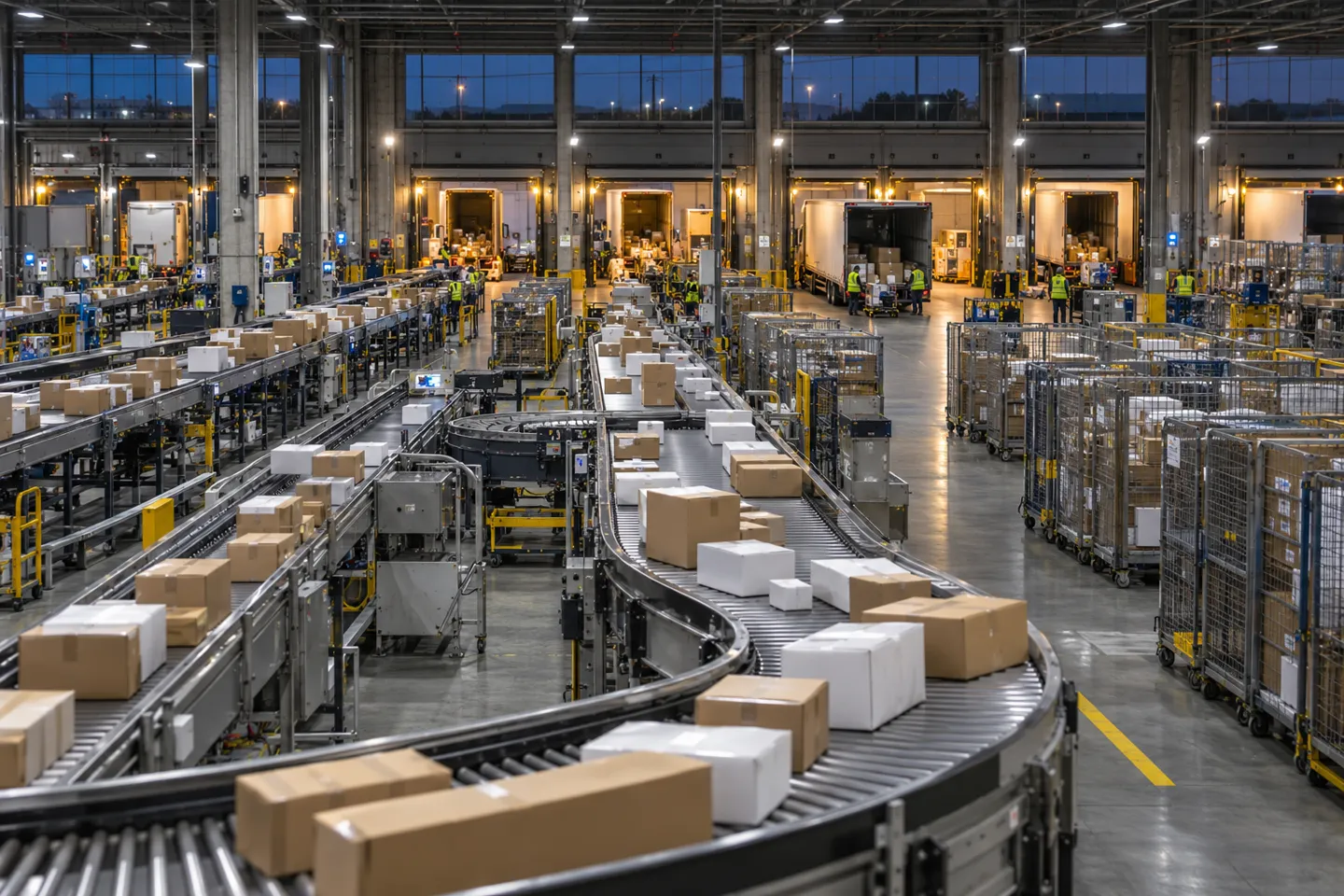
Three Routes into Europe, and What Each Really Costs You
Every “best dropshipping suppliers in Europe” list is selling one of three routes, dressed up as a brand ranking. That is why the lists contradict each other and why reading five of them leaves you more confused than reading none. Each list earns from a different structure. Once you see the routes themselves, the contradictions dissolve.
Three supply routes into Europe, compared
| Route | Transit (claim vs practice) | Cost per order | Stock reality | Catalog | Compliance and after-sales |
|---|---|---|---|---|---|
| AliExpress direct | 2–4 weeks claimed to be shorter; often longer in peak | lowest product cost | shared public listings | nearly unlimited | seller carries everything alone |
| EU warehouse platform | 24–48h fulfilment, domestic last mile | highest product cost | platform’s own stock | fixed catalog of listed brands | files largely handled; seller still holds VAT duties |
| China agent with dedicated DDP line | 4–10 days door-to-door on real lines | product + logistics split | your reserved units | near-unlimited via sourcing | seller carries duties; agent executes QC, packing, documents |
AliExpress direct is the default because it has no barrier. You list, a customer orders, a stranger in Shenzhen mails a parcel. The product cost is unbeatable and the catalog is effectively the whole of Chinese manufacturing. The costs hide downstream: transit claims collapse in peak season, the seller owns every failure alone, and the stock is not really yours. “In stock” on a public listing means in stock for whoever ordered first, which includes your own customers competing with everyone else’s.
European warehouse platforms invert the picture. Fulfilment genuinely runs at 24–48 hours because the goods already sit on the continent, and compliance files come largely prepared. You pay for that in two ways: wholesaler-level product cost on every unit, and a fixed catalog. The platform sells what it has stocked, so your product research is capped at their shelf. For stores whose winning products happen to sit inside that shelf, the trade is rational. For stores that need a specific product to test, it is a wall.
The third route, a China-based agent with dedicated stock and a DDP line, exists precisely because the first two leave a gap. You keep near-market product cost and the full catalog of Chinese manufacturing, your units sit reserved rather than pooled, and one operator runs quality checks, packing, documents, and the freight line under your brand. The transit numbers this route actually achieves are the subject of the next section, because they are also the most misrepresented numbers in the entire market. One more route belongs on the map for completeness: sourcing directly from European wholesalers or brands. A few stores run it, usually single-category sellers with local language operations, and it behaves economically like the warehouse platforms with less tooling.

Which Route Still Holds Up in 2026
The first trend is a number problem. Comparison content aimed at European sellers still prices “China” at 15 to 45 working days (Droppery, 2026). That range describes postal-route dropshipping, the mailbox-parcel era when every order left as an untracked ePacket. Practitioners running dedicated lines report something else entirely: 5 to 7 days to Germany and 6 to 10 days across Europe (r/dropship, 2024), with one China-based agent describing DDP deliveries to most of the EU within 7 to 14 business days as the routine case (r/dropshipping, 2026). When the benchmark number in your spreadsheet is off by a factor of three, every conclusion built on it, return rates, ad efficiency, refund exposure, is overstated in the same way.
The transit benchmark, corrected
15–45 days
Still quoted from the postal-parcel era
4–10 days
Door-to-door on dedicated DDP lines — the UK express line from 3 days
Compare routes against practice, not against a number that expired with ePacket.
The second trend is regulatory, and it is already law rather than agenda. Since 1 July 2026, the EU applies a temporary €3 customs duty per item on low-value consignments up to €150, abolishing the duty exemption that covered them before (European Commission, 2026). The same reform moves the paperwork: non-EU platforms and sellers are treated as the importers of record for distance sales, responsible for customs formalities and duty payments, with a separate handling fee on small parcels expected from November 2026. Read together with the transit numbers, the direction is consistent. The cost advantage of the China line survives; the fiction that a seller can relay orders without touching customs, quality, or data does not. Route choice in 2026 is not a price comparison. It is a decision about which failures you are equipped to absorb.
Running One Line Across the UK and the EU
If the third route is where you are heading, the day-to-day question changes shape. You are no longer choosing between platforms. You are operating one fulfilment line that crosses two customs regimes, because “Europe” means the United Kingdom outside the EU, the EU27 inside it, and the odd Swiss order. Here is the chain, five links long, with the judgment that matters at each link.
One fulfilment line, five links
- 1Order sync and processing
- 2Picking, packing, inspection
- 3Trunk line, split by regime
- 4Customs and last mile
- 5Tracking and expectation management
Link one is order sync and processing. Orders should flow from the store into the operator’s system without manual re-entry, then get processed within 48 hours and handed to the carrier within two days. Contract-grade numbers, not marketing numbers. The judgment: use processing speed to reason backwards about stock placement. A parcel cannot ship in two days from a unit that has not been reserved.
Link two is picking, packing, and inspection. Consumer goods tolerate a working inspection standard: verify the item against your sample photos, check color and variant, test anything powered including batteries, film the first parcel of a new product from several angles so you approve the standard before volume arrives. The judgment: the inspection standard lives in your agreement, with photo or video evidence as the enforcement mechanism, because you will never stand in the warehouse yourself.

Link three is the trunk line, and it splits by regime. DDP means you have prepaid duty and VAT and your customer simply receives a parcel. DAP means the customer gets a bill from the courier before release, and a meaningful share of them refuse it instead. On European lines DDP has become the default for exactly this reason. The physical routing matters too: certain goods, anything with built-in batteries for example, fly out of Hong Kong rather than the mainland, so the line your agent uses decides both speed and what you can sell at all.
Link four is customs and the last mile. On the EU track, the Import One-Stop Shop covers distance sales up to €150, letting VAT be collected at checkout instead of at the border (European Commission, n.d.). On the UK track, customs runs under the UK’s own post-Brexit scheme, and small parcels cross on their own paperwork. The last mile differs too: different national carriers, different delivery cultures, different willingness to drive to a pickup point. The judgment: ask which carrier completes delivery in each of your top three destination countries, and what happens to a refused parcel.

Link five is tracking and expectation management. A full-journey tracking number that works in the customer’s country, plus a short shipping explanation at checkout, does more for conversion than shaving a day off transit. Sellers running 6-to-10-day lines report smooth operations when customers hear from them every couple of days (r/dropship, 2024). Silence, not distance, is what generates refund requests.
The UK track vs the EU track
One line, two regimes
| UK track | EU track | |
|---|---|---|
| Customs regime | outside EU, own declarations | EU customs union rules |
| VAT mechanics | UK VAT scheme of the seller | IOSS collection at checkout up to €150, standard import beyond |
| Small-parcel fees | courier fees vary by carrier | €3 per-item duty on ≤€150 consignments since July 2026 plus handling fee from Nov 2026 |
| Typical transit on a good line | 4–7 days, as fast as 3 on express | 4–10 days door-to-door by country |
| Peak-season variable | channel capacity to UK airports | customs staffing and lane congestion per member state |
Two boundary conditions keep this table honest. DDP pricing holds only while declared values are truthful; under-declare and the failure arrives as a seized parcel or a customer-facing bill anyway, plus a compliance record. And the 48-hour processing promise assumes complete order data; a malformed address stops the clock before the line even starts.
What actually decides your delivery window
The same line produces 4 days for one seller and 4 weeks for another, and the difference is rarely luck. It is line quality, whether the trunk uses direct freight or accumulates transfers; document accuracy, because one bad customs form holds a consignment longer than any flight; product type, since battery goods route through Hong Kong and oversized items price differently; and season, with a 2-to-3-week peak-season cushion being the realistic planning number on any route. Sellers comparing agents should ask for transit breakdowns by destination country rather than a global average, because a line that runs 5 days to the UK and 12 to the rest of Europe is a different product from one that runs 7 everywhere.
Comparing agents? Ask each one for transit windows by destination country and by regime — in writing, before you commit.
Ask for the BreakdownWhere Each Route Breaks: Failure Modes and Your Stop-Loss Moves
Every route breaks somewhere. The difference between a store that survives its second year and one that does not is rarely which failures happen; it is whether the rules for handling them were written before the first parcel shipped.
Return economics come first
A return to China is not a return; it is a second shipping bill that usually exceeds the product’s value. Practitioners put the reverse leg at around €50 for ordinary parcels (r/dropship, 2024), which turns “the customer sends it back” into a fantasy worth deleting from your policy page on day one. Workable rules are set before launch and fall into three patterns: refund without return for low-value items where the freight loses to the refund; local disposal with refund for mid-value goods; and inspection-then-reship when your own defect rate is the cause. Loss and damage in transit belong in the same paragraph, because the carrier’s liability and yours are different numbers. The operator absorbs what inspection and packing evidence proves was theirs; the policy you publish absorbs the rest. Deciding this in advance is what keeps a support ticket from becoming a public review.
The failure-mode matrix
Failure modes on the Europe line, and who bleeds
| Failure scenario | Early signal | Stop-loss move | Route hurt most |
|---|---|---|---|
| Stockout on a winning SKU | supplier quote moves or lead time stretches | reserved buffer units; switch sourcing before ads scale | AliExpress direct and shared pools |
| Peak-season delay | carrier capacity warnings 3–4 weeks before peak | publish honest cutoff dates; pre-position stock | every route, worst on direct |
| Customs cost erosion | duty and fee lines creeping per parcel | reprice or re-split costs; check declared values | DDP lines absorb it first |
| Lost or damaged parcel | tracking stalls in one leg | evidence-based claim; reship on your policy | direct (seller alone) |
| Return request | ticket arrives before rules exist | pre-written refund/return rules by value band | all routes equally |
| Compliance notice | IOSS declaration or product-safety query | records ready; fix the declaration flow | every route; duty follows the seller |
The matrix reads differently depending on your route, which is the point. AliExpress direct concentrates every failure on the seller alone, with the weakest evidence trail. European platforms push stock and compliance risk off your desk but cap the catalog that could have made the store distinctive. A dedicated agent line concentrates the risk that remains into contract terms: processing time, inspection evidence, DDP scope, reshipment rules, all of it writable and checkable.
Obligations travel with the seller
One belief deserves demolition, because it is sold on every platform landing page: that picking the right route outsources your obligations. It does not. VAT is owed by the seller on every route, and even sellers who pay DDP ask whether they still need IOSS registration of their own (r/dropship, 2022), which tells you how well the division of labor is understood. Since 13 December 2024, someone inside the EU must stand behind product safety as the responsible economic operator (European Commission, 2024). And customer data passed to an operator outside the EU needs a data processing agreement, or the store carries the exposure alone. The 2026 customs reform says the same thing in taxpayer language: non-EU sellers are the importers of record (European Commission, 2026). A good agent executes compliance-adjacent work, correct documents, consistent declarations, inspection evidence, data handling you can put in a contract. None of it transfers the duty. It can only support the person who holds it.
Before the first European order ships
- Return/refund rules written by value band
- Carrier liability and reshipment terms in the agreement
- DDP scope and declared-value honesty agreed in writing
- Inspection standard with photo/video evidence
- Data processing agreement signed
- IOSS/VAT registration status confirmed for your price bands
The Business Math Your Route Decides
Four accounts decide whether a Europe dropshipping business is worth running, and the supply route sets all four.
The delivery account comes first because customers touch it directly. When platform content prices China at 15 to 45 days while real dedicated lines run 4 to 10, the seller who believes the old number either overpays for a European warehouse they do not need or underprices their own store with a “3–4 weeks” promise that kills conversion before price ever matters. The gap between those two behaviors is the whole value of knowing the real numbers.
The stockout account is quieter and more brutal. An order you cannot ship is ad spend already spent, plus a refund, plus a customer who will not test you twice. Shared inventory produces this failure mechanically, dedicated stock removes the mechanism. On any store running paid traffic, one prevented stockout week pays for the difference in unit cost.
The return account rewards preparation, not speed. Rules written before launch turn the €50 reverse-leg problem into a policy line customers accept; rules improvised after the first ticket turn it into refunds, reviews, and chargebacks. The transit and return accounts share one root: most European delivery disasters are expectation failures, not logistics failures.
The quality account compounds longest. Published upgrading cases from one China-based operator report customer complaint rates falling by 82% after material and process changes on the same products, the kind of number that no route choice can deliver on its own, because quality lives upstream of routing.
Four numbers to keep
4–10 days
real dedicated-line transit across Europe
48 hours
order processing you can contract
€50
what a return leg to China really costs
82%
what factory-level quality work did to complaint rates in published cases
Scale sets the order of operations. While testing, clear the legal checklist and keep the delivery promise honest. Once orders run steady, dedicated stock and DDP stop being upgrades and become the base, because that is where stockouts and refusal rates start costing more than the margin difference. When a product proves itself over quarters, custom packaging and factory-level upgrades move from nice to necessary. Whatever the stage, the questions for any fulfilment partner are the same, and they all go in writing: processing time, handover time, DDP terms by regime, inspection evidence, reshipment rules, and who pays when a parcel vanishes.
We run this structure daily at SpeedBee for stores across the UK and EU: your units reserved in their own zone rather than a shared pool, orders processed within 48 hours and handed to the carrier within two days, door-to-door delivery windows across the UK and EU of 4–7 days (as fast as 3 on the UK express line), and when a carrier loses a parcel or a defect slips through, we reship at our cost. The route you just read about is not a theory on our side of it; it is a service level we contract.
Whatever route you pick, hold every partner to that written list, including us.
Put your Europe line under contract
Reserved stock in its own zone, 48-hour processing, DDP through both customs regimes, reshipments at our cost — hold us to the written list.
Start Your Europe LineReferences
- Eurostat. “E-Commerce Statistics for Individuals.” 2026. https://ec.europa.eu/eurostat/statistics-explained/index.php?title=E-commerce_statistics_for_individuals
- Ecommerce Europe. “European E-Commerce Report 2025.” 2025. https://svth.is/wp-content/uploads/2025/10/EuroCommerce-Report-2025-Light-Version.pdf
- European Commission. “EU Customs Reform.” 2026. https://taxation-customs.ec.europa.eu/customs/eu-customs-reform_en
- European Commission. “VAT E-Commerce—Import One-Stop Shop.” https://vat-one-stop-shop.ec.europa.eu/index_en
- European Commission. “EU’s General Product Safety Regulation (GPSR).” 2024. https://trade.ec.europa.eu/access-to-markets/en/news/eus-general-product-safety-regulation-gpsr-new-era-consumer-protection
- Reddit, r/dropship. “Are Long Delivery Times to Europe a Problem?” 2024. https://www.reddit.com/r/dropship/comments/1hi1n0s/are_long_delivery_times_to_europe_a_problem/
- Reddit, r/dropshipping. “[Experience] As a Chinese Agent, These Are the Top 3…” 2026. https://www.reddit.com/r/dropshipping/comments/1vsf5vk/experience_as_a_chinese_agent_these_are_the_top_3/
- Reddit, r/dropship. “Do I Need IOSS to Ship to Europe?” 2022. https://www.reddit.com/r/dropship/comments/ss4w5t/do_i_need_ioss_to_ship_to_europe/




 English
 Spanish
 French
 German
 Italian
 Polish