
Top Dropshipping Products That Actually Sell — A 2026 Product Selection Guide
Every dropshipper has been there: you find a product that’s blowing up on TikTok, rush to list it, run some ads — and three weeks later, you’ve made three sales with margins so thin you’re practically paying customers to buy. The problem isn’t that you picked a bad product. It’s that you evaluated the product on the wrong criteria.
The dropshipping market is projected to reach $401 billion in 2026, growing at over 21% annually. That growth attracts competition — and rising ad costs (Facebook CPM now averages $8.77) mean margin for error is tighter than ever. Choosing the right product isn’t about catching a trend before everyone else. It’s about picking something you can actually sell profitably, fulfill reliably, and sustain for more than a few weeks.
This guide goes beyond the usual listicle. It covers which product categories consistently perform, which trending items are worth watching, and — critically — which products are actually practical to source and ship from a supplier’s perspective.
What Makes a Dropshipping Product Worth Selling
Before diving into specific categories, let’s establish what separates a product that builds a business from one that burns through your ad budget. Think of it as a three-dimensional filter. No single dimension alone makes a product viable — you need reasonable scores across all three.
Profitability. Can you sell it for enough to cover product cost, shipping, ad spend, and still keep something for yourself? The sweet spot for dropshipping retail prices is $15 to $60 — the range with the highest conversion rate at 16.4%. A good rule of thumb: your retail price should be at least three times your landed cost (product + shipping). If you’re paying $8 and the going retail price is $15, you don’t have a product — you have a math problem.
Demand Stability. A product needs consistent buyer interest, not a spike that disappears in two weeks. Check Google Trends: a score sustained above 60 for three or more months signals genuine, durable demand. A sharp spike followed by a cliff is a hype cycle, not an opportunity.
Fulfillability. This is the dimension most product guides skip entirely. Can this product actually be sourced consistently, shipped affordably, and delivered intact? A LED lamp that arrives shattered isn’t a sale — it’s a refund, a chargeback, and a customer who never comes back. As a starting benchmark, keep individual products under two pounds (roughly 900 grams). Above that, shipping costs start eating margins fast.
With these criteria in mind, let’s look at the product categories that consistently check all three boxes.
Top Dropshipping Product Categories That Consistently Sell
The best category for your store depends on three things: who your target audience is, which marketing channel you use (TikTok favors visual products; Google Ads favors problem-solving products), and your tolerance for logistics complexity. The four categories below cover different audience × channel combinations — pick the one that fits your setup, not the one with the highest revenue ceiling.
Home, Kitchen & Organization
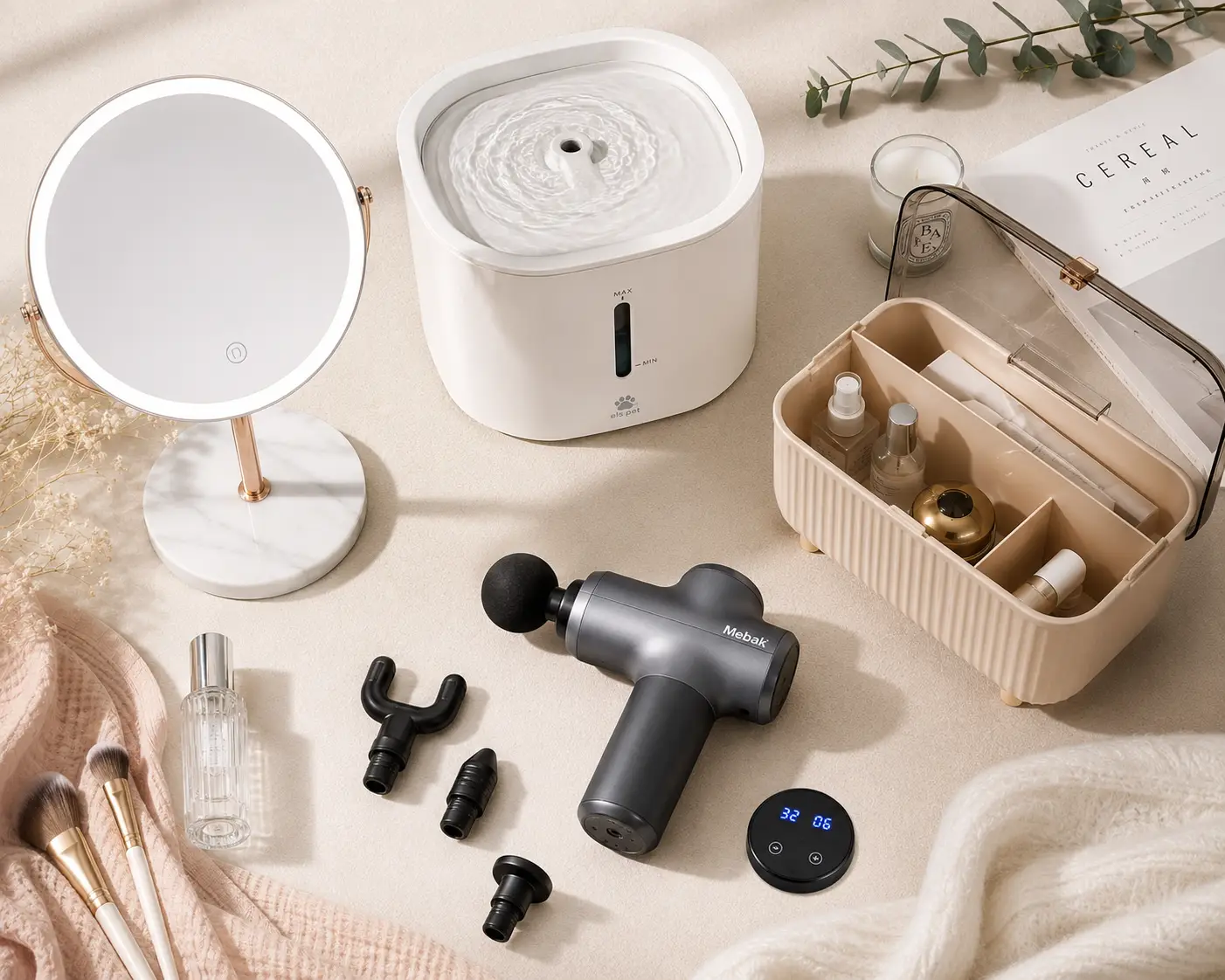
What to sell: Stackable fridge organizers ($15–35 retail, bundle-friendly — selling three-piece sets can boost average order value by roughly 30%). Silicone air fryer liners ($8–15, consumable — customers need replacements every few months, giving you built-in repeat revenue). Over-the-sink drying racks ($20–50, solves a specific kitchen pain point that apartment-dwellers actively search for). LED sunset lamps ($15–38, high visual appeal for social media content — $12 landed cost routinely sells at $38-plus on the strength of before-and-after room transformation videos).
The core advantage of this category: margins typically land in the 55–70% range, and products are mostly flat or stackable — meaning shipping costs stay predictable. Prioritize items that can fold flat or nest together. A bulky bread box will cost more to ship than it’s worth; a collapsible silicone colander won’t.
Health, Wellness & Fitness Accessories
Wellness products sit at the intersection of high margins and strong emotional purchasing. When someone is in pain or trying to feel better about their body, they don’t comparison-shop the way they would for a phone case. The global home fitness equipment market alone is projected to grow from $12.88 billion in 2025 to nearly $23 billion by 2034, and accessories — the lightweight add-ons, not the heavy machinery — are where dropshippers can play.
Products worth testing: Posture correctors ($12–45, directly targets the remote-worker back pain epidemic — strong repeat interest from desk-bound professionals). Compact massage guns ($25–80, wellness trend with strong ad creative potential — before-and-after use videos convert well). Resistance band kits ($15–40, one set supports progression from beginner to advanced, increasing perceived value). Acupressure mats ($20–50, taps into the at-home self-care trend without requiring any medical certification).
One crucial boundary to respect: stick to “wellness accessories,” not “medical devices.” A posture corrector is an accessory. A TENS electrotherapy unit may require FDA or CE medical device registration — and if you’re dropshipping without that documentation, one compliance flag can shut down your payment processor. If a product claims to treat, diagnose, or cure a condition, skip it.
Also worth knowing: massage guns and any product with a built-in lithium battery can only ship via Hong Kong air freight under current regulations. If your supplier isn’t based in the Pearl River Delta with access to Hong Kong’s cargo network, battery products are a logistics dead end.
Pet Supplies & Accessories
Pet owners spend emotionally, not rationally. That’s what makes this category one of the most resilient in dropshipping — 68% of consumers increased their pet spending year over year, and the trend shows no sign of slowing. Dogs and cats account for over 80% of global pet purchases, so focus there first.
Start with these: Automatic pet water fountains ($25–70, solves genuine hydration concerns with strong visual appeal — a fountain in motion performs well in video ads). Deshedding grooming gloves ($10–35, the economics are exceptional — landed cost can be as low as $1–2, with retail at $10–16 for 75–85% margins). Slow-feeder bowls ($15–45, endorsed by veterinarians — the health angle reduces price sensitivity). Calming donut pet beds ($25–50, social-media favorites with strong emotional purchase triggers).
The safety line is clear: stick to pet supplies, not pet consumables. A grooming glove has near-zero compliance risk. A bag of pet supplements or dog treats requires ingredient safety documentation you almost certainly won’t get from a random AliExpress supplier. One contamination-related chargeback can get your merchant account flagged.
Beauty & Personal Care Tools
Beauty tools are the highest-margin category in this guide — profit margins routinely hit 65–80%. They’re inherently visual (perfect for tutorial-style short-form video) and the consumable sub-types drive repeat purchases on autopilot.
Top performers: LED makeup mirrors ($30–80, content-creator appeal with strong perceived value — a $12 unit looks like a $50 product on camera). Heatless curling sets ($20–50, tutorial-friendly — one viral “heatless curls overnight” video can drive months of sales). Facial ice bowls ($15–40, skincare trend with strong TikTok presence). Hydrocolloid pimple patches ($5–15 per pack, consumable — repurchase cycle averages 4–6 weeks, making this one of the few dropshipping products with genuine subscription-like repeat behavior).
The non-negotiable rule in beauty: sell tools and accessories, never cosmetics or skincare formulations. An LED mirror is a tool — zero ingredient liability. A face cream is a cosmetic — if a customer has an allergic reaction, you’re responsible, and your supplier’s “100% natural” claim in a WhatsApp message won’t protect you. Customs authorities in the US, EU, and UK all classify products that claim to alter skin appearance as cosmetics requiring registration. Don’t cross that line unless you have documentation in hand.
Trending Dropshipping Products to Watch in 2026
The categories above are your foundation. The products below are your radar screen — items showing sustained search momentum that may graduate to evergreen status. Trend signals mean opportunity, not a guarantee. Always verify with Google Trends before committing budget: look for a score staying above 60 for three-plus months, not a spike that collapses in weeks.
| Product | Why Trending | Price Range | Risk Level |
|---|---|---|---|
| Red light therapy masks | +567% search interest; skincare tech boom with strong TikTok presence | $45–$120 | 🟡 Medium — seasonal peaks in skincare interest; verify supplier has safety certifications |
| Candle warmer lamps | +400% interest; flameless fragrance trend replacing open-flame candles | $20–$45 | 🟢 Low — simple electronics, lightweight, clear before/after visuals |
| Weighted stuffed animals | +614% surge; anxiety/stress relief for adults, Gen Z “security blanket” positioning | $25–$55 | 🟡 Medium — weight means higher shipping; verify fill material is non-toxic |
| Electric hand warmers | +122% interest; rechargeable replaces disposable, winter seasonal with gift potential | $15–$35 | 🟡 Medium — seasonal (Q4–Q1); lithium battery = Hong Kong shipping only |
| Magnetic tiles (kids) | +317% interest; creative play, strong gift market, bundles well | $20–$60/set | 🟢 Low — lightweight, unbreakable, no compliance issues |
| Engraving pens | +614% search surge; DIY personalization trend, broad use-case appeal | $15–$40 | 🟡 Medium — verify build quality; sharp tools have higher defect risk |
The key discipline with trending products: mix roughly 80% evergreen categories with 20% trend items. If your entire catalog is trend-chasing, you’re rebuilding your business every quarter. If it’s all evergreen, you miss the spikes. The 80/20 split keeps revenue stable while letting you capture upside.
Want to catch trends before they peak? Our trending dropshipping products guide includes a TikTok Creative Center validation method to spot rising products early.
The Overlooked Factor — Which Products Are Actually Easy to Source and Fulfill
Most product guides skip this entirely, which is why experienced dropshippers learn it the hard way: a product that sells well on paper can still fail your business if you can’t source it consistently, ship it affordably, and deliver it intact. The best dropshipping product isn’t just the one with the highest margin — it’s the one with the lowest fulfillment friction. Here’s how to evaluate that friction before you commit.
Shipping Weight, Size, and the Hidden Logistics Cost
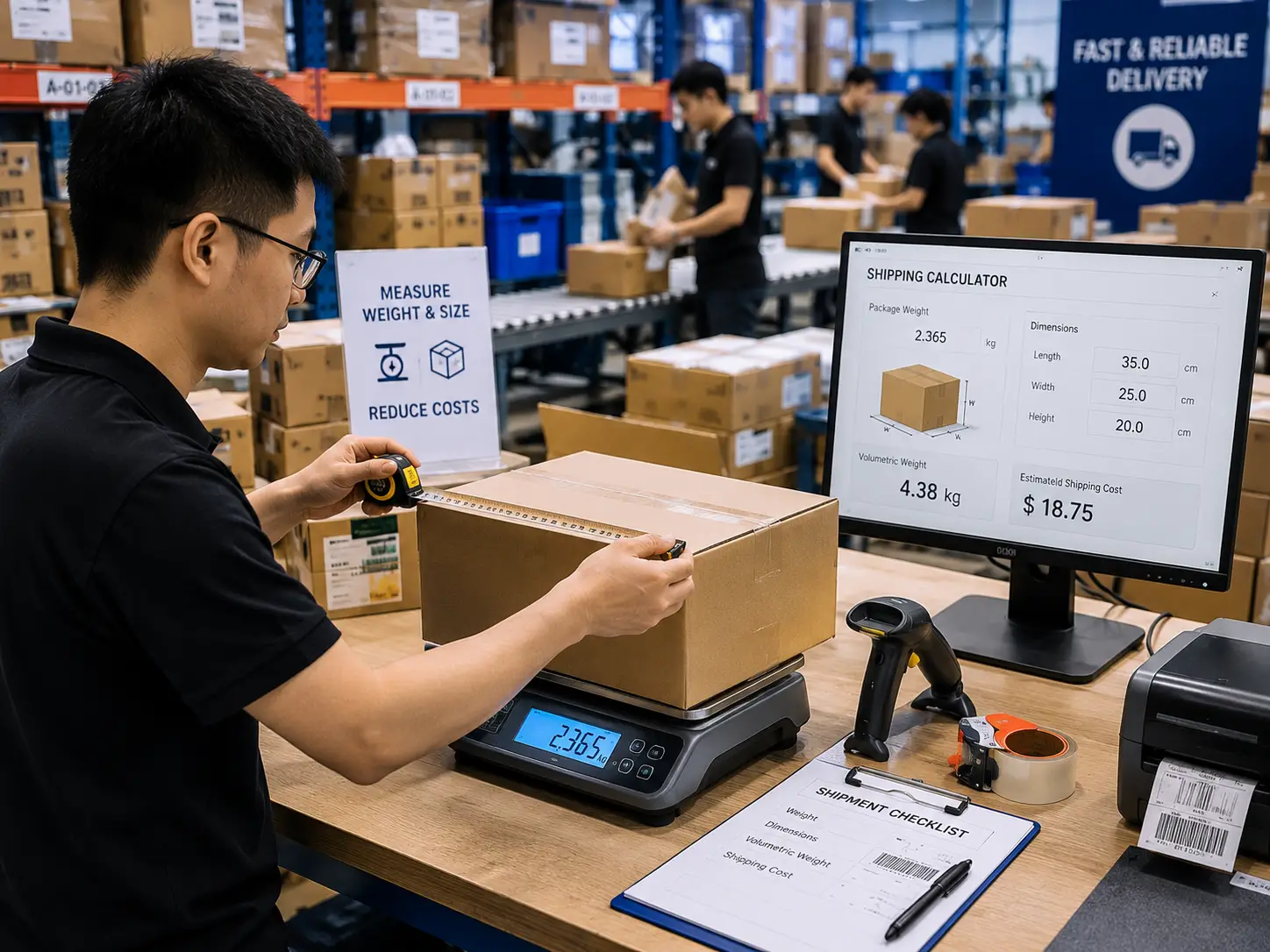
International express shipping uses volumetric weight, not actual weight. The formula is length × width × height (in centimeters) divided by 5,000 (or 6,000, depending on the carrier). A lightweight but bulky product — like a body pillow — gets billed at a much higher rate than its actual kilogram weight suggests. This is how a product with an $8 sourcing cost and a $35 retail price can somehow still lose money: the shipping alone might cost $12–15.
Compare two products side by side. A bed pillow: sourcing cost $8, shipping cost $12, total landed cost $20, retail price $35 — gross margin 43%. A pack of silicone pimple patches: sourcing cost $2, shipping cost $2, total landed cost $4, retail price $15 — gross margin 73%. The cheaper product produces nearly double the margin because logistics costs barely touch it.
Use this logistics-friendliness rating when evaluating any product:
| Tier | Weight | Examples | Recommendation |
|---|---|---|---|
| 🟢 Ideal | Under 500g, flat or compact | Pimple patches, screen protectors, cable organizers, silicone bakeware | Start here. Shipping is predictable and cheap. |
| 🟡 Manageable | 500g–1kg, moderate volume | Pet water fountains, resistance band kits, LED mirrors | Fine with experience. Factor shipping into your margin math upfront. |
| 🔴 Problematic | Over 2kg or high volumetric weight | Bedding, furniture, large plush toys, fitness equipment | Avoid as a beginner. Shipping can exceed product cost. |
Pro tip for textiles and plush items: vacuum sealing can reduce volume by 40–60%, which directly shrinks shipping costs. Ask your supplier if they offer compression packing — it’s one of the simplest margin levers in dropshipping.
Quality Control Difficulty by Product Category
Not all product categories are equally easy to inspect before shipping. Some you can verify with a glance. Others need functional testing, and a few are inherently subjective — meaning disputes are almost guaranteed.
🟢 Visual inspection only. Plastic items, silicone products, simple tools with no electronics. If a trained QC worker can look at it and confirm it’s not broken, scratched, or the wrong color, your return risk is low. Home organization products and basic pet supplies fall here.
🟡 Functional testing required. Small electronics, battery-powered products, anything with moving parts. Each unit needs to be powered on and tested — not spot-checked, but individually. A mini fan that doesn’t spin or a lamp that doesn’t turn on looks identical to a working one in the box. Testing checklist should include: power on/off, all modes or speed settings, unusual noise, loose connectors. Electronics average a 15% return rate — triple that of home goods — and most returns trace back to QC gaps, not defects the customer caused.
🔴 Subjective quality factors. Textiles, clothing, anything where “feel,” color accuracy, or sizing matters. Two people can look at the same bath towel and disagree about whether it’s “soft enough.” Fabric weight (measured in GSM — grams per square meter) is the closest thing to an objective quality metric, but many suppliers can’t or won’t provide accurate GSM data. If you’re considering textiles, order samples from at least three suppliers and compare them side by side — photos won’t tell you what your hands will.
QC difficulty isn’t fixed, though. A small desk lamp, for example, went from a 1.02% monthly complaint rate to 0% after two changes: upgrading from generic batteries to 18650 lithium cells with a protection board, and adding foam padding to the packaging. The product didn’t change — the sourcing and packing did.
Not All Product Categories Are Equally “Dropship-Ready”
This matrix combines everything above — logistics, QC difficulty, and return risk — into a single view:
| Category | Logistics | QC Difficulty | Return Risk | Overall |
|---|---|---|---|---|
| Home organization | 🟢 | 🟢 | 🟢 | 🟢 Safest |
| Phone accessories | 🟢 | 🟢 | 🟢 | 🟢 Safest |
| Pet supplies (non-food) | 🟡 | 🟢 | 🟢 | 🟢 Strong |
| Beauty tools | 🟢 | 🟡 | 🟡 | 🟡 Moderate |
| Fitness accessories | 🟡 | 🟡 | 🟡 | 🟡 Moderate |
| Small electronics | 🟡 | 🔴 | 🔴 | 🔴 Risky |
| Textiles/bedding | 🔴 | 🔴 | 🟡 | 🔴 Risky |
| Furniture | 🔴 | 🟡 | 🔴 | 🔴 Avoid |
For first-time sellers, the pattern is clear: stick to the green rows. Add a yellow category once you have a reliable supplier relationship and understand your logistics costs. The red rows aren’t impossible — but they require experience, supplier trust, and enough margin buffer to absorb the inevitable hiccups.
This is also where who you source through changes the equation. Working with a supplier that has established sourcing networks across the Pearl River Delta — the densest manufacturing cluster in the world, spanning electronics in Shenzhen, home appliances in Shunde, and textiles in Nantong — means you’re not limited to one factory’s catalog or quality standards. SpeedBee, for instance, draws from over 3,000 vetted Chinese suppliers and performs individual unit QC checks before dispatch, which is how a product category that looks “risky” on paper becomes manageable in practice.
Products and Categories You Should Avoid
Some products aren’t worth the headache — not because they can’t sell, but because the operational risk outweighs any plausible margin. Here are the categories to keep off your shortlist, along with smarter alternatives:
| Category | Why Avoid | Sell This Instead |
|---|---|---|
| Large furniture | Shipping costs often exceed product cost; damage rates are high; returns are a logistics nightmare | Flat-pack home organization (stackable bins, over-door racks) |
| Complex electronics | 15%+ return rate industry-wide; troubleshooting over email is impossible; one defective batch can trigger mass chargebacks | Simple electronics with one function (LED lamps, basic Bluetooth speakers) |
| Regulated supplements | FDA/CPSIA compliance required; ingredient liability; customs seizures | Wellness accessories (posture correctors, foam rollers, acupressure mats) |
| Branded knockoffs | Legal liability; PayPal/Stripe account freezes; one IP complaint can kill your entire store | Unbranded products with your own packaging and logo |
| Lithium-battery products without HK shipping | Only Hong Kong airport accepts standalone lithium batteries; if your supplier isn’t in the Pearl River Delta, you have no viable shipping route | Battery-free alternatives (wired versions, USB-powered with built-in battery pre-installed) |
| Purely seasonal items | Six months of dead revenue; if your campaign isn’t profitable by mid-season, there’s no time to recover | Products with mild seasonal lift but year-round baseline (pet cooling mats sell in summer but pet beds sell all year) |
One real-world cautionary tale: a dropshipper built a store around designer-inspired sunglasses, hitting $2,000 in daily revenue within weeks. Then the brand’s legal team filed an IP complaint with Shopify. The store was deleted. PayPal froze $15,000 in pending payouts. Six months of work — gone in an afternoon. Compliance isn’t optional. It’s the foundation your business sits on.
Ready to go deeper on margins? Our best dropshipping products guide walks through a triple-filter vetting framework with real unit economics for each niche.
How to Validate a Product Before You Go All In
A product that looks great in a competitor’s ad isn’t necessarily great for your store. Before you commit real ad budget, run it through this four-step filter:
Step 1: Verify demand, not hype. Open Google Trends. If the product’s search interest has been consistently above 60 for at least three months, that’s real demand. If it spiked from 10 to 95 in two weeks and is already sliding back down, you’re looking at a hype cycle — the early movers already captured the easy sales, and you’d be entering just as ad costs peak and margins collapse.
Step 2: Run the actual margin math. Supplier cost × 3 should put you at or below the market retail price. If the product costs you $10 landed and competitors sell it for $22, that’s a $12 gap — minus $5–8 in ad spend per conversion, minus payment processing fees, and you’re looking at maybe $3–5 profit per unit. That can work at scale, but you need to know the number before you start, not after.
Step 3: Test with a small budget for 3–5 days. Put $50 a day behind the product on your primary ad channel. At a CPM of $8.77, that buys about 5,700 daily impressions. With a 1% click-through rate, you’ll get roughly 57 clicks a day — and over 3–5 days, enough data to see whether people are adding to cart and, ideally, buying. Target a return on ad spend of at least 2× before scaling. One caveat: $150 total budget at today’s CPM rates produces limited sample sizes. If you get 8–10 add-to-carts but zero purchases, it may be a sample-size problem rather than a product problem. But if you get zero add-to-carts across 170+ clicks, the product or your landing page has an issue.
Step 4: Order a sample yourself. Hold the product in your hands. Check the build quality, the packaging, the real shipping time. Photos lie — especially supplier photos. If you wouldn’t be happy receiving this product as a customer, don’t expect your customers to be happy either. One sample order costs $15–40 and takes 4–7 days by express. It’s the cheapest insurance policy in dropshipping.
If a product passes all four steps, it deserves real ad budget. If it fails any one of them, fix the issue or move on. The products that build businesses aren’t the ones that looked hottest on a trends report — they’re the ones that survived the filter.




 English
  Spanish
  French
  German
  Italian
  Polish