
Dropshipping is a strategic retail model where you sell products without holding physical inventory. This guide dismantles the hype, exposing the hidden financial risks, fulfillment traps, and brutal unit economics you must master to build a resilient brand.
The Anatomy of Dropshipping Fulfillment
If you are newly entering digital commerce, what is dropshipping and how does it work must be answered through the lens of supply chain mechanics. It is a sophisticated risk-shifting paradigm. You assume the burden of customer acquisition, while your supplier manages the physical flow of goods.
The hidden friction lies in the Cash Flow Gap. While the item moves physically from the factory to the end-consumer via international line-haul, your capital is often trapped. Payment gateways do not release funds instantly. You must bridge this gap with working capital, paying the supplier upfront while waiting for your revenue to clear. This structural reality separates scalable enterprises from failing side-hustles.
| Operational Pillar | Traditional Inventory Model | Dropshipping Model |
|---|---|---|
| Financial Risk | High upfront capital; Inventory depreciation risk. | Zero inventory cost; High cash flow gap & gateway risk. |
| Supply Chain Control | Absolute control over stock levels and QC. | Delegated; Vulnerable to blind-shipment defects. |
| Fulfillment Traceability | In-house packing; immediate tracking generation. | Platform-dependent; high variability in “First Scan Time”. |
Types of Dropshipping Models Explained
Before launching, you must align your supply chain model with your capital. What companies dropship effectively depends entirely on the operational structure they deploy:
- Product Reselling (Arbitrage): The basic arbitrage of unbranded goods. Fast speed-to-market but zero defensive moat. Competitors will clone a viral product within 48 hours, triggering a race to the bottom in pricing.
- Print-on-Demand (POD): Custom designs on blank canvases. High perceived value due to unique intellectual property, though elevated base costs compress gross margins.
- White-Labeling & Private Label: This is what is branded dropshipping at its core. You customize the product’s aesthetic or packaging to foster loyalty, transforming a transactional sale into a sustainable brand.
- High-Ticket Fulfillment: Selling $1,000+ items like professional machinery. Fewer orders are needed, but it demands elite customer support and exclusive domestic suppliers.

Sales Channels: Marketplaces vs. Sovereign Storefronts
Distinguishing your sales channel from your supply model is a critical strategic step. Dropshipping on Amazon involves leveraging massive organic buyer intent but requires strict compliance with their Terms of Service (TOS) regarding packaging origin. A single late shipment spike can terminate your seller privileges. Conversely, using an independent Shopify storefront provides absolute data ownership and brand control, though it necessitates a mastery of paid media acquisition to drive traffic.
The Unvarnished Pros and Cons
Understanding what to know before dropshipping requires a clinical view of the leverage versus the blind spots. The model’s greatest strength is also its greatest weakness.
The Strategic Agility
This fulfillment method is the ultimate R&D laboratory. You can test a new niche with zero inventory risk. If the data rejects the offer, you pivot in hours. You do not have to guess what products to sell; you let the market dictate demand via conversion data, with financial damage strictly limited to your ad spend.
The Fulfillment Blind Spots
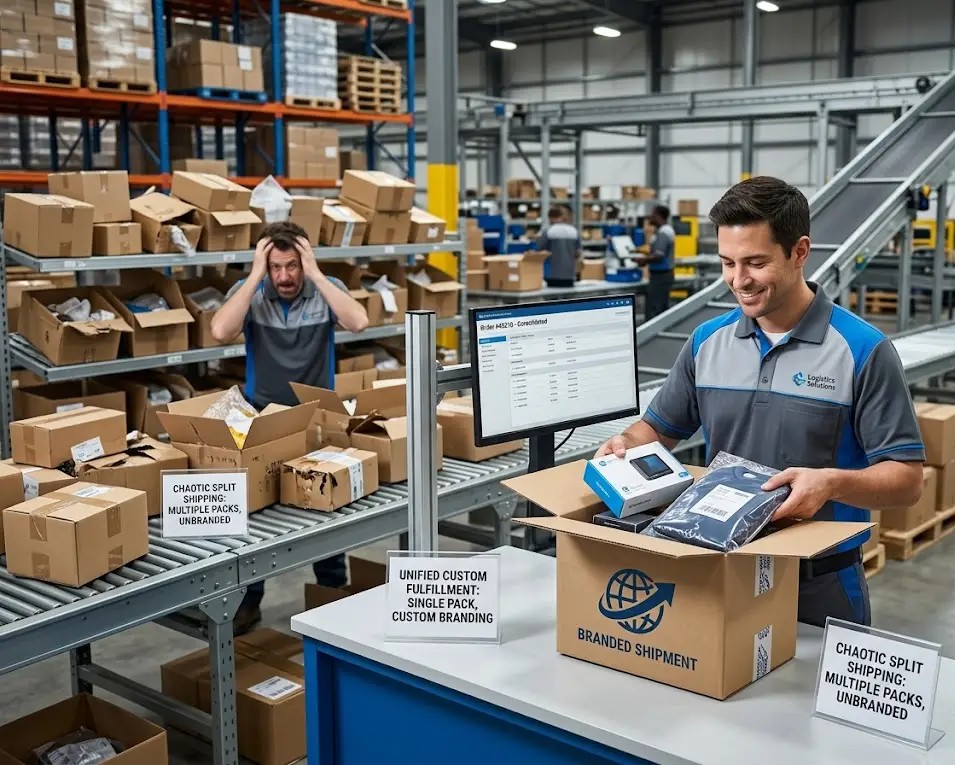
The dark side is the “Multi-Origin Trap.” When using public platform directories, an order containing two different items often arrives in two separate, generic packages weeks apart. This destroys the unboxing experience and triggers chargebacks. To scale, you must move away from platform directories and toward dedicated private B2B fulfillment partners.
The Brutal Unit Economics & The 3X Rule
Revenue is a vanity metric. Your financial viability is dictated by margin profiles. The golden standard is the 3X Pricing Rule. If the market cannot sustain a retail price that is at least three times your total landed cost, advertising attrition will bankrupt you.
The Objective 3X Cost Breakdown:
- 1/3 Landed COGS: The hard cost of the product plus premium express shipping.
- 1/3 Marketing & OPEX: Customer Acquisition Cost (CAC) on ad networks and gateway transaction fees.
- 1/3 Gross Margin Buffer: This 33% is NOT your profit; it is your shock absorber.
The Cold Truth: After accounting for team overhead, software layers, and the inevitable 5-10% loss from failed ad creatives, realistic net margins for scaled stores hover tightly between 10% to 15%.
Logistics directly impact your ability to run ads. Payment processors monitor your Chargeback Dispute Rate, and ad networks poll your buyers. If shipping takes four weeks, your Page Feedback Score drops, your ads are actively penalized with astronomically high CPMs, and your ad account is permanently banned.
Wait! Don’t calculate this in your head. Use our interactive Unit Economics Simulator below to stress-test your margins instantly against real-world advertising decay.
Advanced Protocol: Quality Engineering & AQL Standards
Escaping the commodity trap requires moving your quality control to the factory floor. The best fulfillment partner is one that acts as your engineering department, performing strict AQL (Acceptable Quality Limit) Level II (Major 2.5, Minor 4.0) inspections before the cargo reaches the export terminal.
- Material Optimization: A European bedding brand scaling past 500 daily orders hit a 12.5% complaint rate due to fabric wrinkling. An on-site intervention increased the fabric’s GSM (Grams per Square Meter) and modified the vacuum-seal protocol, driving the defect rate down to a highly profitable 3.5%.
- Component Security: An electronics merchant facing rapid battery depletion authorized an engineering audit. Upgrading to superior 18650 battery cells with a dedicated overcharge protection board reduced “Dead on Arrival” (DOA) failures to a sub-0.3% baseline, saving thousands in weekly refund liabilities.

Financial Compliance: T+7 and Rolling Reserves
Finally, survival depends on navigating the financial windfalls of payment processors. You must distinguish between T+7 payout delays (the standard settlement time) and rolling reserves (where Stripe or PayPal holds up to 30% of your revenue for 90 days to cover potential chargebacks). If your supplier uses ghost tracking, your dispute rate will breach the 1% threshold, leading to a permanent freeze of your capital pool. Selling trademarked intellectual property will invite Immediate TROs (Temporary Restraining Orders).
You must treat cross-border commerce as a rigorous digital supply chain business, not a loophole.
Stop Guessing. Validate Your Margins Before You Scale.
We are currently finalizing our Institutional Unit Economics Master Sheet—a dynamic ledger featuring built-in models for T+7 payout delays, rolling reserves, and CPA decay. Subscribe to our waitlist to be the first to get it for free, plus weekly supply chain insights directly from our CEO.
Join the Waitlist & Subscribe



 English
  Spanish
  French
  German
  Italian
  Polish