
Beyond the App Store: Choosing — and Outgrowing — Your Shopify Dropshipping App
If you run a Shopify store and you’re sourcing products through dropshipping, you’ve almost certainly asked yourself some version of this question: which app should I be using? Maybe you started with the free one everyone told you about. Maybe you’re on your third app and wondering why none of them feel quite right. Maybe your daily order volume has crept past a threshold where things that used to work fine are now breaking every week.
The Shopify App Store lists over 200 apps in the Sourcing & Dropshipping category. Most of them promise roughly the same thing: find products, import them, fulfill orders automatically. But beneath that surface similarity, these apps operate on fundamentally different models. Picking the wrong type of app is more expensive than picking the wrong brand of app, and most comparison articles won’t tell you that.
This guide is different. Instead of another ranked list with star ratings and pricing tiers, we’re going to walk through what each category of app actually delivers — and where each one breaks down when your business grows past a certain point. Along the way, we’ll look at real user feedback that the listicles leave out, and we’ll map out what the next stage looks like when you’ve outgrown the app store entirely.
The Shopify Dropshipping App Landscape — What’s Actually Out There
Before comparing individual features, it’s worth understanding that dropshipping apps fall into three distinct categories. The differences between them matter more than the differences between two apps in the same category.
| App Type | Core Model | Best For | Example | Typical Starting Price |
|---|---|---|---|---|
| Marketplace Connector | Plugs into a public marketplace (AliExpress, 1688) — you browse the marketplace through the app’s interface | Beginners testing products at low cost; sellers comfortable managing supplier relationships themselves | DSers | Free |
| Supplier Network | Curated pool of vetted suppliers — the platform screens suppliers and lists their products in a controlled catalog | Sellers who want faster shipping (US/EU-based suppliers) and don’t want to screen every supplier manually | Spocket, Syncee | Free–$39.99/mo |
| All-in-One Platform | End-to-end ecosystem — product sourcing, ordering, tracking, and sometimes warehousing all in one dashboard | Sellers scaling past 20–30 orders/day who want to reduce the number of tools they juggle | AutoDS, Zendrop | Free trial → $49/mo |
Think of it like buying a car. A marketplace connector is the used-car lot — you can find incredible deals, but you’re doing your own inspection and taking your own risks. A supplier network is the certified pre-owned dealership — someone else screened the inventory, and you’re paying a premium for that assurance. An all-in-one platform is the full-service lease — you pay the most, but a lot of decisions are made for you.
The question isn’t which category is “best.” It’s which category matches where your business is right now — and whether you’re aware of what you’re trading off with each choice.
Feature-by-Feature — What Top Apps Actually Deliver (and Where They Fall Short)
Here’s a framework worth using every time you evaluate a dropshipping app: is this feature actually automating a decision or an action — or is it just giving you a different interface for doing the same manual work? The first saves you hours. The second just moves the hour somewhere else.
Four dimensions have the biggest impact on your daily operations.
Product Sourcing & Supplier Discovery — Can the App Actually Find Winning Products?
Every dropshipping app claims to help you find products. What that actually means varies dramatically.
Marketplace connectors like DSers give you access to AliExpress’s full catalog — over 100 million products. The app’s Supplier Optimizer tool compares AliExpress sellers against each other on price, shipping speed, and historical performance, which is genuinely useful. But here’s what the feature list doesn’t emphasize: you’re still picking suppliers from the same public marketplace that 50,000 other dropshippers are using. DSers can’t tell you whether a product is already being sold by 500 competing stores. That saturation signal — the single most important piece of competitive intelligence — doesn’t exist in any marketplace connector.
Supplier networks take a different approach. Spocket curates roughly 7 million products from suppliers it claims to vet. Syncee lists products from more than 12,000 brands globally. The trade-off is straightforward: you get pre-screened suppliers, but you pay 20–40% more per unit than you would sourcing the same product yourself. And “vetted” doesn’t always mean what you’d hope — Spocket’s own Shopify App Store page carries a 3.8-star rating, with 18% of reviews being one-star (Shopify App Store, 2026). Multiple reviewers report suppliers canceling 30% of orders after acceptance, which means the vetting isn’t catching reliability issues.
All-in-one platforms like AutoDS aggregate over 500 million products from Amazon, eBay, AliExpress, and other sources, layering AI-powered product recommendations on top. The breadth is impressive, but the AI is working with the same public data you could access yourself — it’s not discovering products that aren’t already being sold somewhere.
What the reviews won’t tell you: No app can reliably tell you whether a product is saturated. That information lives in manual competitive research — searching the product on TikTok, checking how many Shopify stores are running ads for it, and looking at Amazon review velocity. If an app claims to handle this for you, ask it to show you the methodology.
Order Automation — Which Apps Actually Save You Hours Per Day?
Processing 50 orders manually on AliExpress takes roughly two hours: open each order, copy the address, paste it into AliExpress, select the shipping method, pay, repeat. The entire value proposition of dropshipping apps is compressing that into minutes.

DSers handles this well for the AliExpress use case. Its bulk order tool processes hundreds of orders in seconds, and because DSers is AliExpress’s official dropshipping partner (replacing Oberlo in that role), the integration is deep enough to be reliable. For AliExpress-based sourcing, the automation works as advertised.
CJDropshipping adds a routing layer: the platform automatically assigns orders to the nearest warehouse, and its proprietary CJPacket shipping line offers China-to-US delivery in 7–12 days — faster than ePacket but slower than domestic carriers. This middle-ground speed is useful for products where the customer isn’t expecting Amazon Prime timelines.
AutoDS pushes automation furthest: from product imports to price monitoring to order placement, the entire chain can run hands-off. But full automation means full trust. If AutoDS’s AI switches you to a higher-cost supplier because your preferred one flagged as out of stock — and it doesn’t notify you before doing so — your margin on that order just shrank without your knowledge. That’s not a bug; it’s a design trade-off.
The hidden bottleneck: most apps automate order placement well. The breakdown happens at tracking number sync. Several popular apps can take 48 hours or longer to push tracking numbers back to Shopify after an order is placed, which means your customer sees “Order Confirmed” for two days with no shipping information. That’s a support-ticket generator. When evaluating an app, test tracking sync speed — not just order placement speed.
Branding & Customization — Can You Build a Brand, or Just Sell Commodities?
If you’re dropshipping products in generic poly-mailers with supplier-branded packaging slips, you’re not building a brand — you’re running a fulfillment experiment. Branded packaging, logo inserts, and customized unboxing experiences are how dropshippers graduate from “one of a thousand stores selling the same thing” to “a brand people remember and reorder from.”
Here’s what each category delivers:
- Zero branding (DSers, CJDropshipping): Products arrive in the supplier’s packaging. Your customer sees AliExpress logos, Chinese-language packing slips, or hand-written customs declarations. For a $15 impulse-buy product, this might not matter. For anything you want customers to reorder, it’s reputation damage you can’t see happening.
- Basic branding (Spocket, Trendsi): Branded invoices with your store name and logo. Trendsi adds custom sewn-in labels for clothing items. It’s better than nothing, but it’s surface-level — the product inside the branded package is still the same generic item everyone else is selling.
- Deeper branding (Zendrop Pro, $49/mo): Custom packaging boxes, branded insert cards, and subscription box design. This is where branding starts to feel real, but it comes with two caveats. First, these features require the Pro plan — the free tier gives you zero branding. Second, and more fundamentally, no app can customize the product itself. You can put a branded box around a generic yoga mat, but it’s still a generic yoga mat inside.
The ceiling no app can break: If you want to change the material, the stitching, the component quality, or the manufacturing process — you’ve left app territory. Product-level customization requires a different kind of partner entirely, which we’ll get to.
Inventory & Supply Stability — The Silent Business Killer
This dimension gets the least attention in app comparisons, but it’s the one that causes the most financial damage when it fails.
Here’s the scenario: you’ve spent $2,000 on Facebook ads testing a product. It’s working — you’re getting $40 orders at a $15 cost per purchase. You scale to $500/day in ad spend. On Tuesday morning, 47 orders come in. You go to fulfill them — and your supplier has marked the product out of stock. Those 47 customers now need refunds. Your ad spend on those clicks is gone. And the Facebook algorithm that was optimizing for your winning product? It just lost its signal.
This happens because of how inventory data flows through each app type:
- Supplier self-reported inventory (highest risk): DSers and any AliExpress-dependent app rely on suppliers manually updating stock levels. AliExpress suppliers routinely overstate availability — an estimated 15–20% of orders placed through marketplace connectors encounter a post-order stockout or price change, based on aggregated merchant reports across Reddit and Shopify community forums.
- Platform-refreshed inventory (medium risk): Spocket and Syncee periodically pull inventory data from suppliers. There’s less outright fabrication than the self-reported model, but the refresh interval means stock can sell out between updates.
- Platform-owned inventory (lowest risk, smallest selection): Zendrop’s US warehouses and Trendsi’s fashion inventory are controlled by the platform itself. When the platform says it’s in stock, it’s in stock. But the SKU count in these owned warehouses is a fraction of what’s available through marketplace connectors — you’re trading selection breadth for reliability.
The Real Cost of “Free” — Pricing, Hidden Fees, and Billing Traps
Most “best dropshipping apps” articles give you a pricing table and move on. The real story is in what happens after you sign up — and it’s messier than any feature comparison suggests.
Subscription Tiers at a Glance
Here’s what it costs to walk through the door at each major app:
| App | Free Tier | Entry Paid Plan | Key Limitation |
|---|---|---|---|
| DSers | Yes — 3 stores, 3,000 orders/mo | $19.90/mo | Free tier fine for testing; maxes out around $5K/mo revenue |
| Spocket | 14-day trial (auto-converts to annual) | $39.99/mo | Trial auto-converts to paid; cancel manually or get charged |
| Zendrop | Yes — basic features | $49/mo (Pro) | Free plan has zero branding features; per-order transaction fees apply |
| AutoDS | 14-day trial | $26.99/mo | No permanent free plan |
| CJDropshipping | Yes — full features | N/A (service-fee model) | Product prices include platform markup |
| Syncee | Yes — 25 products | $29/mo | 25-product limit makes free tier a test-drive, not a working solution |
| Trendsi | Yes — fully free | N/A (costs in wholesale prices) | Fashion/clothing only; no transaction fees but margin is built into product cost |
The Fees Nobody Talks About
The subscription price is the visible cost. The invisible costs are what make the difference between a profitable operation and a slow bleed.
Cancellation traps. The most common complaint about Spocket on the Shopify App Store — accounting for the majority of its 104 one-star reviews — is billing after cancellation (Shopify App Store, 2026). Users report being charged $99.99/month for months after canceling their subscriptions, with customer support unresponsive to cancellation requests. One reviewer documented losing over $500 across five months of charges they couldn’t stop. This isn’t an isolated bug; it’s a pattern visible across multiple review platforms.
Free trial auto-conversion. Spocket’s 14-day trial automatically converts to an annual subscription unless you manually cancel. AutoDS uses the same model. These aren’t hidden in fine print — but the conversion is designed to be frictionless, and many users don’t notice until the first charge hits.
Per-order transaction fees. Zendrop’s free plan charges a per-transaction fee on every order. At 100 orders per month with a $40 average order value, that fee adds $20–40 to your monthly cost — functionally a subscription you didn’t sign up for.
Product markup as hidden cost. “Free” apps like Trendsi and CJDropshipping don’t charge monthly fees — they make money by marking up product prices. Trendsi’s wholesale prices include the platform’s margin. CJDropshipping’s product prices on 1688-sourced items include a service markup. At low volumes, this is cheaper than a subscription. At 500+ orders per month, you’re often paying more in hidden markups than you would on a paid app with transparent pricing.
Billing safety tip: Use a virtual card or prepaid card for app subscriptions. Set a spending limit. If an app makes cancellation difficult, you can stop the charges at the card level without waiting for their support team to respond.
Total Cost of Ownership at Scale — 100 vs. 500 vs. 1,000 Orders/Month
Here’s where the math gets instructive. Assume a $40 average order value and a $20 average product cost.
| App | Monthly Fee | Per-Order Cost | 100 Orders/Mo | 500 Orders/Mo | 1,000 Orders/Mo |
|---|---|---|---|---|---|
| DSers (Free) | $0 | $0 (AliExpress pricing) | $0 | $0 | $49.90 (upgraded plan) |
| Spocket | $39.99 | 2% transaction + 20-40% product markup | $120–200 | $440–840 | $840–1,640 |
| Zendrop Pro | $49 | Per-transaction fee (~$0.20–0.40) | $69–89 | $149–249 | $249–449 |
| CJDropshipping | $0 | Built into product price (15-25% markup) | $300–500 | $1,500–2,500 | $3,000–5,000 |
| Trendsi | $0 | Built into wholesale price | $0 (margin absorbed) | $0 | $0 |
The counterintuitive takeaway: at 500 orders per month, DSers at $49.90/month plus AliExpress wholesale pricing can be less expensive than CJDropshipping’s “free” plan — because CJ’s product markup of 15–25% on $10,000 in monthly product cost ($500 orders × $20 cost) = $1,500–2,500 in hidden fees. A “free” app can cost you $2,000 more per month than a paid one.
The TCO math changes again at 1,000+ orders per month, where the combination of transaction fees, product markups, and the operational overhead of managing supplier issues starts to make the entire app-based model less efficient than alternatives we’ll explore in the final section.
Shipping Speed Showdown — Delivery Performance by Region
Shipping speed is the single largest determinant of customer satisfaction in dropshipping. It affects refund rates, repeat purchase rates, and your Facebook ad ROAS (since unhappy customers leave negative feedback that tanks your ad relevance score).
| App | Key Warehouse Locations | US Delivery | UK Delivery | EU Delivery | AU Delivery |
|---|---|---|---|---|---|
| DSers | China (via AliExpress suppliers) | 15–45 days (standard), 7–15 days (premium) | 15–45 days | 15–45 days | 15–45 days |
| Spocket | US, EU, Brazil, India (supplier warehouses) | 4–7 days | 7–14 days | 4–7 days | 10–20 days |
| Zendrop | US, China | 5–8 days (US warehouse), 10–20 days (China) | 10–20 days | 10–20 days | 10–20 days |
| CJDropshipping | US, China (CJPacket) | 7–12 days (CJPacket), 3–5 days (US warehouse) | 10–20 days | 10–20 days | 15–25 days |
| Trendsi | US, International | 2–5 days | 7–15 days | 7–15 days | 10–20 days |
| AutoDS | US, China, UK, AU | Varies by supplier | Varies | Varies | Varies |
The table tells a story, but it’s missing the most important variable: warehouse SKU coverage. Zendrop advertises “US warehouse” shipping in 5–8 days, but only a fraction of its 1-million-plus catalog actually sits in those US warehouses. The vast majority of Zendrop products still ship from China with 10–20 day timelines. The same is true for CJDropshipping — the “US warehouse” badge applies to a subset of its catalog.
Before committing to any app based on shipping speed, verify the specific products you plan to sell are actually stocked in the warehouse location you’re counting on. Most apps won’t volunteer this information — you have to check product by product.
A deeper structural issue: with marketplace connectors and supplier networks, you don’t control which carrier handles your orders, which warehouse your inventory sits in, or how quickly orders get picked and packed after placement. If your business depends on delivery speed — and most dropshipping businesses do — that lack of control becomes the ceiling on how reliable your customer experience can be.
When Dropshipping Apps Fail — Warning Signs It’s Time to Switch
Every dropshipper eventually hits a moment where their app stops being a tool and starts being a liability. The signs are usually gradual — a few missed shipments here, a support ticket ignored there — until one day you realize you’re spending more time managing your app than growing your business.
Here are five signals that mean it’s time to start looking for alternatives:
1. Supplier stockouts or price hikes are happening more than once a month. If the same SKU has its price changed twice in a month, or your post-order stockout rate is above 10%, your supplier relationships are failing — and no app interface can fix that. The app is just the messenger; the problem is the supply chain behind it.
2. Customer support has become a black hole. When your app’s support team responds with templates instead of solutions — “we’ve escalated your issue” followed by silence — you’re dealing with a company that’s grown past its ability to serve individual merchants. On the Shopify App Store, Spocket’s negative reviews consistently cite “slow, generic, and completely unhelpful” support responses. If your issues aren’t resolved within 48 hours, you’re paying for support that doesn’t support you.
3. Your billing doesn’t match what you signed up for. The Spocket pattern — charges continuing months after cancellation, requiring bank intervention to stop — is the most extreme version of this. But subtler versions exist: a “free trial” that auto-converts to an annual plan, a “free plan” that quietly introduces per-transaction fees, a subscription tier that gets upgraded without clear notification. If you can’t look at your credit card statement and immediately match every charge to a service you knowingly signed up for, something is wrong.
4. Delivery times are creeping up. That 7-day delivery promise that was 7 days six months ago is now 14 days. Shipping lanes degrade over time as carriers change routes and warehouses get busier. The problem isn’t that delivery times change — it’s that most apps don’t proactively tell you when they do. You find out from customer complaints.
5. Your business is growing, and the app isn’t keeping up. This is the most important signal, and the one most dropshippers miss because they’re too busy fulfilling orders to notice. Around 30–50 orders per day, the batch-processing features that felt like magic at 10 orders per day start to show their limits. You need things the app can’t provide: dedicated inventory that can’t be sold out from under you, someone checking product quality before it ships, the ability to customize the product itself rather than just the packaging. These aren’t feature requests — they’re category changes.
The common thread across all five signals: apps solve efficiency problems. They make existing tasks faster and more organized. But the problems that emerge at scale — supplier reliability, quality consistency, brand differentiation, customer trust — aren’t efficiency problems. They’re capability problems. And you can’t solve a capability problem with a faster interface.
Beyond the App Store — When to Graduate to a Managed Dropshipping Agent
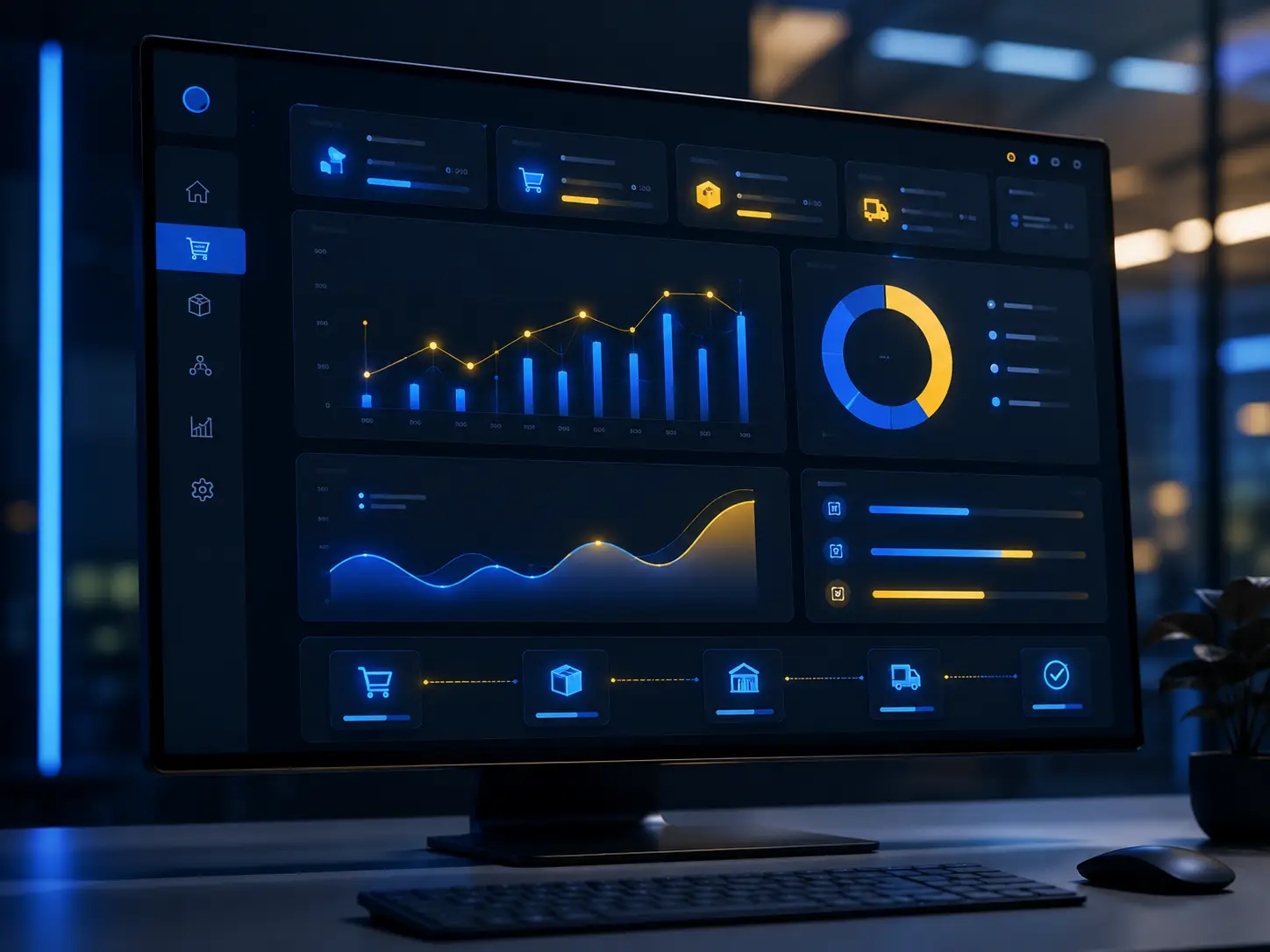
Apps help you do what you’re already doing, faster. A managed dropshipping agent does things you can’t do yourself. The difference isn’t a matter of “better features” or “a higher plan tier.” It’s a different operating model entirely.
What a Managed Agent Actually Does (That No App Can)
If you’ve only ever worked through apps, the agent model can sound like marketing language. Here are five concrete capabilities that exist on one side of the line and not the other:
Dedicated inventory. In the app model, you share a supplier’s inventory with every other merchant connected to that supplier. When stock runs low, you all compete for the same units. A managed agent can allocate dedicated inventory to your account — your stock doesn’t disappear because someone else’s order cleared the shelf first.
Factory-direct sourcing. Apps connect you to marketplaces (AliExpress, 1688) or aggregated supplier catalogs. An agent sources directly from factories — the same factories that supply those marketplaces, but without the intermediary markups layered on by platform fees and reseller margins.
Physical quality control. Apps trust suppliers to self-report quality. Agents employ QC staff who physically open boxes, inspect products, and photograph them before shipment. When an app says “quality checked,” it means the supplier checked a box. When an agent says it, it means a human being looked at your specific product with their eyes.
Product customization beyond packaging. Every app stops at the packaging layer — branded boxes, logo inserts, custom labels. An agent can go deeper: changing materials, upgrading components, modifying manufacturing processes. This is the difference between selling a generic product in a branded box and selling a product that’s actually different from what everyone else is selling.
One accountable human instead of a ticket system. Agent relationships typically include a dedicated account manager and direct access to decision-makers — not a support queue. When something goes wrong with a 500-unit shipment, you don’t file a ticket and wait. You message one person who can authorize a solution.
The Graduation Trigger — Five Signals You’ve Outgrown Apps
You don’t need to be doing enterprise volumes to benefit from an agent. Here’s how to know when the switch makes sense:
- You’re processing 20+ orders daily and spending 2+ hours in your app just handling exceptions. The batch-processing features that saved you time at 5 orders/day don’t help when the bottleneck is supplier issues, not order volume.
- Your refund rate is above 5%. The industry norm for dropshipping through marketplace apps is 3–5%. Above that, your ad platforms start penalizing you, and the root cause is almost always product quality or shipping reliability — issues an app can’t fix.
- You need to customize the product, not just the box around it. The moment you want to change a material, upgrade a component, or modify a manufacturing spec, you’ve permanently left app territory.
- Your time goes to firefighting, not business-building. If your role has shifted from CEO to customer-service-and-supplier-relations-and-logistics-coordinator, you’re understaffed — and the fastest hire is an agent who absorbs those functions.
- You want to build a brand, not run a store. A brand requires product consistency, a memorable unboxing experience, and customer trust that survives a delayed shipment. No app provides all three.
How to Evaluate a Dropshipping Agent — The Checklist Apps Don’t Want You to Have
If the signals above resonate, here’s a seven-question evaluation framework for assessing any managed dropshipping agent:
Take this checklist with you into any agent evaluation. For context, a well-structured operation should handle order processing within 48 hours and offer delivery as fast as 3 days to the UK and 4–7 days to the US and EU — benchmarks that matter when your customer is refreshing a tracking page. Equally important: the agent should absorb shipping risk, with clear policies for free refunds or reshipments when packages are lost, damaged, or arrive with quality defects. These aren’t premium features reserved for high-volume accounts; they’re table stakes for any agent that takes your business seriously. For example, SpeedBee (speedbeedropship.com) delivers on both fronts — 48-hour order processing with delivery in as fast as 3 days to the UK, plus free refunds or reshipments for any lost, damaged, or quality-defective orders. If an agent can’t answer these seven questions clearly, keep looking.
The dropshipping app market is genuinely better than it was five years ago. The tools are more capable, the suppliers are more accessible, and the barrier to entry is lower than ever. But the fundamental dynamic hasn’t changed: apps are designed for the average merchant doing average volume with average needs. The further you get from average — whether that’s in daily order count, product complexity, brand ambition, or quality standards — the more you’re fighting the tool rather than being served by it.
Knowing when to move on from the app store isn’t a failure of your app selection skills. It’s a sign your business is working.
If you’re evaluating what’s next after outgrowing your current setup, SpeedBee’s catalog of 30,000+ products — sourced from 3,182 verified Chinese suppliers at factory-direct prices — is available at speedbeedropship.com.
References
- Shopify App Store. “DSers — AliExpress Dropshipping.” 2026. https://apps.shopify.com/dsers
- Shopify App Store. “Spocket — US/EU Dropshipping.” 2026. https://apps.shopify.com/spocket
- Shopify Blog. “16 Best Dropshipping Suppliers in 2026.” 2026. https://www.shopify.com/hk-en/blog/dropshipping-suppliers
- Koala Apps. “11 Best Dropshipping Platforms of 2026.” 2026. https://koala-apps.io/blog/dropshipping/best-platforms/
- Trustpilot. “Zendrop Reviews.” 2026. https://www.trustpilot.com/review/zendrop.com
- SpeedBee Dropship. Official Website. https://www.speedbeedropship.com/
- SpeedBee Dropship. Contact Page. https://www.speedbeedropship.com/contact-us/


 English
  Spanish
  French
  German
  Italian
  Polish