
Dropshipping Sweden: How the Model Actually Works There
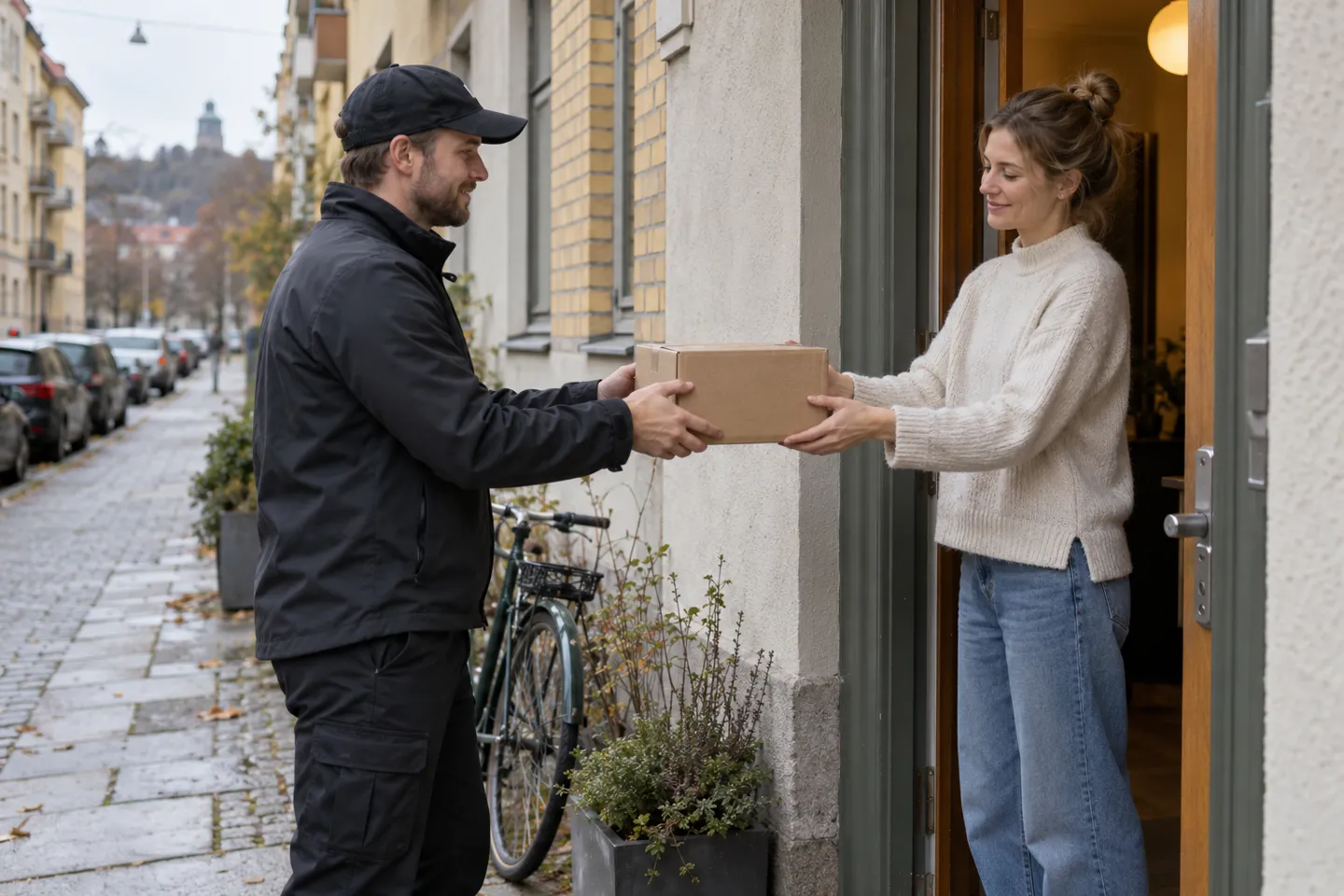
A customer in Gothenburg orders a phone case from your store on a Tuesday. The parcel leaves a warehouse in Guangzhou on Thursday. What happens in between decides whether that customer ever orders from you again: which flight the parcel catches, who clears it through customs, and who pays the SEK 175 declaration fee when it reaches Sweden.
The model itself is not the complicated part. Dropshipping means you sell products online without holding inventory, and a supplier ships each order on your behalf. What makes Sweden different is the market it runs on. Roughly 10.6 million people, some of Europe’s heaviest online buying habits, and a checkout culture built around Klarna. It is a small market that pays well and forgives little. It is also still growing: Swedish online sales reached SEK 153 billion in 2025, up 10 percent on the year before (PostNord, 2026).
Two perspectives get mixed together under this keyword, so it helps to split them once. Dropshipping in Sweden usually means a Swedish resident registering a company and selling online. Dropshipping to Sweden means selling to Swedish customers from anywhere, with goods most often shipped from China. Both are legal. Both need the same foundation: a registered business (sole trader or limited company), F-tax status, and VAT (moms) handling once you make sales. Sweden’s official registration portal Verksamt.se walks you through the steps, and Skatteverket publishes the rules in English (Skatteverket).
This guide follows the second perspective, because that is where the hard questions live. Which supply route should feed your Sweden store? How long does delivery really take? Who owes which tax when the goods ship from China? And what happens when a Swedish customer wants their money back? Each answer depends on decisions most sellers make once, early, and rarely revisit.
The Three Supply Routes Into Sweden
Every Sweden-bound dropshipping store runs on one of three supply routes. The route decides your delivery window, your cost structure, and the ways you can get hurt. It also explains why the internet argues so loudly about delivery times here. Platform sites promise next-day delivery. Forum sellers describe 15 to 20 days. Both are telling the truth about different routes, and neither is describing yours until you pick one.

Direct From China, One Parcel at a Time
The default route connects a marketplace supplier straight to your store. Each order triggers one parcel from one Chinese seller. There is no upfront stock, the catalog is effectively unlimited, and you can test a product tonight.
The trouble arrives in two waves. First, the wait: operators in Shopify’s own community describe 15 to 20 days to Sweden from China, “maybe longer” (Shopify Community, 2022). Second, the bill: when the parcel reaches the Swedish border, the costs find your customer rather than you. Swedish VAT runs 25 percent, and PostNord charges SEK 175 including VAT for a standard customs declaration (PostNord, 2026). A SEK 99 phone case turns into a payment demand at the door.
Weeks of waiting followed by a surprise fee is the pattern behind most dead Sweden stores. The model did not fail. This route simply hands both failure points to the customer.
EU Stock, Shared Warehouses
EU-stock platforms attack the waiting problem directly. Goods are parked in European warehouses before anyone orders, so delivery runs in days instead of weeks and feels local to the customer.
The costs are quieter than the benefit. Unit prices run higher because someone else financed the warehouse. Catalogs shrink from millions of listings to thousands of SKUs. And the stock is shared: when three stores sell the same warehouse item at once, somebody’s order comes back refunded.
One claim in the marketing deserves a footnote. “Compliance built in” does not move your obligations. VAT registration, consumer law, and customs paperwork follow the seller no matter where the goods sit. A Swedish warehouse changes the delivery time, not the duty holder.
A China Line With Dedicated Stock
The third route keeps sourcing in China and changes who controls the goods. An agent sources products, stores inventory dedicated to your store, and fulfils each order under your brand. Managed lines on this route publish service tiers of 4 to 7 days door-to-door across Europe, DDP, with customs clearance and last-mile delivery inside the quote. Order processing runs at roughly 48 hours, and stock levels sync to the store as they change.
The delivery window is the visible difference. The structural one matters more. Because the stock is dedicated to you, nobody can oversell it. Price changes get flagged before they reach your customers. And the parcel arrives without a payment demand attached, because the fees were settled inside your shipping price before it ever left China.
Where each route breaks:
Three supply routes into Sweden
| Route | Best for | Breaks when |
|---|---|---|
| Direct from China | Testing demand with zero upfront cost | First repeat customer; first door fee arrives |
| EU stock | Fast delivery on a narrow, proven catalog | You need breadth, margin, or guaranteed availability |
| China line, dedicated stock | Scaling SKUs that already sell | The agent runs shared stock or ships DAP, which is route one with extra steps |
Read the right-hand column first. Switching routes is cheap before orders arrive and expensive after. Most Sweden stores that stall picked a route for the stage they were in and never moved off it.
Which Route Fits a Sweden Store
Sweden stacks three traits that decide the answer. It is small: 10.6 million people, so one viral product can saturate the niche in weeks. It is growing: that SEK 153 billion market expanded 10 percent in 2025 (PostNord, 2026). And it is demanding: Klarna Checkout alone holds over 40 percent of the Swedish checkout market (Klarna, 2024), and roughly a quarter of Swedish e-commerce payments are buy-now-pay-later, the highest share measured anywhere in the world (Sveriges Riksbank, 2023).
Match the route to your stage. Testing demand: direct from China or EU stock, whichever is cheaper to try, because the goal is signal, not reviews. First proven sellers: move those SKUs onto a managed line so the delivery promise and the fee handling stop leaking customers. Scaling: dedicated stock with DDP, so availability and door-side fees stop being variables at all.
Sweden in three numbers
10.6M
people
SEK 153B
online sales in 2025, +10% year on year
40%+
checkout share held by Klarna Checkout
One exception is worth naming. If you already run a profitable store in another market and are cloning the playbook into Sweden, skip the testing stage and start on a managed line. Sellers in exactly that position ask for Sweden delivery inside 10 to 12 days (r/DropshippingService, 2024). They do not need to re-learn what sells; they need the line to not embarrass the store.
The uncomfortable version of this advice: “test with direct shipping, sort out the rest later” is more dangerous in Sweden than in the US. The parts you postpone, payments, customs fees, returns, are precisely the seams Swedish customers hit first.
Running the Line: Delivery, Tax and Payments
A managed China line has four configuration points. Get each one decided before the first order, because retrofitting them mid-queue is how stores lose a launch week.
What the Delivery Number Depends On
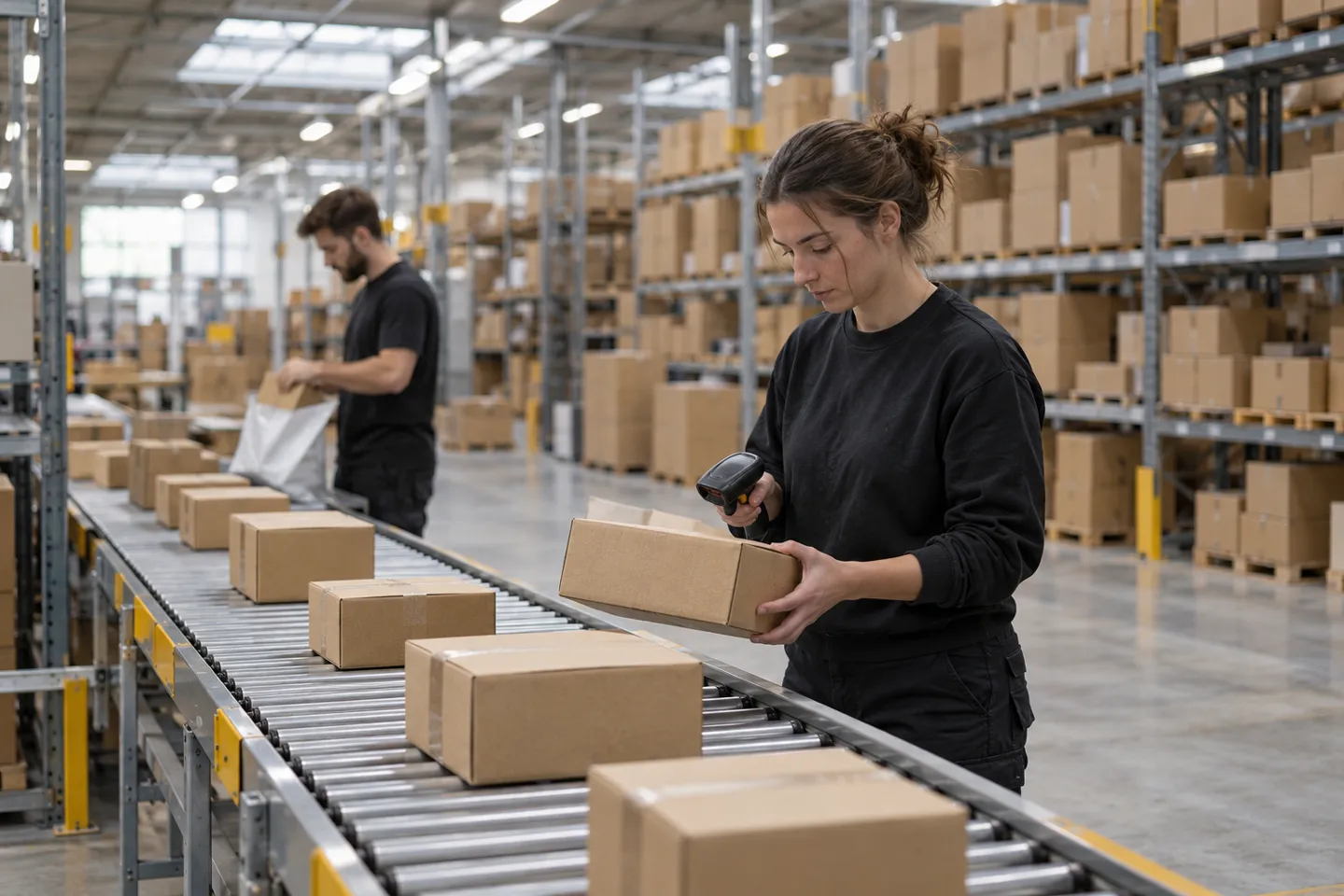
The same China line can deliver in 8 days or 25, and the difference is mechanical. Flight routing matters: direct or well-hubbed routings beat whatever the cheapest consolidator found that week. Paperwork quality matters: a clean commercial invoice clears in hours, a sloppy one sits. Peak season compresses everything. And the last-mile carrier decides whether the final day is a doorstep drop or a collection errand.
A DDP line with a published Europe tier of 4 to 7 days sits comfortably inside the 10-to-12-day ceiling most sellers expanding to Sweden ask for. When you evaluate any partner, ask where the clock starts: order placement, dispatch, or flight departure. A “7-day” promise that begins at flight departure is a 12-day promise wearing a smaller number.
Who Owes Which Tax
For low-value consignments up to EUR 150, the EU’s IOSS scheme lets the seller collect VAT at checkout and clear the goods without a surprise at the door (European Commission). Registration is optional, which is why so many small stores skip it.
Skipping it has a price, and the customer pays it. Under the DAP default, every fee lands at delivery: 25 percent VAT, the EUR 3 low-value consignment fee that applies since July 2026, and PostNord’s SEK 175 declaration charge (PostNord, 2026). Note that the old duty-free treatment under EUR 150 ended in July 2026 as well; duty now applies on all values. DDP flips the direction: your shipping price carries the fees, and the customer just signs for a parcel. Standard moms in Sweden is 25 percent across most goods (Skatteverket).
Who owes which fee at the door
IOSS, registered
VAT is collected at checkout; the parcel clears without a door-side demand.
DAP, the default
25% VAT, the EUR 3 fee and the SEK 175 declaration land at delivery, charged to your customer.
DDP, managed line
Fees ride inside your shipping price; the customer signs for a parcel, not a bill.
Getting Paid Like a Swedish Store
Klarna is the wall every foreign seller hits. It holds over 40 percent of Swedish checkouts, and it requires an organisation number to approve a merchant, which is precisely what a non-Swedish seller does not have. One seller-targeting-Sweden thread walks through the problem from Norway, where registering ran to about $3,000 and was judged not worth it for a small store (r/dropshipping).
There is a second Klarna problem that hits even approved merchants. Dropshippers report payout holds of 30 days or outright account closures once Klarna’s risk system sees long China fulfilment cycles (r/dropshipping). The practical order is therefore: card payments through Stripe or Shopify Payments from day one, and Klarna added when your volume and fulfilment speed make the organisation number worth earning. Forgoing Klarna forever means forgoing the default payment habit of 10.6 million shoppers. Adding it before your line can ship predictably means risking frozen cash at the worst moment.

The Verification Checklist
Whatever route and partner you choose, five questions separate a real line from a marketing page. Ask them in writing.
The verification checklist
1. Delivery promise and its start point: order placement, dispatch, or flight departure?
2. Is the quote DDP, and does it include customs clearance plus last-mile?
3. What notice do you get on stock-outs and price changes, and how fast?
4. What happens to lost or damaged parcels: reshipment or refund, in writing?
5. Is the inventory dedicated to your store, or drawn from a shared pool?
When we evaluate a Sweden line, these are the same five questions we answer upfront at SpeedBee: our Europe service runs 4 to 7 days DDP door-to-door with customs clearance and last-mile inside the quote, orders are processed within 48 hours through Shopify auto-fulfilment, and stock levels sync to your portal as they change, with the exact terms laid out in SpeedBee’s fulfilment FAQ. Whichever partner you pick, get the five answers in writing before the first order ships, because unwritten promises have a way of resurfacing as fees, delays, or silent stock-outs.
Send us your product list and target delivery window, and the five answers come back in writing with the quote.
Get a Sweden line quoteWhat to Require From a Fulfilment Partner
Put the providers into three types and the market gets easy to read. Marketplace tools connect your store to individual Chinese sellers, which is the direct route with software on top. EU-stock platforms sell you their warehouse inventory, which is the shared-stock route. Managed agents build a line around your catalog, which is the dedicated-stock route.
Each type fits a stage, and the checklist above works on all three. A tool cannot answer the dedicated-stock question. An EU-stock platform will fail the breadth question on a wide catalog. A managed agent should pass all five, and if one hedges on the DDP question or the reshipment terms, that hedge is your answer.
Judge on the five answers, not on catalog size or per-parcel price. A catalog of ten million items is worthless if the parcel arrives in three weeks with a fee attached. A per-parcel price saved of a few kronor is worthless next to a frozen payout. The questions cost nothing to ask, and the answers predict almost every failure mode in the next section.
Where Sweden Lines Break Down
Four accidents account for most of the dead Sweden lines, and all four are visible in forum posts from sellers who hit them first.
The first is the payment freeze. Sellers approved for Klarna report payout holds of 30 days or account closures once the risk system ties their store to slow China fulfilment (r/dropshipping). A hold during your best month is a cash-flow event, not an inconvenience. Keep a second payment rail live, and keep your fulfilment cadence defensible before you push volume through a single checkout provider.
The second is the door fee. This is the one customers remember.
A China-direct parcel landing in Sweden becomes a payment demand: SEK 175 declaration fee plus 25% VAT (and a EUR 3 low-value fee since July 2026), collected before the customer sees the box. A customer who pays unexpected fees once rarely places a second order.
The fix is contractual, not hopeful. If your quote is DDP with customs and last-mile included, the fee scene never happens. Verify that in the quote itself, not in the sales call.
The third is the cross-border return. Swedish consumers have 14 days of ångerrätt on distance purchases (Konsumentverket), and the law expects the consumer to cover return shipping (Riksdagen, SFS 2005:59). Beyond withdrawal rights, the Consumer Sales Act gives buyers a complaint window of three years from delivery (Riksdagen, SFS 1990:932). The economics get ugly fast: a returned parcel cannot profitably travel back to China, so somebody absorbs it. Decide who, in advance, and write the return address and fee rules into your policy page instead of improvising them per angry email.
The fourth is the lost or damaged parcel, which is ordinary everywhere and expensive in Sweden because expectations are high. The difference between a kept customer and a chargeback is usually one paragraph of written terms: reshipment or refund, decided by the partner, without argument. Confirm that clause exists before you need it.
The Business Math, Re-Read
Add the four sections up and the selection standard for a Sweden line writes itself: seam control. Can your partner prove the delivery window and its start point? Does the quote carry customs and last-mile inside a DDP price? Is there a written reshipment rule? Can your checkout survive Swedish habits without freezing your cash? Those four answers predict the line’s future better than any catalog count or per-parcel quote.
The math behind the standard is one comparison. Saving a few kronor per parcel on a cheaper route buys the door-fee scene at every Swedish doorstep, the payout freeze in your best month, and a return you swallow alone. Any one of those costs more than the savings will ever return. And in a market of 10.6 million with few repeat buyers to spare, the customer who pays a surprise fee once is usually gone.
So the configuration to lock in: dedicated stock, DDP with fees inside the quote, proactive stock and price notices, and written reshipment terms. Run the China line that way and it behaves like local infrastructure. Run it loosely and it degrades into the first route in this article, the one with 15-to-20-day delivery and a payment demand at the door. You have already seen how that story ends.
If a partner’s after-sales terms matter to you as much as its delivery times, ours are public: SpeedBee reships or refunds lost and damaged parcels, and the after-sales terms are written down for exactly the four accidents above.
Lock in a Sweden line that holds
Dedicated stock, DDP with fees inside the quote, proactive notices, and reshipment terms in writing — tell us what you sell and we will spec the line.
Set up your Sweden lineReferences
- PostNord. “E-Barometer 2025 Annual Report.” 2026. https://www.postnord.com/insights/reports/e-barometer-2025-annual-report/
- PostNord. “FAQ about VAT on Shipments from Non-EU Countries.” 2026. https://www.postnord.se/en/private/preparations/customs-information/common-questions-and-answers-about-vat-on-shipment-from-non-EU-countries/
- Klarna. “New Owners to Take Klarna Checkout to the Next Level.” 2024. https://www.klarna.com/international/press/new-owners-to-take-klarna-checkout-to-the-next-level/
- Sveriges Riksbank. “The Emergence of BNPL.” Staff Memo, 2023. https://www.riksbank.se/en-gb/press-and-published/publications/staff-memos/buy-now-pay-later–a-threat-to-financial—–stability/the-emergence-of-bnpl/e-commerce-has-grown-explosively-in-recent-years-together-with-various-new-payment-solutions-/
- Skatteverket. “VAT Rates and VAT Exemption.” https://www.skatteverket.se/servicelankar/otherlanguages/englishengelska/businessesandemployers/startingandrunningaswedishbusiness/vat/vatratesandvatexemption.4.676f4884175c97df419255d.html
- European Commission. “VAT One Stop Shop (IOSS).” https://vat-one-stop-shop.ec.europa.eu/index_en
- Konsumentverket. “Ångerrätt—När Kan Du Ångra Köpet?” https://www.konsumentverket.se/konsumentratt-process/angerratt/
- Riksdagen. “Lag (2005:59) om Distansavtal och Avtal Utanför Affärslokaler,” 13 §. https://www.riksdagen.se/sv/dokument-och-lagar/dokument/svensk-forfattningssamling/lag-200559-om-distansavtal-och-avtal-utanfor_sfs-2005-59/
- Riksdagen. “Konsumentköplag (1990:932).” https://www.riksdagen.se/sv/dokument-och-lagar/dokument/svensk-forfattningssamling/konsumentkoplag-1990-932_sfs-1990-932/
- Shopify Community. “Where Can I Find European Suppliers for Dropshipping to Sweden?” 2022. https://community.shopify.com/t/where-can-i-find-european-suppliers-for-dropshipping-to-sweden/119001
- Reddit, r/dropshipping. “Starting Dropshipping in Sweden (Non-EU Resident): Setup, Payments & Minimum Requirements?” https://www.reddit.com/r/dropshipping/comments/1sbac8i/starting_dropshipping_in_sweden_noneu_resident/
- Reddit, r/DropshippingService. “Seeking an Agent for Dropshipping in Sweden with Fast Delivery Times!” 2024. https://www.reddit.com/r/DropshippingService/comments/1b391r4/seeking_an_agent_for_dropshipping_in_sweden_with/
- Reddit, r/dropshipping. “Dropshipping to Sweden.” https://www.reddit.com/r/dropshipping/comments/1eluoyc/dropshipping_to_sweden/
- Verksamt.se. “Starting a Business in Sweden.” https://verksamt.se/



 English
 Spanish
 French
 German
 Italian
 Polish