
What Shopify Dropshipping to Canada Actually Involves
A Shopify order lands at 2 a.m.: a $28 dog hoodie, buyer in Halifax. You never touch the hoodie. A supplier’s warehouse in Guangzhou picks it, packs it, and hands it to a freight forwarder. The parcel flies to Toronto, clears customs, and a Canadian carrier walks it to the buyer’s door. You run the storefront. Someone three time zones away runs everything that happens after checkout.

That is the entire model. Dropshipping on Shopify means you own the customer, the brand, and the pricing, while someone else holds the inventory and ships per order. Nothing in that sentence requires you to live in Canada, and nothing requires you to live outside it. That is why the topic carries two readings worth separating early:
- In Canada: you are in Canada and starting a store. Registration, apps, and the sales tax you collect at checkout follow Canadian rules for Canadian businesses.
- Into Canada: you are anywhere in the world and Canadian customers are your market. Your store setup barely changes, but every parcel now has to survive the border.
The split matters less than it looks, because both lines converge at the same place: a package arriving at a Canadian door. Duties, sales tax, and courier fees get decided there, whether you thought about them or not. This guide follows the whole journey. It runs from setup and supply paths, through the border math, to the fulfillment upgrades that separate stores that test from stores that scale.
Getting Set Up Legally: Registration, Sales Tax, and Honest Startup Math
Legality first, because the question comes up constantly: dropshipping itself is legal in Canada. What matters is how you run it. Authentic products, honest descriptions, and real customer service raise no issue. Counterfeit and replica goods are where stores get shut down and payment processors walk away.
Do you need a company on day one? No. You can start as a sole proprietor. The question of when to incorporate comes up on r/dropshipping almost monthly, and the practical answers cluster the same way: start lean, incorporate when revenue justifies it. Have an accountant confirm what your province does to the math, because personal tax brackets and the small-business corporate rate treat the same dollar differently. What has a hard trigger is sales tax. Once your taxable sales pass CAD $30,000 in four consecutive calendar quarters, or in a single quarter, you must register for a GST/HST account (Canada Revenue Agency, 2026). Below that line you are a small supplier and registration is optional. Selling into Canada from abroad changes the registration picture again; CRA publishes separate guidance for non-resident businesses, and reading it before your first campaign is cheaper than after.
Before the first ad spend
- Structure chosen — sole proprietorship now and corporation later, accountant to confirm.
- The CAD $30,000 GST/HST trigger diarized, with CRA’s page checked for the current figure.
- Fixed costs budgeted — store subscription plus apps run in the tens of dollars per month.
- A test budget assigned that you can lose without flinching.
The startup math, honestly stated: the store itself is cheap. The first real budget line is the ad test, commonly a few hundred dollars to learn whether a product converts at all. Treat that as tuition. The “$10,000 a month” questions that fill every related-search box have a shadow side. Public forums are full of stores that ran ads for a week, watched zero add-to-carts, and quit. That is not an argument against starting. It is an argument for running a testing process with a defined budget instead of buying a lottery ticket.
Four Supply Paths, and What Actually Changes Between Them
Search for suppliers and you will mostly find lists: Gelato, CJ Dropshipping, Syncee, Printful, AutoDS. Lists answer “which app.” They skip the better question: what structurally changes between supply paths? Four paths cover nearly the whole market, and the differences between them decide who holds stock, who carries border risk, and where quality gets checked.
⭐ App-direct is where most stores start: AliExpress-style sellers connected to Shopify through a fulfillment app. The catalog is enormous and the commitment is zero. The trade-offs are structural: stock is pooled with every other seller ordering from the same listing, and quality control is whatever the seller does by default. The parcel crosses the border as the customer’s import, fees attached.
Platform warehouses such as CJ’s model hold goods in their own fulfillment centers and ship on their own logistics lines. Delivery gets faster and more predictable than a marketplace listing, but your inventory still pools with other sellers’. Customs terms are the platform’s standard offering, not something negotiated around your products.
A private agent sources for you, holds stock dedicated to you, inspects before dispatch, and quotes shipping lane by lane. This is the path where control begins, and it is where this guide returns once the border math is done.
Local and North American suppliers, including print-on-demand, ship domestically and skip the import event entirely. The constraint is supply. Verified Canadian dropship suppliers are scarce and their catalogs run narrow, a scarcity Canadian tech media has documented directly (canadiansinternet.com, 2026). Unit costs also run higher than direct-from-China.
Four supply paths, four structural differences
| Path | Who holds stock | Who carries border-cost risk | Where QC happens | Where it breaks |
|---|---|---|---|---|
| App-direct | Supplier’s pooled stock | Your customer, at the door | Seller’s default, often none | Fees crush small orders, pooled stockouts |
| Platform warehouse | Platform, shared | Split, on the platform’s standard terms | Platform’s standard line | Rigid terms, shared stock |
| Private agent | You, dedicated | Negotiated per lane, DDP possible | Agent inspects before dispatch | Only as good as your vetting |
| Local/NA | Supplier, domestic | Nobody, no import event | Supplier’s own | Narrow catalog, high unit cost |
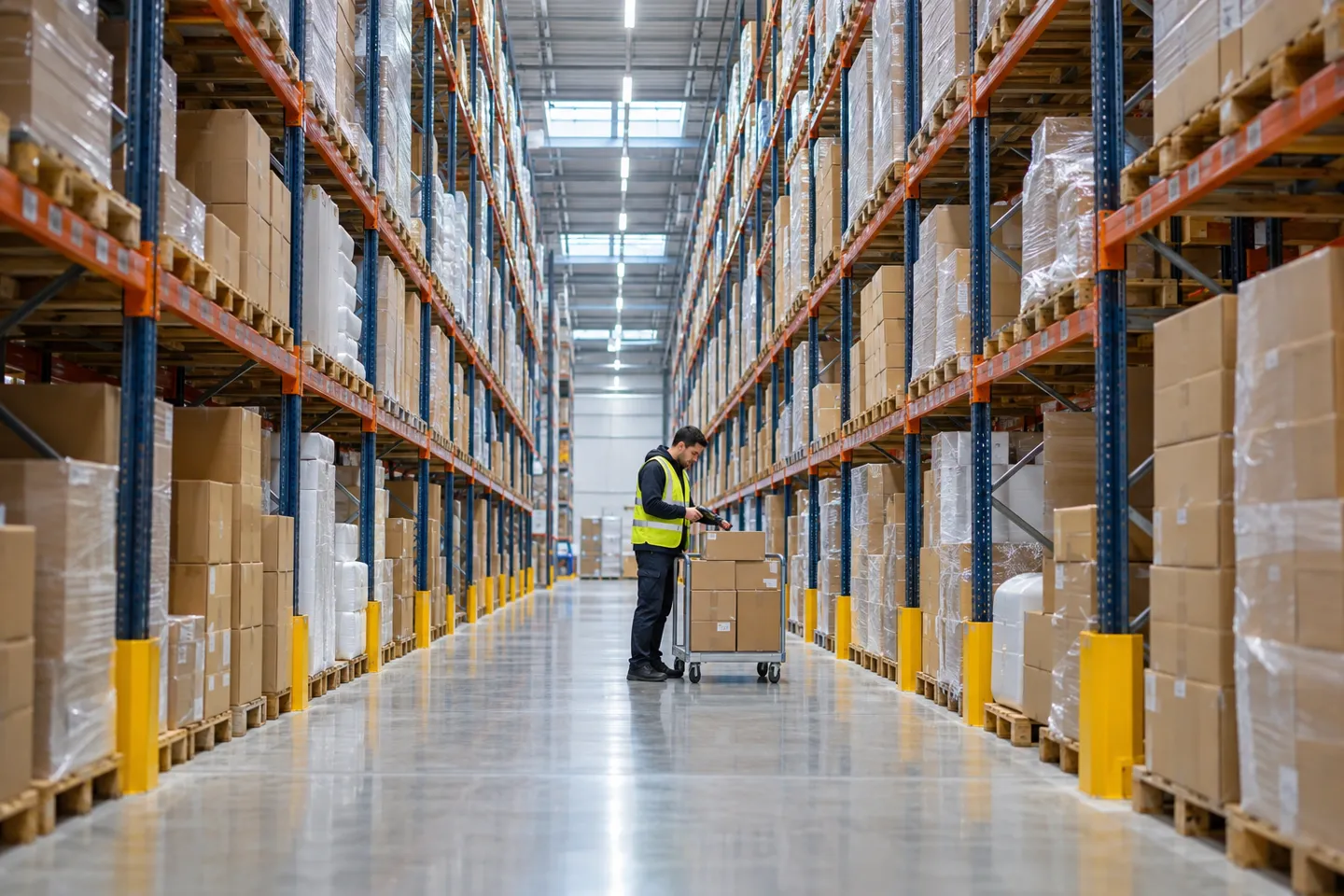
Read the last column and a ladder appears. Each step up buys more control and costs more commitment, and the rungs are visible in the table. They run from pooled to dedicated stock, from customer-paid duties to negotiated lanes, from no inspection to inspection before dispatch. What forces stores up the ladder is what happens at the border, which is where thin margins go to die.
The Border Is Where Margins Go to Die: Duties, Taxes, Brokerage, and Time
What Your Customer Actually Pays at the Door
Start with the confusion, because even well-meaning guides get it wrong. Many quote Canada’s “de minimis” as CAD $40 or $150. Those numbers are real but conditional. They belong to the CUSMA courier channel for goods shipped from the United States or Mexico. A parcel arriving from China does not travel that channel. The casual-goods lines that do apply sit lower, starting at CAD $20. Past them the full stack applies (CBSA CUSMA thresholds, 2025; CBSA casual goods by courier, 2024). One US seller considering exactly this move asked in r/dropship whether his $20–$30 orders would dodge fees into Canada. The top reply said Canada has no such policy at all, which is also wrong (r/dropship, 2025). When the forum answers contradict the guides, and both are half right, treat the border as something to calculate, not assume.
Then comes the part no beginner guide models: the courier’s own paperwork. Duty and GST/HST are the government’s take, 5 to 15 percent depending on province for the tax. Carriers add entry-preparation charges for clearing the parcel, plus a disbursement fee for fronting the money. UPS’s disbursement fee runs 2 percent of the advanced amount with a minimum of $5 (UPS value-added services rates, 2025). Entry-prep tiers climb with declared value, reaching into three figures CAD on higher-value parcels (Secureship, 2026). CBSA warns consumers directly that these clearance fees are private charges, separate from duties and taxes (CBSA, 2024).
The door cost, in one number
~40%
A CAD $25 parcel can collect roughly forty percent of its value in taxes and brokerage before your customer signs for it. One US store watched it happen across its whole Canadian book: charges approached 40% of purchase price once courier fees stacked on taxes, concentrated on its most loyal buyers.
Source: Shopify Community, 2024
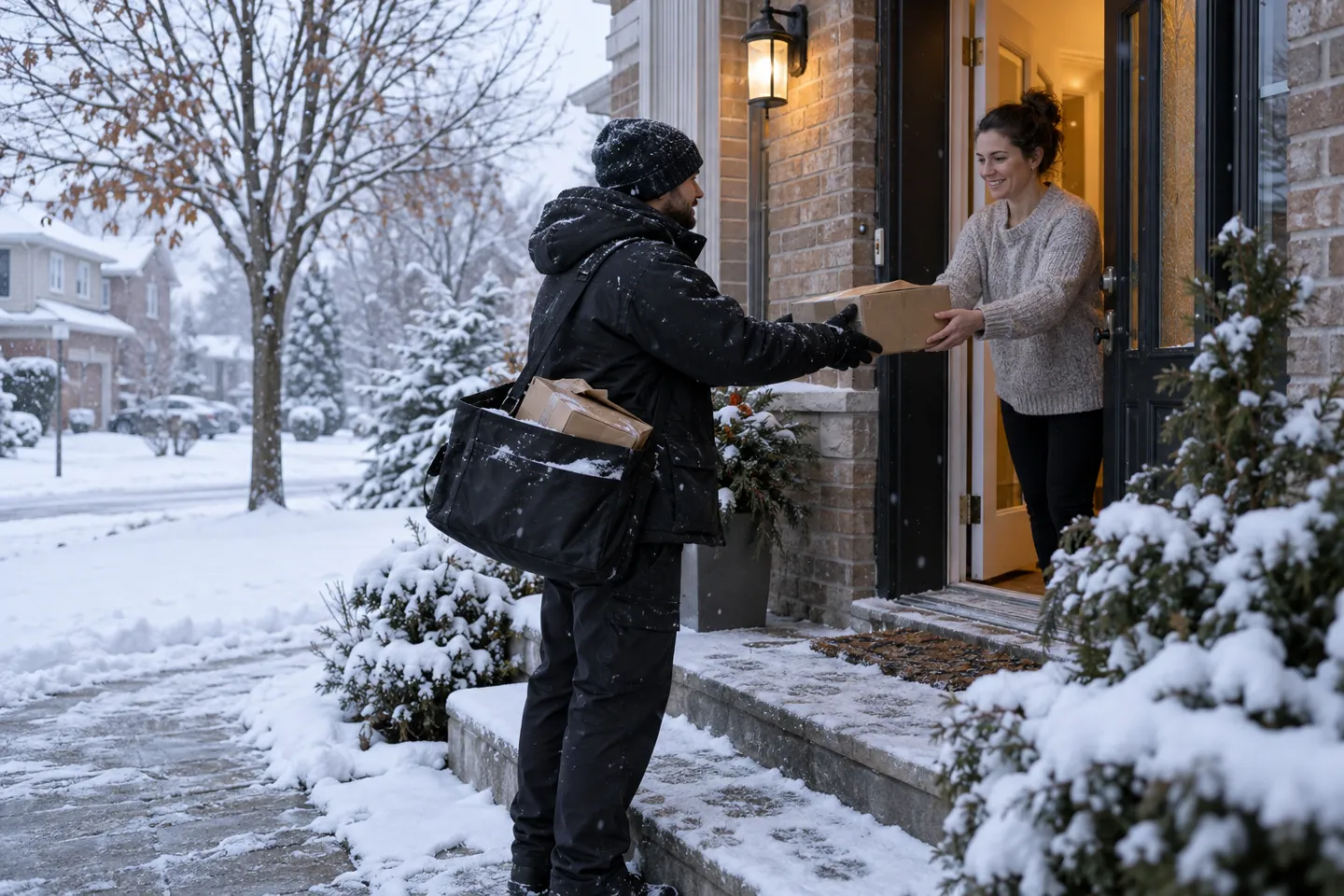
Run the arithmetic on that $25 hoodie from China. It clears the duty-free line but not the tax line: 13 to 15 percent HST lands on it. Then a brokerage-style fee arrives that can exceed both combined. Your customer either pays about forty percent over your price at the door or refuses the parcel. Either way, you are refunding a sale you already paid an ad platform to acquire. Small orders get hit hardest, because these fees barely scale down with the cart.
DAP, Forwarder DDP, or Checkout-Collected: Which Survives Your Scenario
Three ways exist to handle the border, and each fails somewhere specific. The differences are worth a table you can keep.
Three ways to handle Canadian import charges
| Approach | Who pays | Works when | Where it fails | Verify before committing |
|---|---|---|---|---|
| DAP (default on app-direct) | Your customer, at the door | Carts big enough to absorb surprise fees | Small orders get refused, support tickets pile up, chargebacks follow | Ask your forwarder for typical all-in door charges at your price band |
| Forwarder DDP line | You, baked into the shipping price | Proven winners and repeat purchases | Quotes vary in what they cover, some “DDP” skips GST/HST or brokerage | Get duty, tax, and brokerage coverage itemized in writing, per lane |
| Checkout-collected (Shopify) | Your customer, at checkout | Stores whose plan supports it and whose products carry HS codes | Needs HS codes and country of origin on every product, availability varies by plan and region | Open Settings, Taxes and duties on your plan and test with codes loaded (Shopify, 2026) |
One policy boundary puts a shelf life on any of these numbers: thresholds move. The United States suspended duty-free de minimis treatment for all countries on August 29, 2025, which means parcels entering the US now face duties no matter how small (CBP, 2026). Canada’s lines have shifted before and will shift again. Before you price anything, check the CBSA page for the current values rather than trusting this article, or any article, on autopilot.
Delivery-Time Tiers From China to Canada: Current Reality
The “two weeks from China” expectation is a fossil from the ePacket era. Current air express lanes from China to Canada run roughly 3 to 7 days door to door depending on service level (dfhlogistics, 2025; docshipper, 2026). Economy lines trade days for dollars, and peak season adds buffer to all of them. For a Shopify store the hero number matters less than two operational details. Does your supplier commit to a tier in writing? Does someone tell you about a delay before your customer does? App-direct offers neither, which is why delivery complaints cluster there.
None of these walls are unique to Canada. They are the app-direct model showing its shape at the border. Patching them one by one works until the volume makes the patching a job in itself. At that point the question stops being “which courier setting” and becomes “what structure am I buying,” which is a different purchase entirely.
Every wall in this section has a price when someone holds your stock: get your lanes quoted door-to-door, DDP with duties, taxes, and brokerage itemized.
Get a lane quote from SpeedBeeWhen to Upgrade Your Fulfillment Architecture — and What to Demand from an Agent
App-direct dropshipping is a discovery tool, and there is no shame in using it as one. Four signals say the discovery phase is over:
Four signals it is time to upgrade
- Door charges are eating sales — refusals and “pay at door” tickets are showing up in support.
- A product is proven — stable returns on ad spend, repeat purchases, reviews accumulating.
- Pooled stockouts are costing sales — you advertise and the listing is gone.
- Delivery complaints cluster — “where is my order” tickets are capping your review velocity.
The Hybrid Structure: Winners in Bulk, Long Tail on Dropship
The sellers who got past this did not abandon dropshipping; they split it. One r/ecommerce seller described the transition plainly: “I have slowly switched to buying my popular items in bulk, and drop-shipping smaller ones” (r/ecommerce). Winners get inventory held specifically for you, so the ad that works never dies because a stranger bought the last unit from a shared pool. The long tail keeps testing on per-order shipping, and a fulfillment agent holds the winners, ships both streams, and connects into Shopify so orders and stock sync automatically.
This is also where quality stops being the supplier’s problem and becomes your specification. Pre-shipment inspection against your own samples comes first; for proven winners, factory-level upgrades to materials or processes come next, the kind that do not require new molds. Suppliers who do this work publish the outcomes; one fulfillment agent’s case pages claim an 82% reduction in customer complaints after product upgrades (SpeedBee, 2026). The claim is the supplier’s, so treat it the way you would treat any claim you cannot see receipts for. Run a pilot batch and measure your own complaint rate before a winner depends on it.

The Agent Vetting Checklist: Five Hard Items
“Looking for a reliable agent” threads appear on r/dropshipping weekly, and most of the answers are vibes. These five items are checkable, and each one exists because a real failure mode creates it:
- 1Dedicated stock. Is your inventory stored and counted separately from other clients’? Ask to see your stock positions in their system, distinct and traceable. Shared pools produce the stockout signal above. Dedicated stock ends it.
- 2A processing SLA. What happens between the order landing and the parcel leaving? A concrete standard reads like “orders processed within 48 hours and handed to the carrier within 2 days.” Vague answers are data too.
- 3DDP coverage, itemized. Get duty, GST/HST, and brokerage coverage broken out per lane in the quote. A DDP price that cannot show its components is a DAP price with better marketing.
- 4QC before dispatch. What gets inspected, against what standard, and what happens to failures? A four-stage pattern is what serious operations run: match against your sample, appearance check, function test, final clean and pack check.
- 5Breakage and repricing terms. Who pays when a carrier loses or damages a parcel, and can prices change mid-agreement? Reship-or-refund on lost and damaged goods, and a commitment against sudden price increases on confirmed orders, are normal asks, not special treatment.
The boundary that keeps this honest: none of it is a mandate to upgrade. Low order values, unproven products, and ads still in testing are exactly when app-direct stays correct, because architecture costs money and unproven products have not earned inventory. Upgrade when the signals fire, not when ambition does.
The Business Math, Re-Read: Where the Next Dollar Should Go
Take the same $25 hoodie and run it through both structures. App-direct with the customer paying at the door. The buyer meets a bill that can approach forty percent on top of your price, refuses or grudgingly pays, and your chargeback rate ticks up. The ad account that found the product keeps paying full price for demand that dies at delivery. Hybrid with a quoted DDP lane: the same parcel lands duty-paid for a number you accepted in advance. The customer just signs, and the review talks about the hoodie instead of the surcharge.
The complaint ledger runs the same direction. Inspection and product upgrades cost money up front, and they attack the two lines that quietly cap a store: refunds and one-star reviews. When an agent’s published cases claim 82% fewer complaints after material and process upgrades (SpeedBee, 2026), the number that matters in your store is what a prevented complaint is worth. Count the ad spend that acquired the order, the refund, and the review you never have to answer. That figure usually beats the per-unit upgrade cost. It is why the trade pays for proven products and is reckless for unproven ones.
The third ledger is the cost of misjudging the market itself. That US dog-clothing seller who asked about Canadian small-order duties in 2025 got a wrong answer from the thread. He tested ads for a week, saw zero purchases, and concluded the market did not work (r/dropship, 2025). The wall was never demand. It was an unpriced door cost, and one quoted DDP lane would have settled the question for the price of an email.
So the sequencing writes itself. Fulfillment structure is the first lever after a product proves itself, ahead of more ad budget, because ads amplify whatever the structure already is, holes included. Discover with app-direct. Prove a winner. Move budget into stock that is yours and lanes that are quoted.
This is what the upgraded version looks like as an actual offer, because it is the one we run. At SpeedBee, each client’s stock is dedicated and separately counted: one client to a warehouse section. Orders are processed within 48 hours and handed to carriers within 2 days. A Shopify app auto-fulfills orders while syncing stock back to your store. The inventory your storefront advertises is then the inventory that actually exists (how dedicated inventory works in our warehouses, our fulfillment terms in detail). On lanes we run regularly we quote door-to-door DDP with duties and taxes itemized rather than publishing one number for every country. Canada pricing is confirmed per quote, because thresholds and lanes move, and a quote that survives that check is worth more than a promise.
Control, in the end, is not a slogan. It is three documents in your folder: a door-cost quote, a stock count, and a vetting checklist. All three are yours to demand before the next ad spend.
Put your winners on dedicated stock
SpeedBee Dropship runs one client per warehouse section, processes orders within 48 hours with 2-day carrier handoff, and quotes door-to-door DDP with duties, taxes, and brokerage itemized per lane.
Get a fulfillment quoteReferences
- Canada Border Services Agency. “Increase to Low-Value Shipment Thresholds and Other Measures (CUSMA).” Updated November 25, 2025. https://www.cbsa-asfc.gc.ca/services/cusma-aceum/lvs-efv-eng.html
- Canada Border Services Agency. “Importing Casual Goods by Courier.” October 18, 2024. https://www.cbsa-asfc.gc.ca/import/courier/lvs-efv/prsn-eng.html
- Canada Revenue Agency. “When to Register for and Start Charging the GST/HST.” Updated 2026. https://www.canada.ca/en/revenue-agency/services/tax/businesses/topics/gst-hst-businesses/when-register-charge.html
- UPS. “Value-Added Services Rates and Other Charges.” 2025. https://www.ups.com/media/us/currentrates/rate-pdf/imaddl.pdf
- Secureship. “UPS Import Fees Canada: Duties & Customs.” September 14, 2026. https://secureship.ca/ups/customs-duties
- Shopify Help Center. “Duties and Import Taxes.” 2026. https://help.shopify.com/en/manual/international/duties-and-import-taxes
- U.S. Customs and Border Protection. “Suspending Duty-Free De Minimis Treatment for All Countries.” Updated February 27, 2026. https://www.help.cbp.gov/s/article/Article-1919
- Shopify Community. “Shipping to Canada Is a Disaster.” June 8, 2024. https://community.shopify.com/t/shipping-to-canada-is-a-disaster/329904
- Reddit, r/dropship. “Switching from US to Canada for Dropshipping—Need Some Advice.” February 10, 2025. https://www.reddit.com/r/dropship/comments/1im9fmc/switching_from_us_to_canada_for_dropshipping_need/
- Reddit, r/ecommerce. “Dropshipping in Canada.” https://www.reddit.com/r/ecommerce/comments/rwfha3/dropshipping_in_canada/
- CanadiansInternet. “2026 Top 8 Shopify Drop Shipping Apps for Canadian Sellers.” January 7, 2026. https://canadiansinternet.com/shopify-drop-shipping-apps-canadian-sellers/




 English
 Spanish
 French
 German
 Italian
 Polish