
What a Pet Dropshipping Supplier Actually Does
At 9:40 on a Tuesday night, a customer in Manchester pays for a silicone chew toy and a collapsible water bowl from your Shopify store. She expects a tracking number within a day and her parcel inside the week. Between her payment and her doorstep sits a company you may never have met. It stores the toy, checks it, packs it, and puts it on a plane.

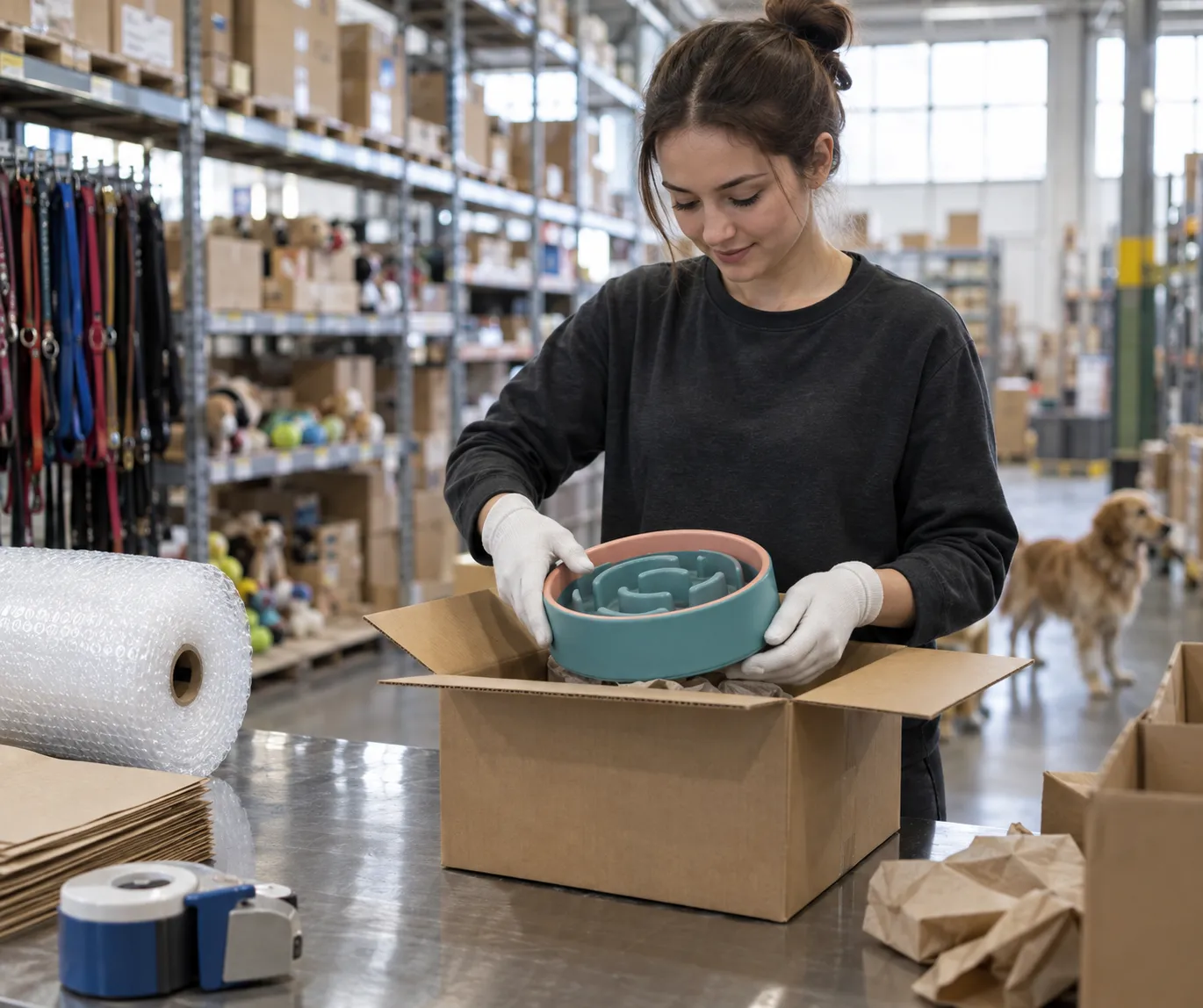
That company is what people mean by a pet dropshipping supplier, and in practice it does four jobs. It holds or sources stock so an order can actually ship. It inspects goods before they leave, and that matters more in pet products than in almost any other niche. A chew toy that splits into small pieces is not a return request. It is a vet bill and a one-star review that names your store. It packs to your standard, plain or branded. And it ships cross-border, clears customs, and hands off to a local carrier who knocks on her door.
One boundary before going further. This guide covers physical pet goods: toys, beds, grooming kits, apparel, training gear, cleaning supplies. Selling live animals is a different business with different laws, and none of the suppliers discussed here does it.
Here is the problem with every best pet dropshipping suppliers list you have already skimmed, including the good ones. They line up companies that look similar and are not. A marketplace with shared inventory, a subscription app, an American wholesaler, and a China-based agent holding stock for you answer to completely different economics and fail in completely different ways. Treat them as five supply models, work out which model your store actually needs, and the shortlist almost writes itself. That is what the rest of this guide does.
The Five Supply Models Behind Every “Pet Supplier” List
Every pet supplier you will meet runs on one of five models. The model decides your delivery times, your margins, and the way the arrangement will eventually break. Most stores start with Model 1 or 2, which is why the popular lists are crowded with them. The stores that survive quietly move down the list.
Model 1: Shared-Inventory Marketplaces ⭐
You list a product from AliExpress or the CJ marketplace, and when an order arrives you buy it from whatever warehouse currently holds it. Upfront cost is close to zero, the pet catalog is effectively endless, and for a first store this is a reasonable place to learn. The catch is structural: the inventory is shared with every other seller on the platform, and nothing is reserved for you. Dropshippers who scaled on this model describe the pattern after it breaks (r/dropshipping, 2026). Margins get eaten by middle-layer fees. Shipping drags past 14 days. Disputes pile up because tracking goes dark for days at a time. Stock-outs, surprise price increases, and silent de-listings are the three standard failures, and all three trace back to the same root: the supplier never committed stock to you in the first place.
Model 2: Catalog and App Platforms (Zendrop, Spocket, Doba, AutoDS)
These wrap marketplace sourcing in a subscription and a Shopify app: one-click product import, automated order routing, and some US warehouse options on selected SKUs. For a solo operator they remove real work, and plenty of stores run fine on them. Two ceilings remain, though. First, the platform is still a middle layer. Your margin pays its subscription and its markup before anything reaches you. Store owners who outgrow it say so bluntly. “Do NOT recommend platforms like Zendrop, Spocket, AutoDS. Low profit margins,” wrote one seller hunting for genuine wholesalers instead (r/dropshipping, 2026). Second, integration becomes a failure mode of its own. One seller on the Shopify Community forum documented how Syncee re-uploaded products he had deleted, reset its own prices, and scrambled his Google Ads campaigns before he noticed (Shopify Community, 2021). A vetted catalog is not the same as someone watching your stock.
Model 3: Local Wholesale Suppliers (TopDawg, PetStoresUSA, Essential Pet Products, BigBuy)
Real wholesalers with domestic warehouses work on a different basis. TopDawg lists over 500,000 products across 12 departments and ships from US wholesalers with tracking inside 24 hours (TopDawg, 2026). PetStoresUSA has specialized in pet category dropshipping for decades, Essential Pet Products sells at true wholesale pricing, and BigBuy covers European stores from Spain. Delivery is genuinely fast, usually one to five days domestically, and the goods are retail-grade. The trade-off is the product itself. These are catalog items your customers can also find on major retail sites, so price comparison is one click away. Margin sits thin, especially on commodity pet goods. Wholesale accounts can also require approval or a paid tier before you see real prices. This model solves speed and concedes margin, which is a fine trade for proven, restocked goods and a bad one for everything else.
Model 4: Direct-Source Agents with Dedicated Inventory
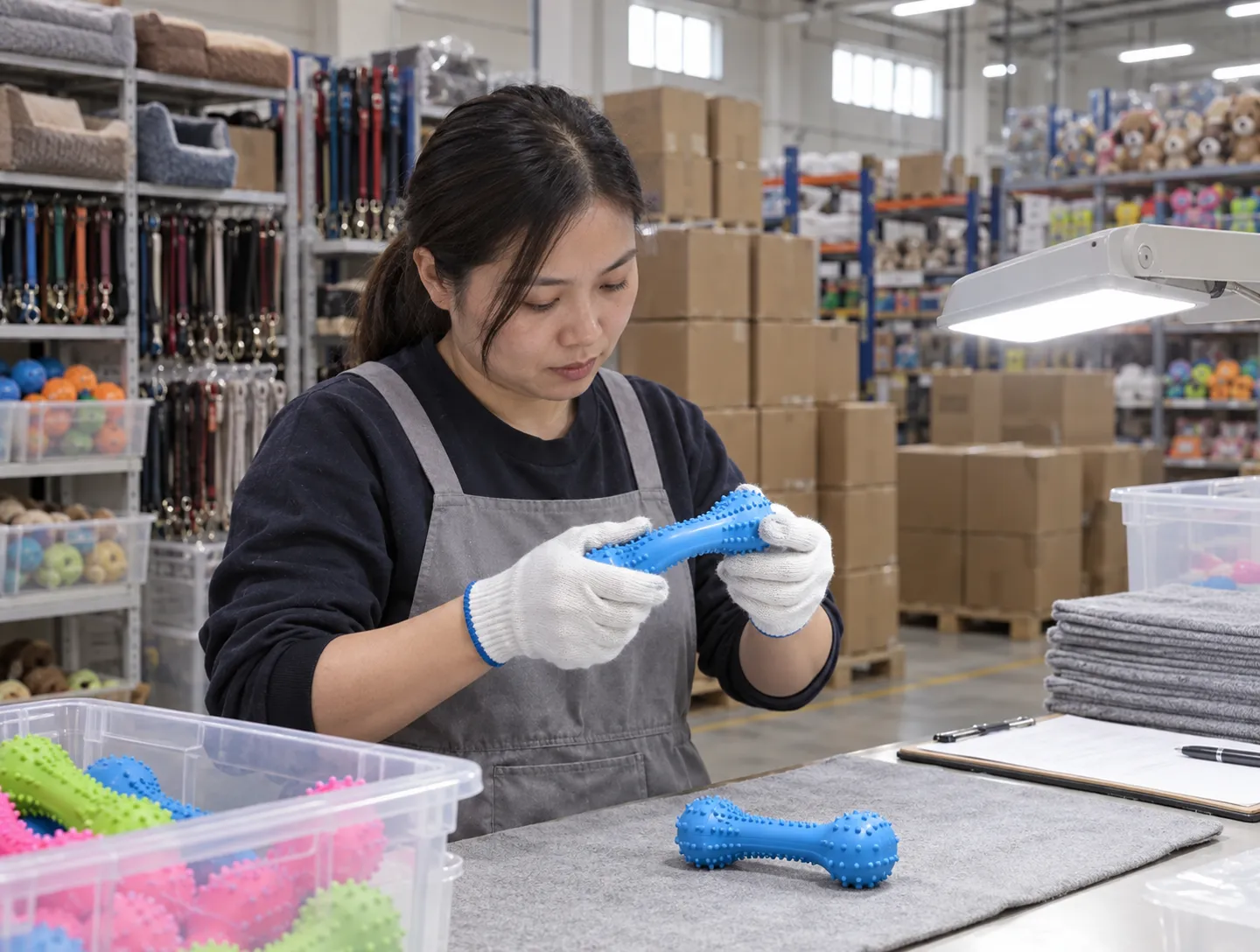
A China-based sourcing agent is a different animal from the first three. The good ones work from manufacturing clusters. Most pet supplies come out of Guangzhou, Shenzhen and Dongguan in Guangdong province, where OEM and ODM pet factories sit within reach of five international airports. Instead of shared stock, you reserve inventory under your own account, so a viral week cannot strand your bestseller. Quality control happens before shipping rather than after the customer complains. Goods are checked against your samples, inspected for appearance and function including battery items, then cleaned and packed to your spec. The stronger agents go further. They visit the factory to upgrade materials or processes when a product keeps generating complaints. They print your brand on the packaging and run dedicated Europe lanes that deliver door-to-door in about a week. The quiet difference is accountability: with a big marketplace, a problem ticket dies in a queue; with an agent, a named person answers.
The fifth model sits at the top of the ladder. Brand-direct wholesale programs, like Petco’s or Chewy’s, give you established products at distributor terms, but approval is slow, conditions are tight, and the paperwork only pays off once your volume and negotiating power are real. Keep it on the map; park it for now.
The matrix below compresses the whole station into one view. Find the row that matches your store today, then note the column that will eventually push you to move.
Five pet dropshipping supply models at a glance
| Supply model | Best for | Delivery expectation | Fails when |
|---|---|---|---|
| Model 1 · Shared marketplaces (AliExpress, CJ) | First store, testing products at near-zero cost | 10–20+ days | Stock-outs, price hikes, silent de-lists; disputes once shipping slips past two weeks |
| Model 2 · Catalog & app platforms (Zendrop, Spocket, Doba, AutoDS) | Solo operators who want automation fast | 5–15 days | Margin capped by the middle layer; integrations drift without supervision |
| Model 3 · Local wholesalers (TopDawg, PetStoresUSA, Essential Pet Products, BigBuy) | Stores selling proven goods in the US or EU | 1–5 days domestic | Thin margins on identical retail products; account approval gates |
| Model 4 · Direct-source agents with dedicated inventory | Category-focused stores building a brand | 4–7 days on UK/Europe lanes, 3 days express | Needs reserved stock and demand forecasting; unverified agents fail exactly like Model 1 |
| Model 5 · Brand-direct wholesale (Petco, Chewy programs) | High-volume stores with leverage | Varies by program | Slow approval and tight terms; overhead only pays at scale |
Speed vs. Margin: The Trade-Off Lists Never Resolve
Spend an evening in any dropshipping forum and you will find the same standoff. American sellers argue for local wholesalers because nothing beats a two-day delivery, then discover the margin on pet goods that PetSmart also stocks. Sellers working with China-based sourcing defend the margin, then lose a chunk of it to refunds when parcels take two weeks. “Fast shipping is easy, but keeping decent margins at the same time is where it gets hard,” as one pet-niche seller summed it up (r/dropshipping, 2026). Both halves are right, which is why the debate never ends. What has changed is that the choice is no longer binary.
The signals that it is time to change models
Model changes are triggered by numbers, not moods. Four thresholds cover most stores, and they are practitioner rules of thumb rather than laws.
The four thresholds
- 1Orders holding steady above 30–50 a month
- 2Repeat-purchase rate above 15%
- 3Disputes or chargebacks creeping toward 2%
- 4Stock and tracking complaints outnumber product complaints
Any two of those appearing together means your supply model, not your ads, has become the bottleneck. Stores that miss the signal pay for it later. The marketplace model that worked at ten orders a month is the same one generating refund requests at two hundred. Its failure modes are all volume-dependent.
The third option most lists skip
The stale part of the speed-versus-margin debate is the assumption that shipping from China still means two weeks. Dedicated lanes changed that arithmetic. Freight capacity out of South China is dense, and five international airports sit within trucking distance of the Guangdong factory belt. Agents that consolidate daily volumes run fixed Europe routes with customs cleared at the destination.
Delivery to the UK, door-to-door, customs included
4–7 days
Dedicated agent lane
3 days express on the same door-to-door lane
14+ days
Shared marketplace parcel
tracking gaps common
1–5 days
US wholesaler
domestic only
The concrete version: one Guangzhou-based agent publishes 4–7 day door-to-door delivery to the UK on its standard Europe lanes (SpeedBee FAQs, 2026). Express shipments arrive in as fast as 3 days, with customs charges included in the quote. The cost structure matters as much as the speed. Direct agents quote product and shipping as separate lines. You can see what the factory charges and what the lane charges, and both numbers are negotiable in a way a marketplace listing never is.

What a growing pet market does to this decision
Zoom out and the stakes get clearer. Fortune Business Insights puts the global pet care market at USD 273.42 billion in 2025, growing to USD 499.06 billion by 2034 at a 7.06% CAGR (Fortune Business Insights, 2026). Europe alone contributed about USD 77.83 billion of that 2025 total, roughly 28% of the world market, and the UK market alone passed USD 21 billion (Fortune Business Insights, 2026). A category expanding at that pace rewards stores that lock in supply structure early, because it is getting more crowded, not less. The practical reading: as pet spending grows, Model 3’s catalog goods get more price-competitive. Stores running reserved stock with controlled quality keep both the margin and the reviews.
Local wholesaler vs. direct-source agent
| Dimension | Local wholesaler (Model 3) | Direct-source agent (Model 4) |
|---|---|---|
| Speed | 1–5 days domestic, overseas not offered | 4–7 days door-to-door UK/Europe, 3 days express |
| Margin | Thin, retail-comparable catalog pricing | Factory price plus lane cost, wider spread |
| Stock | Catalog shared with other retailers | Reserved under your account |
| Quality control | None that you direct | Pre-shipment inspection against your samples |
| Branding | None or invoice-level | Packaging, inserts, cards, hangtags |
| Accountability | Account manager or helpdesk | Named contact, escalation to decision-makers |
Best Pet Dropshipping Suppliers by Model (2026)
Match your model first, then read down its rows. The names below are entry points, not endorsements. The column that will actually save you money is the last one: it lists what to verify before you send your first order. Suppliers that require reserved inventory do not appear in the third-party table, because they quote per store rather than list a catalog. The paragraph after the table covers how that model works in practice.
Pet dropshipping suppliers by supply model
| Supplier | Model | Strengths | Pet-category fit | What to confirm before committing |
|---|---|---|---|---|
| AliExpress | 1 | Largest pet SKU pool anywhere, zero entry cost | Toys, accessories, budget grooming | Tracking continuity and dispute window before scaling past trial orders |
| CJ Dropshipping | 1 | Marketplace plus optional warehouses, broad pet catalog | Toys, bowls, apparel | Which warehouse physically holds your SKUs and its ship-out time |
| Zendrop | 2 | One-click import, US warehouses on select items | Accessories, gadgets | Real stock location and true margin after fees on pet goods |
| Spocket | 2 | US/EU supplier focus, branded invoices | Beds, apparel on EU/US stock | Per-supplier pet quality and subscription cost against your margin |
| Doba | 2 | Long-running catalog aggregator | Mixed pet supplies | Per-SKU origin country and realistic delivery estimate |
| AutoDS | 2 | Full automation and price monitoring | Mixed pet supplies | Which fulfillment partner actually ships each product |
| TopDawg | 3 | 500,000+ US products, retailer-grade operation | US wholesale pet goods including beds and treats | Account tier fees and any pricing rules that cap your markup |
| PetStoresUSA | 3 | Decades in the pet category | US pet staples | Per-order dropship fees and processing cutoffs |
| Essential Pet Products | 3 | True wholesale pricing on consumables | Toys, consumables | Minimums, account approval, restock cadence on top sellers |
| BigBuy | 3 | EU wholesale with dropshipping API | Pet accessories for EU stores | VAT and DDP handling, and actual UK lane delivery times |
One warning about this table: Models 1 through 3 are all catalog businesses, which is why they can be listed like this. Model 4 cannot, because a direct-source agent builds its offer around your products, your stock, and your lanes rather than a public catalog. If Model 4 is where your store is heading, that is the layer we work in at SpeedBee. Your inventory sits reserved in our own Guangzhou warehouses, never shared, and synced live with your Shopify store. Orders are processed within 48 hours, and parcels leave inside two days. Our Europe lanes deliver door-to-door to the UK in 4–7 days with customs cleared. Our pet supplies program covers toys, grooming, beds and training gear sourced directly from Guangdong’s factory belt (fulfillment and shipping guarantees) (pet supplies dropshipping program).
Model 4 quotes per store, not per catalog — tell us which pet products you sell and we will map reserved stock, QC and a 4–7-day UK lane to them.
How to Vet a Pet Supplier Before You Commit
Whichever model you choose, the verification sequence is the same, and it starts smaller than most stores expect. Place one or two real orders through the full chain before you commit any volume. Time every stage yourself, from pickup to linehaul to customs to last-mile delivery, and photograph the packaging the day the parcel arrives. One round trip through the chain tells you more than a month of chat logs.
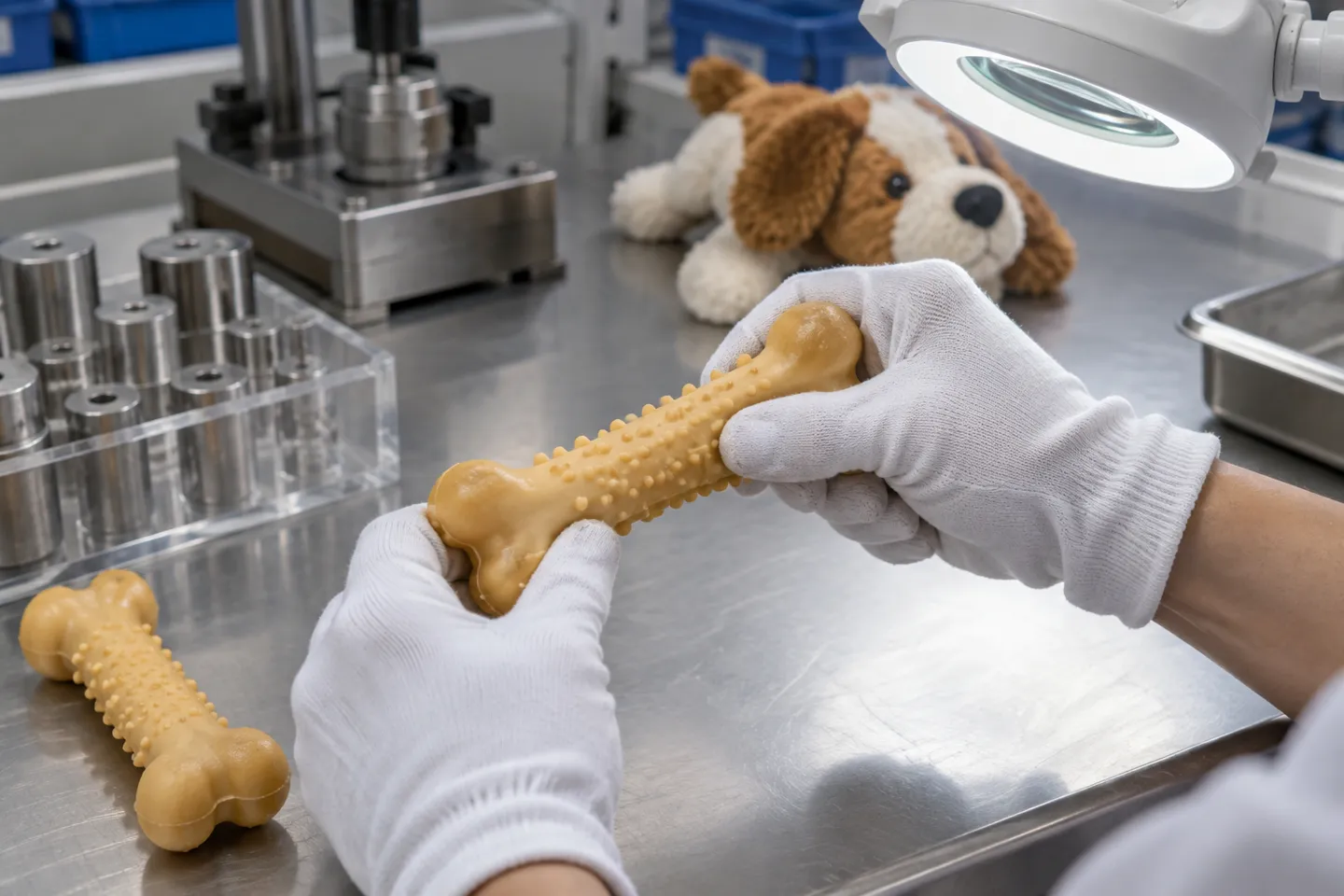
The second check is specific to pet goods: ask quality questions by category and listen to how the answer is phrased. For plush toys, ask about seam strength and whether stuffing is vacuum-packed for transit. For chew products, ask what pull or small-parts testing the factory runs, because choking hazards are the fastest route to a refund storm. For anything electronic, ask whether batteries are function-tested before dispatch. For textiles, ask about thread trimming and color consistency against your sample. A supplier who answers in those terms has an inspection process. One who answers “very good quality, don’t worry” is telling you the check happens after your customer opens the box.
Third, pin down the after-sales terms in writing, and three questions cover most of it. If a parcel is lost or arrives damaged, who pays, and is the reshipment or refund free? Once an order is confirmed at an agreed price, can that price be changed unilaterally? And when something goes wrong, does a ticket queue answer, or does a named person you can actually reach?
Finally, demand last-mile transparency before your first order. Which carrier delivers in the destination country? Does tracking stay continuous end to end? Is your quote DDP with customs already included? Ambiguity on any of these is cheap to fix before you ship and expensive after.
Before you send volume
- 1–2 trial orders timed end to end
- Packaging photographed on arrival
- QC questions asked by pet category, answered in inspection terms
- After-sales terms in writing: free reship or refund, no unilateral repricing, named contact
- Last-mile carrier named, continuous tracking, DDP confirmed
Run this list against two suppliers and the gap between them is obvious within a week. Most stores that get burned skipped exactly one item on it.
The Pet-Niche Supply Chain as a Business Decision
It helps to stop thinking of supplier choice as procurement and start treating it as the store’s operating structure. In pet retail, the gap between procurement price and delivered quality is where the profit actually lives. A unit price that is 30% cheaper looks like margin. Then you count the disputes, the refunds, and the reviews that quietly bend your conversion curve. The marketplace pattern described earlier is not bad luck. It is the predictable output of a structure where nobody holds stock for you: margins get eaten, shipping slips past two weeks, and disputes pile up.
Quality control, done early, is measurable money. One China-based agent publishes case results where complaint rates fell by up to 82% after material upgrades and factory process changes on existing products (published case library, 2026). Read that number commercially rather than sentimentally: fewer complaints means fewer refunds, fewer chargebacks, and ad accounts that stay healthy because customers stop posting unboxing disasters. The same logic explains why reserved stock pays for itself once volume is real. Inventory set aside under your account ties up cash; there is no way around that. Free storage windows of up to 6 months while you keep shipping soften the carry cost considerably. The honest decision rule: if your store cannot yet justify one pallet of bestseller stock, stay in Model 2 or 3 and revisit at higher volume. Once it can, shared inventory becomes the expensive option, because you pay for its failures in disputes instead of paying for stock in advance.
The price gap is not the profit.
A cheaper unit price that adds disputes, refunds, and one-star reviews is a more expensive supplier. Count the complaint cost before you count the invoice.
We built our after-sales the way we would want it as a store owner, because store owners are who we serve. Parcels lost or damaged in transit are reshipped or refunded at no charge. A confirmed order is never quietly repriced mid-season. And if any of that slips, our CEO sits in every client work group, so the escalation path ends at a person who can fix it (after-sales guarantees). That is the standard worth demanding from whichever agent you shortlist.
Pick the supply model first, verify with a trial order, and the best supplier list for your store becomes short very quickly.
References
- Fortune Business Insights. “Pet Care Market Size, Share | Industry Report [2026-2034].” 2026. https://www.fortunebusinessinsights.com/pet-care-market-104749
- TopDawg. “Dropshipping Pet Products from U.S. Wholesale Suppliers.” 2026. https://topdawg.com/dropshipping/wholesale-products/pet-supplies-products
- r/dropshipping. “Looking for US-based pet dropshipping suppliers for Shopify (fast shipping + decent margins).” 2026. https://www.reddit.com/r/dropshipping/comments/1s7agdf/looking_for_usbased_pet_dropshipping_suppliers/
- r/dropshipping. “New store, $2k a day in under a week. These are the principles I followed.” 2026. https://www.reddit.com/r/dropshipping/comments/1tnoqiy/new_store_2k_a_day_in_under_a_week_these_are_the/
- Shopify Community. “Can you recommend fast-shipping dog suppliers in the USA?” 2021. https://community.shopify.com/t/can-you-recommend-fast-shipping-dog-suppliers-in-the-usa/75818
Put your pet store on reserved stock
Trial the full chain with one or two real orders: dedicated inventory, category-level QC and 4–7-day UK lanes, quoted for your product list.
Start a trial order


 English
  Spanish
  French
  German
  Italian
  Polish