
The quote lands in your inbox looking harmless. Factory-direct prices, fast worldwide shipping, quality guaranteed, flexible MOQ. You are about to put a product that people apply to their faces on the strength of that paragraph. Cosmetics punish vague supplier claims faster than almost any other niche. A cream triggers reactions. A mascara arrives dried out. A bestseller goes out of stock the same week your ads start working. Before you compare prices with anyone, it helps to know that “cosmetics dropshipping supplier” is not one kind of company. It is at least four, and they differ in who actually holds the inventory and who carries the risk when something goes wrong.

Four Kinds of Suppliers Behind “Cosmetics Dropshipping”
Behind that one word sit four different structures, and most stores never notice the difference until something breaks.
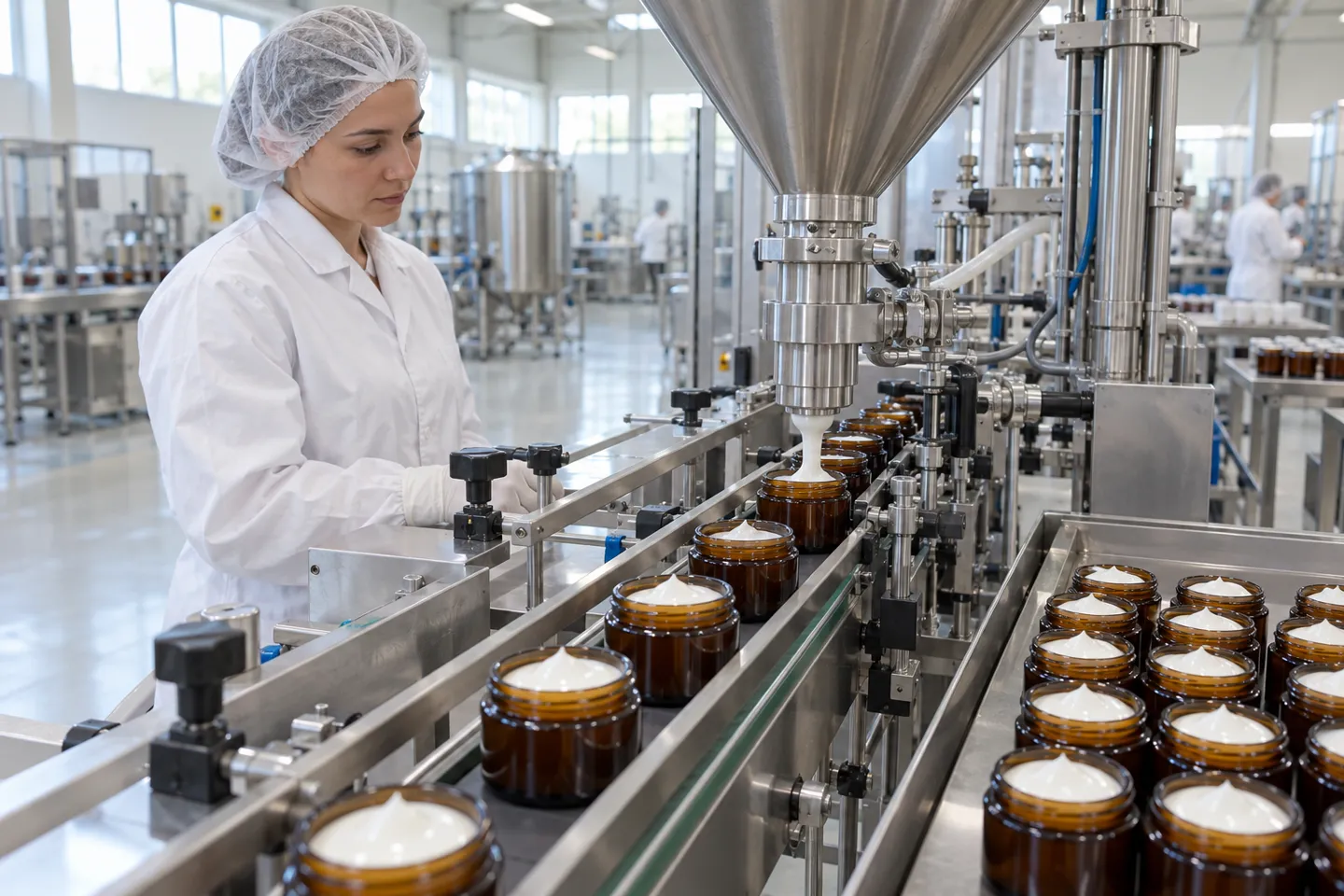
Private-label platforms manufacture their own formulas and print your brand on them. You pick from their catalog, they produce per order, no inventory and often no minimums. Blanka and Selfnamed are the names most stores meet first here.
Brand-name resale catalogs list cosmetics that already exist under brands consumers recognize. Syncee and HertWill work this way, connecting you to wholesale suppliers of branded stock.
General marketplaces are the classic start: AliExpress, CJdropshipping, and similar platforms with a beauty category somewhere between phone cases and kitchen gadgets.
Sourcing-and-fulfillment agents are the fourth structure, and the least visible in search results. An agent in China sources from factories, verifies them, warehouses your stock, and ships each order under your rules. You are not buying from a catalog; you are renting a supply chain.
The differences that matter are structural, not cosmetic: who holds stock before a sale, and who is liable when a batch disappoints.
Four supplier structures at a glance
| Structure | Who holds stock | Who carries quality risk | Typical stage |
|---|---|---|---|
| Private-label platform (Blanka, Selfnamed) | platform produces per order | platform, capped by their fixed formulas | testing a brand idea |
| Brand-name resale catalog (Syncee, HertWill) | wholesale supplier | original brand | reselling recognized names |
| General marketplace (AliExpress, CJ) | marketplace sellers | shared and opaque | first experiments |
| Sourcing-and-fulfillment agent | your dedicated stock | shared with you, controllable | scaling a proven niche |
Is the niche worth it? Beauty still prints margins that general merchandise envy, and demand is not the problem. The stores that fail here rarely die from weak demand. Those three failures run through everything below, so keep them in mind as the models get compared.
Where cosmetics stores actually fail
The Real Trade-offs: Cost, Compliance, Fulfillment, and Branding
Every model markets itself as the obvious choice, which is exactly why the comparison needs to happen on your spreadsheet rather than their landing page.
Cost is the first place the stories fall apart. “Free to start” usually means the platform earns from subscription tiers, per-item branding fees, or card and fulfillment add-ons that only appear at checkout. Private-label platforms charge monthly plans for brand removal features. Marketplaces look cheap per unit until shipping fees and long delivery promises start showing up in refund requests. Agent quotes bundle product and freight separately, so the number is larger but the parts are visible. The honest comparison is landed cost per order at your real volume, including every recurring fee.
Fulfillment is the trade-off nobody frames correctly. Local US or EU fulfillment is fast and compliant but caps you at the platform’s catalog and formulas. Direct shipping from China gives you the widest product range and the best unit economics. On express lines it delivers to UK and EU doors in four to seven days. What it demands in return is paperwork discipline, because regulators have stopped being patient about it.
The lane check most stores skip. Alcohol-heavy cosmetics such as perfumes ride dangerous-goods rules on many air lanes. Confirm the lane accepts your category before you build a store around it.
Compliance is now the sharpest edge in this comparison. Under MoCRA, the facility manufacturing a cosmetic for the US market must register with FDA (FDA, 2026). The brand’s responsible person must also list every marketed product with its ingredients and update that listing annually. In Great Britain, every cosmetic product needs a UK-established Responsible Person and a notification through the SCPN service before sale (GOV.UK, 2021). Europe runs the parallel CPNP regime under Regulation 1223/2009 (GOV.UK, 2026). Private-label platforms hold these files for their formulas. If you source yourself, the files are yours to obtain, and an agent can gather them from the factory, but only if you ask before the first order.
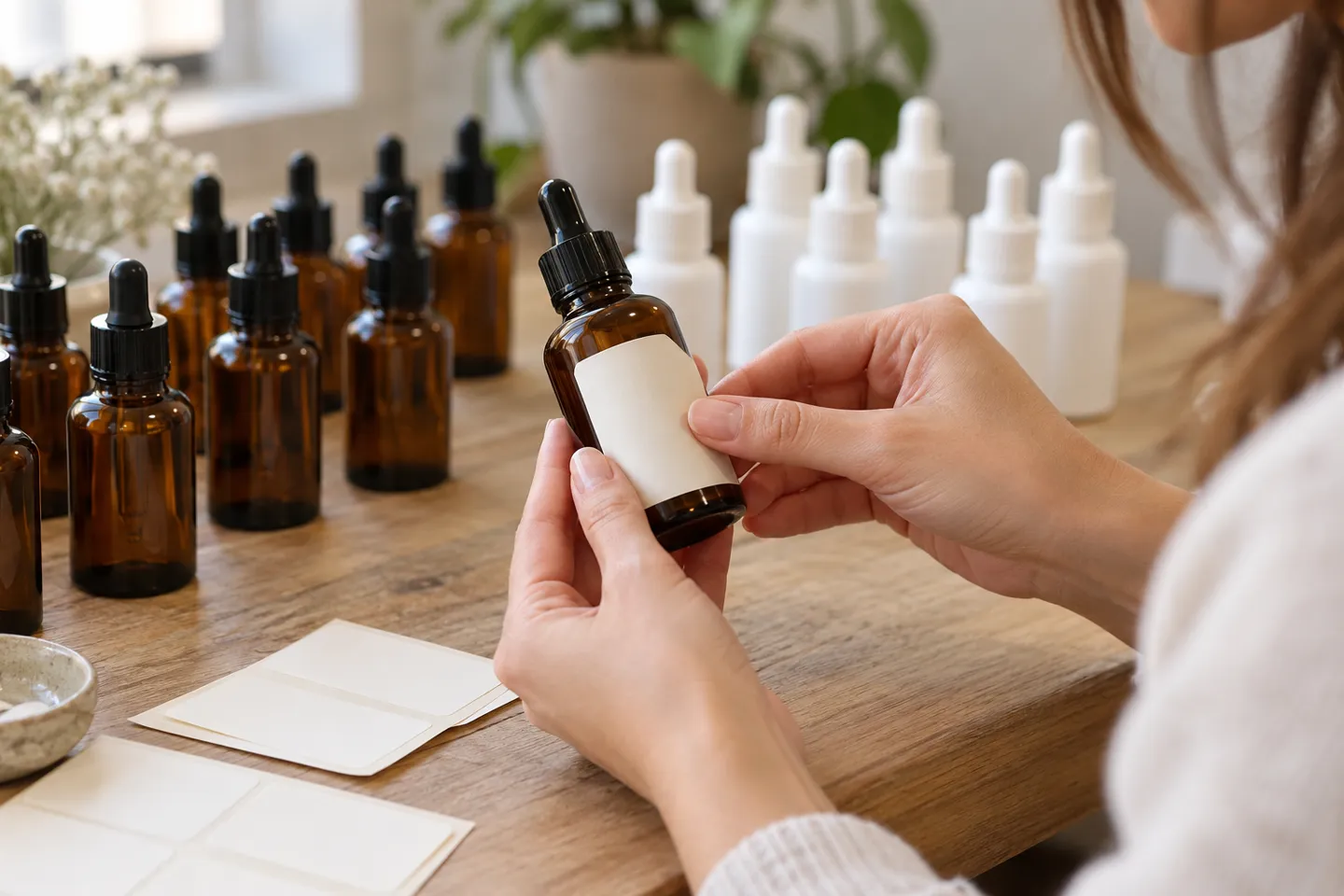
Branding is the quiet ceiling. A catalog you share with every competitor can carry your logo. It cannot carry differentiation. One r/Dropshipping thread puts the complaint plainly: the platform “wants you to put your logo on the same products everyone else is using” (r/Dropshipping, 2024).
The trade-off matrix: where each model breaks
| Model | Cost truth | Compliance burden | Fulfillment reach | Branding ceiling | Breaks when |
|---|---|---|---|---|---|
| Private-label platform | subscription + per-item branding fees | held by platform for fixed formulas | US/EU production, domestic speeds | your logo, their formulas | you need differentiation or custom formulas |
| Brand resale catalog | wholesale margin, thin | mostly yours, permissions vary | supplier-dependent | none, the brand belongs to someone else | the brand owner raises prices or pulls stock |
| General marketplace | cheapest units, costliest refunds | yours entirely, usually ignored | long lanes, unpredictable | none | volume meets a stockout |
| Sourcing agent | visible bundle, product + freight | shared: factory provides, you verify | China direct, 4-7 days UK/EU express | capped by your own supplier management | your verification steps get skipped under time pressure |
Read the last column twice. Each model works until a specific condition appears, and the condition, not the model, is what decides whether you need to change. That is why the next step is not choosing harder. It is verifying earlier.
Verify Before You List: Documents, Samples, and Red Flags
Two failures explain most of what goes wrong in cosmetics dropshipping, and neither starts with a bad ad.
The first is a product failure. A skincare seller on r/Dropshipping described customers starting to react badly to components of one cream, and the store closing over it (r/Dropshipping, 2026). No document check, no batch test, just a listing that went live and faces that paid for it.
Enforcement is the second failure mode. A December 2025 sweep in Cincinnati tells that story from the government side. CBP and FDA officers seized 398 shipments of undeclared contact lenses plus 50 more shipments of misbranded FDA-regulated products (CBP, 2025). Misbranded goods in the haul included skin care items, injectables, and dermal fillers. Combined retail value: $407,784.
One US port, one operation
448
shipments of fake or unapproved beauty and health products
$407,784
combined retail value in a single enforcement sweep
Counterfeit cosmetics are not a corner case; they are an active enforcement target. Source: U.S. Customs and Border Protection, December 2025.
Both failures share a root: the product reached customers before anyone verified it. What fixes both is a checklist applied in order.
The Document Checklist
Get these five files before a single product goes live. Each one answers a specific question.
- Full INCI ingredient list, per product, from the actual manufacturer. Your labels must show it, and allergy disputes will hinge on it.
- MSDS (Material Safety Data Sheet). Carriers use it to decide how a product ships and whether your lane accepts it at all.
- Batch or third-party test report. It is the difference between “the factory says it is safe” and “this batch was tested.”
- US market evidence: the manufacturing facility’s FDA registration and the product listing under MoCRA, or written confirmation of who holds them.
- UK/EU evidence: the Responsible Person details and the SCPN or CPNP notification reference for each SKU.
The Verification Chain, Step by Step
Documents tell you what the factory claims. What follows tells you what actually happens.

- Sample, tested by hands and skin. Order it, use it, and have someone else use it. A pressed powder that sheds or a pump that leaks tells you more than any certificate.
- Pre-shipment inspection on the first bulk order. Either a third-party inspection or the supplier’s own documented check against your reference images, colors, and function.
- Packing video on your actual spec. One video of how the first carton is packed, protection included, before the batch leaves. It settles most “arrived damaged” disputes before they exist.
- After-sales terms in writing. What happens when a carrier loses a parcel, when a customer sends photos of breakage, when a batch is genuinely defective: who reships, who refunds, and how fast.
Before you list
- INCI list
- MSDS
- batch test
- MoCRA registration and listing evidence
- RP and SCPN/CPNP notification
Before you scale
- sample pass
- pre-shipment inspection
- packing video
- written after-sales terms
Red Flags That End the Conversation
Some answers should stop the negotiation, not start a discount discussion.
- “Our formula is proprietary” when you ask for the INCI list. Every regulated market requires it; refusal means they do not have it.
- No batch documentation of any kind, offered with a shrug about “factory quality.”
- After-sales promises that live in a chat window and nowhere in a contract.
- A catalog pitched as “same products, your logo,” which you now know is a differentiation problem wearing a supplier costume.
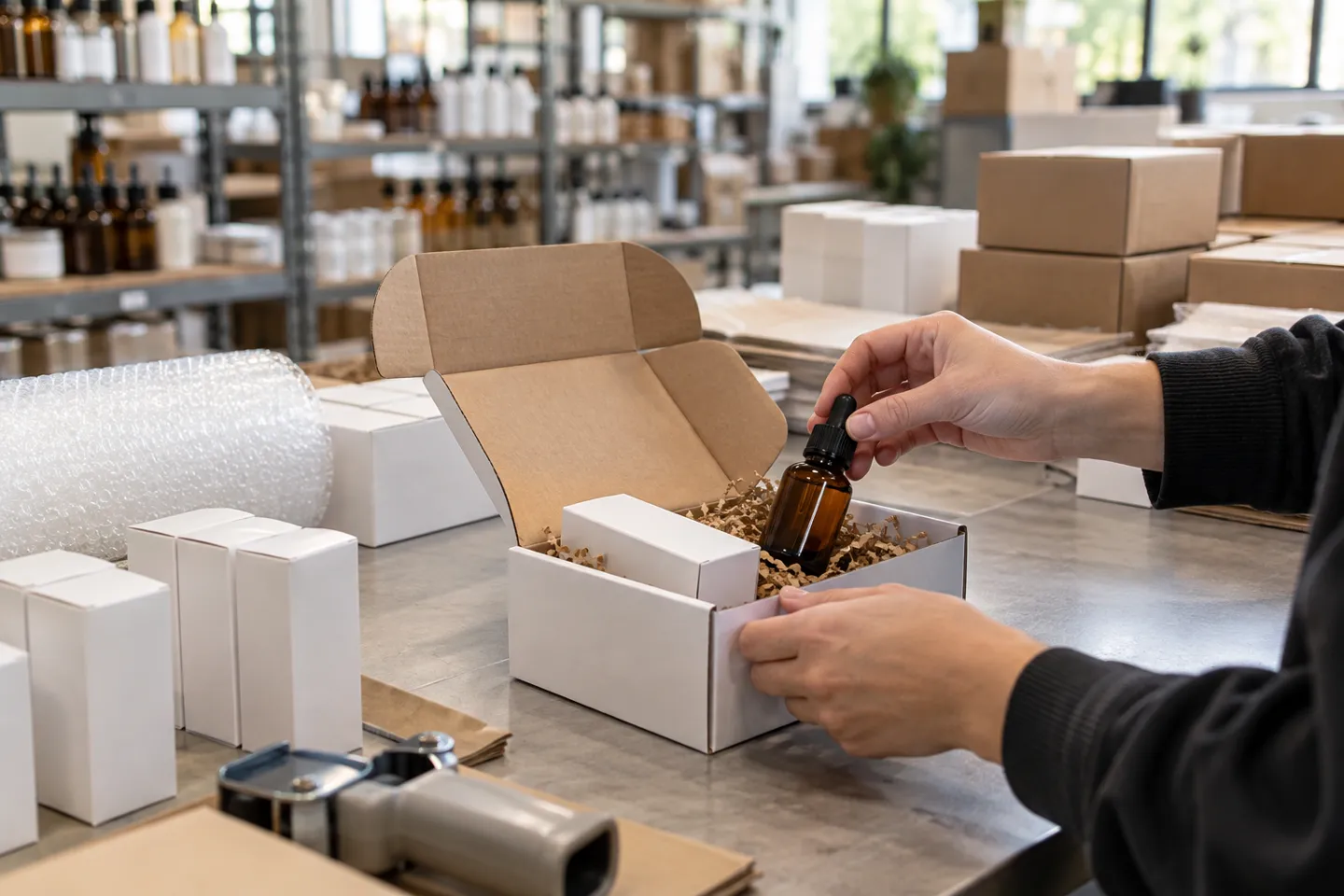
Verification this strict does one more thing: it tells you which suppliers can grow with you. Suppliers who pass every step usually run their own quality control and hold their own stakes in your repeat orders. When we quote a cosmetics order at SpeedBee, our four-stage quality check verifies each item against your reference images before anything ships. Design and color come first, then surfaces for stains and scratches, then function, including battery tests for beauty tools. You receive a packing video of your actual specification, so the carton, the protection, and the label are confirmed before the batch leaves. If a carrier loses a parcel or a customer receives damaged goods, our written policy is free reshipment or a refund, with orders processed within 48 hours. Those are the four answers the verification chain is designed to produce. Anyone who cannot produce them was a red flag all along.
From Shared Catalogs to Dedicated Stock: The Control Layer
Passing verification solves the batch problem. It does not solve the structure problem, which shows up the month your ads start working.
How a Stockout Turns Into an Ad Account Problem
Shared catalogs fulfill from a pool that every other store draws from. At low volume that is fine. At volume it is a chain reaction. Your ad keeps spending while the shared pool runs dry. Orders stall, reviews slip, chargebacks rise, and the account pays for traffic that converts into apologies. The seller never decided to accept this risk. It came bundled with the catalog. Operators describe this same loss of control when they leave a supplier over “long fulfillment times, inconsistent communication, and lack of flexibility” (r/dropship, 2025). Here it arrives through inventory instead of support tickets.
Three Steps Up the Control Ladder
Control is not a yes-or-no switch. It comes in three levels, and each one has a job.
Test on shared catalogs
run unproven products with zero inventory commitment; treat it as paid product research.
Scale on dedicated stock
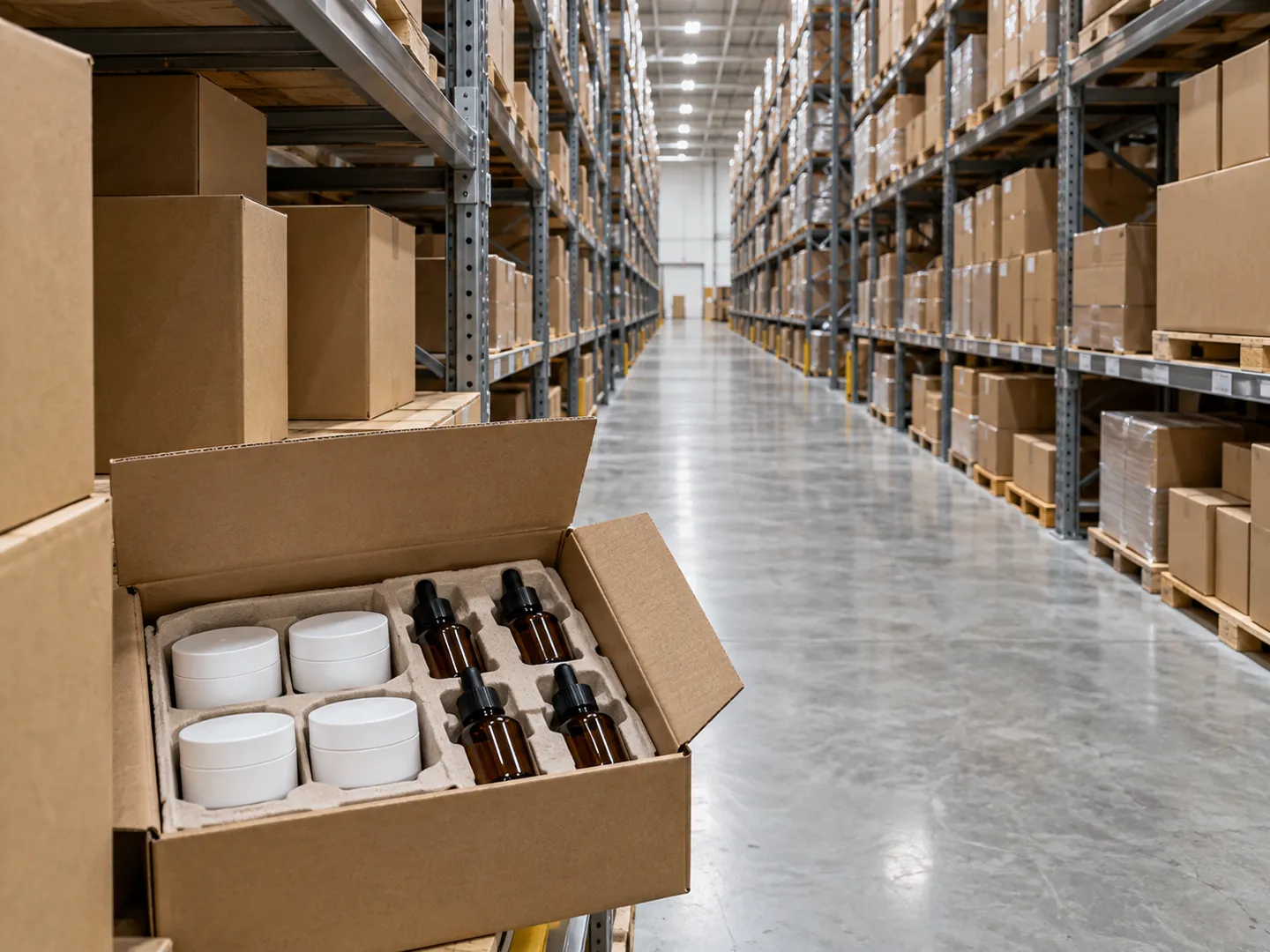
reserve inventory for your proven SKUs, in your own warehouse space, synced to your store.
Upgrade the product itself
take the factory visit route to improve materials and processes on the SKUs that pay for your brand.
Step one exists to buy information cheaply, and it should stay in its lane. Step two is where a store becomes a business. You hold inventory in advance, in space that is not shared with a thousand other sellers, and bundling, hangtag swaps, and relabeling become available. Step three is the one almost nobody talks about. Product upgrading means going back to the factory to improve the materials or the process on a proven SKU, no re-tooling required. It is how “quality” stops being a supplier adjective and becomes your specification.
When Moving Up Actually Pays
Moving up earns its cost under three signals, and all three are checkable. A SKU sells steadily for consecutive months without promotion. Repeat customers show up in the order data. Reviews cluster around one quality complaint you cannot fix by switching catalogs. Dedicated stock has its own failure mode, to be fair. Cash tied in slow inventory is real money, so the move is per-SKU, never store-wide. If a product has not earned step two, step one was doing its job.
If your order data already shows the three signals above, ask us to reserve dedicated stock for the SKUs that earned it.
Reserve Dedicated StockRunning the Numbers: A Supply Setup That Scales
Look back at the three failures with everything above in hand. The allergic reaction was a document and batch-test failure. The customs seizures were a verification failure. The identical-catalog complaint is a structural failure. Different symptoms, one root: the store had no control over what was in the box or how more of it would arrive.
That is the case for treating supplier choice as a supply design problem rather than a shopping decision. Shared catalogs are how you test. Dedicated stock is how you scale. Product upgrading is how you defend the margin once the brand exists. And the four models from the first section finally sort themselves. Platforms are for testing. Marketplaces are for experiments. Resale catalogs suit recognized brands you are content to resell. An agent structure is for when control is the point.
Hold suppliers to the standard this article kept returning to. Can they show documents, pass a sample, prove their packing, and put their promises in writing? If that is where your store is headed, it is the standard we built SpeedBee around. Your inventory sits in dedicated space, one client per warehouse rather than a shared pool. Stock levels sync to your store, and you get proactive notice when prices or availability shift (SpeedBee). Proven products can move into our product upgrading program, where factory visits improve materials and processes without re-tooling. The program’s published case page leads with an 82% reduction in customer complaints (SpeedBee, 2026). Test on shared catalogs, scale on dedicated stock, upgrade what you have proven. That is how a cosmetics store stops renting its supply chain and starts owning it.
Put Your Cosmetics Supply Chain Under Your Control
Dedicated warehouse space for your proven SKUs, four-stage quality checks with a packing video of your spec, and written 48-hour reshipment terms. Ask for a quote on your categories.
Get a Cosmetics Sourcing QuoteReferences
- U.S. Customs and Border Protection. “Cincinnati CBP Seizes over $407,000 of Unapproved Pharma.” 2025. https://www.cbp.gov/newsroom/local-media-release/cincinnati-cbp-seizes-over-407000-unapproved-pharma
- U.S. Food and Drug Administration. “Registration & Listing of Cosmetic Product Facilities and Products.” 2026. https://www.fda.gov/cosmetics/registration-listing-cosmetic-product-facilities-and-products
- GOV.UK. “Making Cosmetic Products Available to Consumers in Great Britain.” 2021. https://www.gov.uk/guidance/making-cosmetic-products-available-to-consumers-in-great-britain
- GOV.UK. “Regulation 1223/2009 and the Cosmetic Products Enforcement Regulations 2013: Great Britain.” 2026. https://www.gov.uk/government/publications/cosmetic-products-enforcement-regulations-2013/regulation-20091223-and-the-cosmetic-products-enforcement-regulations-2013-great-britain
- Reddit, r/dropshipping. “Your Skincare or Supplements Dropshipping Store Is Going to…” 2026. https://www.reddit.com/r/dropshipping/comments/1s54ulk/your_skincare_or_supplements_dropshipping_store/
- Reddit, r/dropshipping. “I’m Looking for a Dropshipping Supplier That Has Quality Makeup.” 2024. https://www.reddit.com/r/dropshipping/comments/1ccdx8u/im_looking_for_a_dropshipping_supplier_that_has/
- Reddit, r/dropship. “Looking for an Organic Cosmetics Supplier.” 2025. https://www.reddit.com/r/dropship/comments/1m4msti/looking_for_an_organic_cosmetics_supplier/



 English
 Spanish
 French
 German
 Italian
 Polish