
Melbourne, a Tuesday morning. A customer messages your store asking where her order is. The tracking page still shows her parcel in a Guangzhou sorting facility, nine days after she paid. She is patient today. Around day eighteen she stops being patient, the refund request becomes a chargeback, and your ad account keeps feeding new buyers into the same pipeline. Nothing about your product, your landing page, or your targeting caused this. The cause sits one layer earlier, in a decision most sellers make once and never revisit: who holds your inventory, and who answers for delivery.

What Dropshipping in Australia Actually Involves
The mechanism is simple enough. You run the store. A supplier somewhere else holds the products and ships them to your buyer under your brand. You never touch a carton. Australian law has no problem with this arrangement: dropshipping is a legal fulfillment method, and the usual obligations apply. Register an ABN, and register for GST once your turnover reaches A$75,000 (ATO, 2026). One more line matters if you sell from overseas. Under the low-value goods rules introduced in 2018, merchants selling goods worth A$1,000 or less to Australian consumers are responsible for collecting 10% GST on those sales (ABF, 2026).
That is the entire compliance layer. It is also the easy part, which is why registration is where most articles stop. The part that decides whether your store survives its second quarter happens somewhere else. It sits in the structure you choose for supply, and there are exactly four structures in play.
Some sellers work with Australian wholesalers who agree to dropship. Some route every order through a China-based platform like AliExpress or a fulfillment marketplace. Some appoint a private agent in China who sources, inspects, packs, and ships on their behalf, often from stock reserved for them. And at the far end, some buy in bulk and run their own Australian warehouse or a local 3PL. Whether you operate the store from Brisbane or from Berlin, the four roads are the same. What changes with each road is who holds your stock, how fast a parcel can physically reach your buyer, and who pays when something goes missing.
Four supply structures for Australian orders
| Structure | Who holds stock | Delivery ceiling | Best fit |
|---|---|---|---|
| Local AU wholesaler | The wholesaler | Days (local post) | Proven local demand, small catalog |
| China dropship platform | The platform’s pooled stock | 2-5 weeks standard lines | Testing products, one-person start |
| China private agent + dedicated stock | You (reserved at the agent) | Express 4-7 days door-to-door | Scaling a validated SKU |
| Own AU warehouse / 3PL | You | 1-5 days local | High stable volume, brand building |
Notice what the table does not say. It does not say one road is best. It says each road buys something and charges something, and the charge is usually paid in delivery time.
The Per-Order Reality: Why “2–5 Weeks” Keeps Happening
Published numbers contradict each other so bluntly that sellers stop trusting any of them. One benchmark puts standard China-to-Australia delivery at 15 to 30 days (ecopy.app, 2026). Another source counts 20 to 40 days for AliExpress orders. Express lanes run 7 to 12 days. An Australian seller who built a seven-figure home-and-garden brand states it from the operator’s side: shipping from China to his customers took 3 to 4 weeks as standard (r/dropshipping, 2025). These figures are not lies. They are different lanes, and the lane is a choice most sellers never realize they are making.
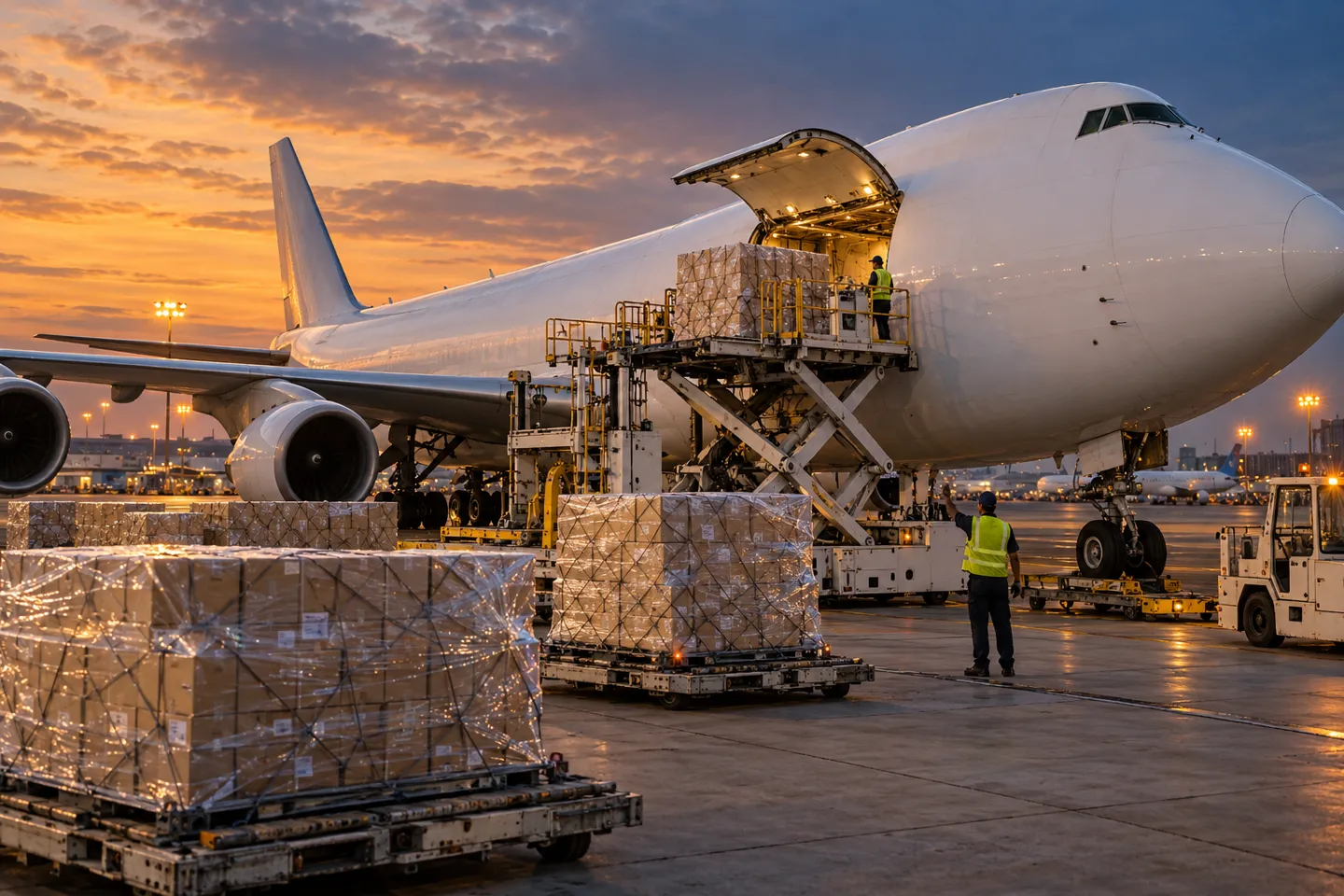
The Five Legs of a China-to-Australia Parcel
A per-order parcel travels five legs. First, your order waits for pick, pack, and handover to a domestic courier, which on crowded platforms competes with thousands of other orders the same day. Second, the parcel consolidates at a freight depot and waits for a booked flight. This leg is where peak season bites: full flights push everything back a week at a time. Third comes the linehaul itself, direct or transshipped depending on what the cheapest routed option was that day. Fourth, customs, which for low-value parcels is usually the fastest leg. Fifth, the Australian domestic last mile, typically a day or three once the parcel reaches local hands. Stack the slow version of each leg together and you get the 15-to-30-day range; stack the fast versions and express promises land. The reason your specific parcel takes five weeks is rarely one disaster. It is five average legs, each tilted slow.
Pick, pack & handover. Waits in the day’s order queue.
Consolidation & flight booking. Peak-season full flights push a week at a time.
International linehaul. Direct or transshipped, whichever was cheapest that day.
Customs. Usually the fastest leg for low-value parcels.
Australian last mile. A day or three once local hands take over.
What Each Order Really Costs
Freight is the number sellers quote, and it is already ugly. A seller who had worked through the generic platforms put it plainly. Delivery runs two weeks or more, and you are paying $15 to $20 in shipping per order (r/dropshipping, 2026). But bare freight is not the whole bill. Add the chargeback fee when a day-25 delivery becomes a dispute. Add the refunded order itself, since the goods may never come back. Add the ad spend wasted acquiring that buyer. Ads quoted “from $4 per order” exist too, and they are real. Read the fine print, though: those are bulk DDP lane rates on specific routes, not the per-parcel rate a low-volume store actually pays. The two numbers describe different quantities of orders, so comparing them directly is how sellers end up feeling cheated by their own quotes.
The Shared-Stock Risk Nobody Quotes You
Per-order platforms sell from pooled stock. The listing says in stock, and it is true, in the sense that somebody’s order can be filled from it. It does not mean your twentieth order of the day can. When the pool drains, your listing keeps selling into a hole: the order that cannot ship, the price that quietly rises mid-campaign, the supplier who stops replying. The seven-figure seller quoted above described the industry’s default answer to this: “trial and error with suppliers,” plus asking for photos of your orders being packed. Eyes on the ground are the only substitute for control (r/dropshipping, 2025). Trial and error is a strategy. It is just an expensive one to run on live customers. One thread on the subject put the stakes without decoration: slow delivery is “basically a death sentence for your store nowadays (chargebacks will kill you)” (r/ShopifyeCommerce, 2026).
None of this means per-order dropshipping is wrong. As a way to test products with almost no capital, it is still the fastest school in the world. The mistake is staying in it after the school has taught you what it knows.
The Signals That Say It’s Time to Change Structure
Structure changes have a timing problem. Move too early and you sink cash into stock for a product nobody has validated. Move too late and you spend months paying for the lesson you already learned. A third-party benchmark draws the line at roughly 50 orders per month on a store. Past that volume, it is time to consider moving inventory closer to the customer (ecopy.app, 2026). The number is a benchmark, not a law. What matters is the direction of the curve underneath it.
orders / month
The threshold to write on a sticky note:
Past about 50 orders a month on a validated product, stop paying per-parcel freight and per-incident chargebacks, and move your stock one step closer to the buyer.
The signals around that number are easy to audit tonight. Reviews start mentioning delivery before they mention the product. The first chargeback lands, then a second. You spend more hours answering “where is my order” than building campaigns. One SKU has proven it can sell repeatedly without heroics. And the cash account could carry 30 to 60 days of stock without sweating payroll. Two or more of those true at once means the question is no longer whether to change structure. It is which structure comes next.
The reverse boundary is just as real. Hold the line if your product is still in its first test cycles. Hold it too if your cost per acquisition has not stabilized, or if a 60-day stock buy would strain the account. Per-order pain is tuition. Structure is capex, and capex before validation is how stores die with full warehouses.
When the signals say move, price the move first: send us your validated product and monthly volume, and we will return a dedicated-stock DDP quote you can hold against your current per-parcel bill.
Price Your Next StructureThe Agent Route: Dedicated Stock and the SLA Checklist
Between the platform and your own warehouse sits the road most sellers skip past: a private agent in China holding dedicated stock for you. It is the road the seven-figure seller eventually took in his own way, buying 500-unit batches and later running his own Australian warehouse (r/dropshipping, 2025). Done properly, the agent version buys most of that control without the lease.
What Dedicated Stock Changes
Dedicated stock means your units sit in labeled space, counted as yours, not pooled against strangers’ orders. Three things follow. Your delivery ceiling stops being whatever the pool allows and becomes a function of how deep you chose to stock. Stockouts turn from a surprise into a forecast, because your own inventory level is visible and can be refilled before it runs dry. And a campaign becomes plannable: you brief the agent before the ads scale, so the volume spike lands on prepared shelves instead of a shared pool. The fastest stores in this game are not the ones with the best creatives. They are the ones whose supply did not flinch when the creatives worked.
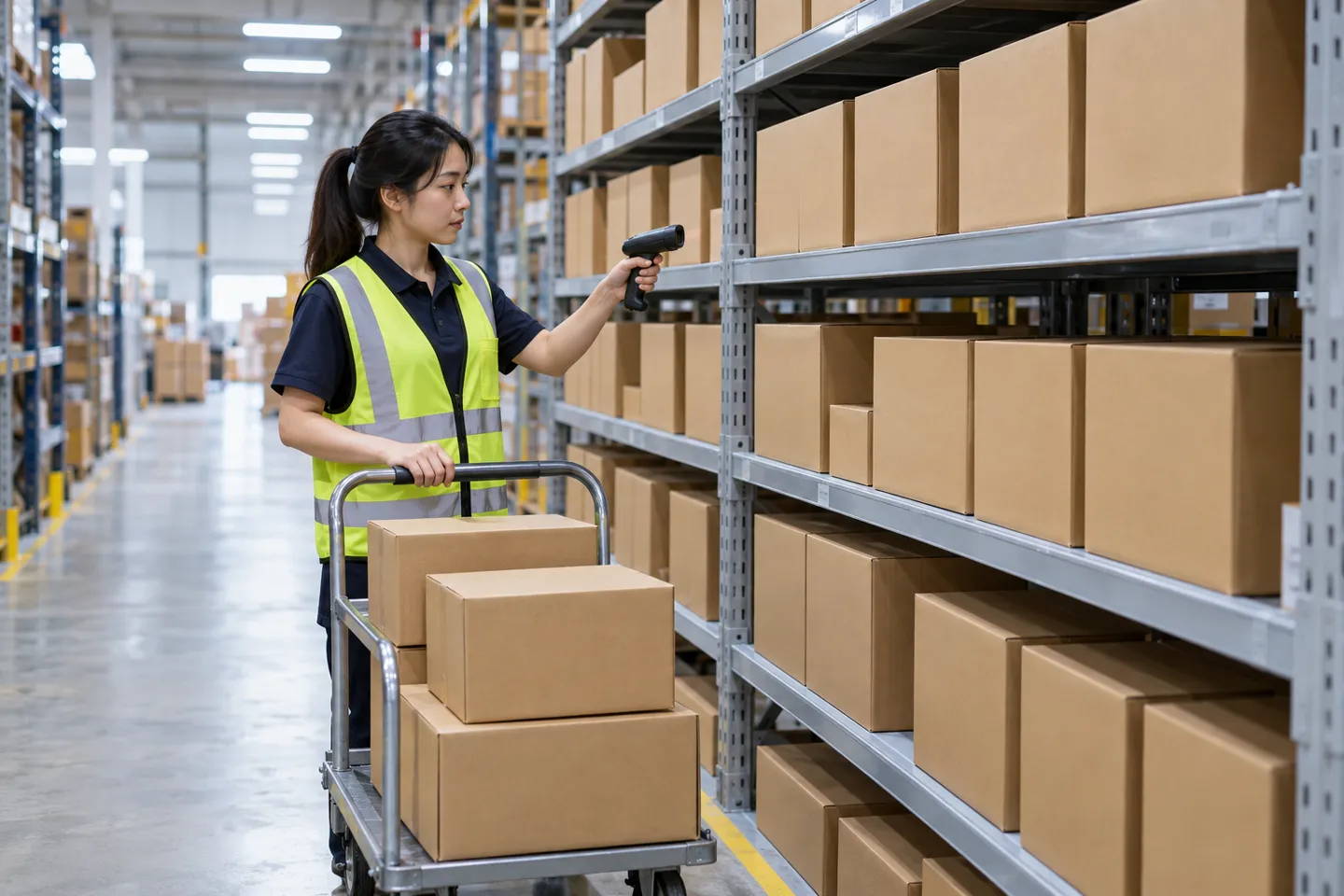
The SLA Checklist to Demand
An agent relationship is a contract, and the checklist below is what belongs in it. Ask for each item in writing, with numbers.
SLA checklist for a China-based fulfillment agent
Order processing deadline in hours, e.g. within 48 hours, with handover to the domestic carrier inside 2 days.
Exclusive, dedicated inventory with real-time sync to your Shopify store, never pooled.
Lost or damaged parcel liability including last-mile failures, with free reshipment or refund stated as policy.
Stage QC evidence: sample match, appearance check, power-on test, final clean, with photos on request.
First-batch packing video, multi-angle, for your written approval before bulk packing runs.
Chinese labels and text removed on every outbound parcel, with branding and card options listed.
Delivery tiers in writing for Australia, e.g. express door-to-door in 4-7 days versus economy.
DDP quotes with product cost and freight cost on separate lines.
Battery and sensitive-goods routing stated explicitly, including which airport lane they use.
Each line exists because its absence has a body count. Processing deadlines without numbers become “soon.” Pooled stock becomes the hole described two sections back. Quotes without a product-freight split make every price rise invisible until it is inside your margin.
How to Vet an Agent From Another Continent
You cannot visit every candidate, so make distance their problem, not yours. Ask for a packing video of a live order before you commit, not a marketing reel. Ask what happens, step by step, when a parcel goes missing after it leaves their dock. Send a trial batch through the full cycle and time every leg. Then test the part that no quote sheet reveals: message them a hard question on a Friday and measure how long the real answer takes. Operators who have been through this summarize it the same way, you need eyes on the ground and a supplier you trust (r/dropshipping, 2025). The vetting above is how you rent the eyes instead of hoping for the trust.
One honesty note before the matrix: an agent cannot fix everything. The Australian last-mile carrier is outside their contract. Your buyer’s expectations are outside everyone’s contract. And a product with an inherent flaw will keep generating returns no matter who ships it. Dedicated stock moves the ceiling; it does not repeal physics.
Supply structures: boundaries and switch signals
| Structure | Fits stage | Delivery ceiling | Hard boundary | Switch signal |
|---|---|---|---|---|
| Local AU wholesaler | Proven local SKU | Days | Thin catalog, high unit cost | Volume grows past their range |
| China platform | Product testing | 2-5 weeks | Pooled stock, per-parcel freight | About 50 orders/month on one SKU |
| China agent + dedicated stock | Scaling validated SKUs | Express 4-7 days | Cash tied in stock, agent dependency | Stock depth outruns agent warehousing |
| Own AU warehouse/3PL | Stable volume, brand era | 1-5 days | Fixed costs before revenue | Volume already stable at agent tier |
From Agent Stock to Your Own Australian Warehouse
The full staircase has three steps, and the order is not negotiable. Per-order platforms teach you which product sells. Dedicated stock at an agent teaches you how deep to hold it and what your buyers complain about. Your own Australian warehouse or a local 3PL only makes sense when volume is stable enough to pay its rent every month. Sellers who follow the staircase in order tend to describe the same progression. Test with dropshipping, buy the first real batch around 500 units, then graduate to local stock once the product has earned it (r/dropshipping, 2025).
The own-warehouse stage has a real bill on one side and a real prize on the other. Rent, staff, and returns processing are fixed costs that arrive whether orders do or not. What you buy with them is one-to-five-day delivery, local returns handling, and a brand that feels domestically present. Category economics decide how long you can wait at the agent step. Bulky home goods bleed per-kilogram freight and push you toward local stock sooner. Battery-powered goods ride dedicated compliant lanes and care more about the lane than the warehouse location. Apparel lives or dies on upstream QC, which happens at the factory, not the warehouse. Jump the staircase and the fixed costs arrive before the revenue does. That is the failure mode behind the advice to validate first and buy bulk later, and it is not a myth: it is arithmetic.

The Delivery-Time Tax: Rereading Your Australian Margin
Now reread your own numbers with the pieces from the sections above. A per-order setup on default lines costs you two to five weeks of delivery and $15 to $20 of freight per order. The same setup charges you a second tax in errors and omissions: every chargeback, every refunded parcel, every buyer who never returns because the first experience took a month. Past the 50-orders-a-month line, this is not a rounding error. It is a fixed levy on growth, collected per order, and your ad account pays it whether you notice the line item or not.
The underrated move, as this article has argued throughout, is the middle step. Dedicated stock at a Chinese agent converts the tax into a plan. Processing deadlines become written terms. Inventory becomes exclusive, lanes become express, and liability lives in the contract instead of the dispute. Jumping from per-order straight to your own warehouse swaps one problem for a heavier one, fixed costs ahead of validation. Staying on the platform past the threshold simply keeps paying the tax. Between them sits the step most sellers never examine, and it is priced in contracts, not in hope.
Numbers like these should be contract terms, not aspirations. SpeedBee writes ours into every quote: a fulfillment SLA of 48-hour order processing, with parcels handed to the domestic carrier within 2 days (48-hour processing SLA). On the Australia express lane in 4–7 days, we quote DDP with product and freight on separate lines. Your stock sits as dedicated inventory in Guangzhou, synced to your Shopify store in real time. Run the SLA checklist above against any supplier you are considering, us included, and keep whoever clears it.
Put Your Australia Lane Under Contract
48-hour order processing, handover to the carrier within 2 days, and a written 4-7 day express DDP quote for Australia — product and freight on separate lines.
References
- ecopy.app. “Dropshipping Shipping Times to Australia: How to Manage Customer Expectations.” 2026. https://ecopy.app/blog/dropshipping-australia-shipping-times/
- Australian Taxation Office. “Registering for GST.” 2026. https://www.ato.gov.au/businesses-and-organisations/gst-excise-and-indirect-taxes/gst/registering-for-gst
- Australian Border Force. “GST on Low Value Goods When Importing.” 2026. https://www.abf.gov.au/importing-exporting-and-manufacturing/importing/cost-of-importing-goods/gst-on-low-value-goods
- elviant. “AMA: I Turned My Dropshipping Store into a 7-Figure Brand Just in Australia.” Reddit, r/dropshipping, 2025. https://www.reddit.com/r/dropshipping/comments/1hwzfca/ama_i_turned_my_dropshipping_store_into_a_7fig/
- RealisticBuffalo720 et al. “Dropshipping Suppliers for Australia.” Reddit, r/dropshipping, 2026. https://www.reddit.com/r/dropshipping/comments/1s6ifk3/dropshipping_suppliers_for_australia/
- r/ShopifyeCommerce. “Struggling with China Shipping Times.” Reddit, 2026. https://www.reddit.com/r/ShopifyeCommerce/comments/1ri40vk/struggling_with_china_shipping_times_whats_your/




 English
 Spanish
 French
 German
 Italian
 Polish