
Dropshipping Suppliers for France: The Three Routes
A bedding order lands at nine in the evening, Paris time. The customer asks the question every French buyer asks: when will it arrive? Whether the honest answer is four days or four weeks was decided weeks earlier, when the store owner picked a supplier. The search results for “dropshipping suppliers France” look like ten interchangeable names. They are not.
Two different questions hide inside one phrase. Suppliers in France are wholesalers and distributors with stock on French ground, from fashion distributors like BrandsDistribution to marketplace programs like CDiscount Pro. Suppliers for the French market are companies anywhere in the world that can deliver to a French doorstep. The first group is a small subset of the second, and most list articles quietly mix the two. This guide answers the second question, because that is the one a Shopify store owner actually faces. Local French suppliers stay in the picture throughout, and sometimes they are the right answer.

Suppliers that can serve French customers fall into three routes, and the differences between them are mechanical rather than cosmetic. Local and EU-stocked suppliers (BigBuy in Spain, BrandsDistribution in Italy, the Spocket and AppScenic catalogs) hold goods inside Europe, so domestic couriers finish the last mile in two to four days. Prices run higher, catalogs run smaller, and some require minimum orders or wholesale accounts. China-based platforms (AliExpress, CJdropshipping, Zendrop, AutoDS) list tens of thousands of products at factory prices, and delivery runs long unless you control the shipping line. China-based private agents buy, store, pack, and ship on your behalf, usually reserving stock for you and quoting per product.
The three supplier routes for the French market
| Route | Typical catalog | Typical delivery into France | Cost level | Access | Fits best |
|---|---|---|---|---|---|
| Local / EU-stocked (BigBuy, BrandsDistribution, Spocket, AppScenic) | Small to mid | 2-6 days domestic EU | Higher product cost, often subscription | App or wholesale account | Testing premium goods, French-language niches |
| China platform (AliExpress, CJ, Zendrop, AutoDS) | Very large | 10-35 days on standard lines | Lowest product cost | App integration | Wide testing on low-ticket items |
| China private agent (sourcing + reserved stock) | Built to order | 4-7 days on dedicated DDP lines | Quote-based, product plus shipping split | Inquiry and quote | Stores with steady sales that need control |
A route is not a ranking. The route decides the shape of your delivery chain, and the delivery chain decides what your customer experiences: how long the parcel takes, who clears customs, and who pays when something goes missing. The next four sections walk that chain in order.
Why “Ships from China” Means Anywhere from 4 Days to 45
Ask two store owners how long delivery from China takes and you can hear answers that sit ten times apart. Both are telling the truth. The variable is rarely the platform; it is which line the parcel actually books. One practitioner put it plainly on r/dropshipping: “the platform choice matters less than which shipping line the seller actually books… the same shop can ship one order fast and the next slow” (Reddit, r/dropshipping, 2026).
The same “ships from China” parcel can book a 4-day lane or a 45-day lane — the line grade decides, not the platform name.
15–35 days
Postal & economy lines
4–7 days
Dedicated DDP lines
2–5 days
Express & EU-stocked
Postal and economy lines: the 15 to 35 day band
The cheapest lines consolidate parcels until containers fill, fly only when capacity allows, and hand over to national posts for the final stretch. That is why the same product can arrive in three weeks on a good month and stretch past a month at peak. Sellers on the same thread describe standard and economy lines, “which most casual dropshippers use,” as running “15-35 days, and delays are frequent across Eastern EU nations, especially during peak seasons” (Reddit, r/dropshipping, 2026). Older reports agree: parcels moved on postal products were “often 2-3 weeks” to France and its neighbors (Reddit, r/dropship, 2022). Tracking sites show economy products estimating anywhere from two weeks to six (Parcelsapp, Yun Express, 2026).
Dedicated commercial lines: the 4 to 7 day band
The next tier works differently. Carriers such as YunExpress, Yanwen, and 4PX run fixed products with reserved air capacity, daily consolidation, and customs handled by the line operator on both ends. YunExpress markets a France special line with final delivery through La Poste Colissimo, and its apparel line advertises 4-8 day average transit (YunExpress, 2026). The fastest advertised lanes into the UK promise door delivery in as fast as three days, built on the Pearl River Delta’s dense airport cluster. One structural constraint matters for electronics: lithium batteries can only fly ex-Hong Kong on many lanes, so a supplier’s answer about battery products tells you which airports it can actually use.
Express couriers and EU-stocked goods: the 2 to 5 day band
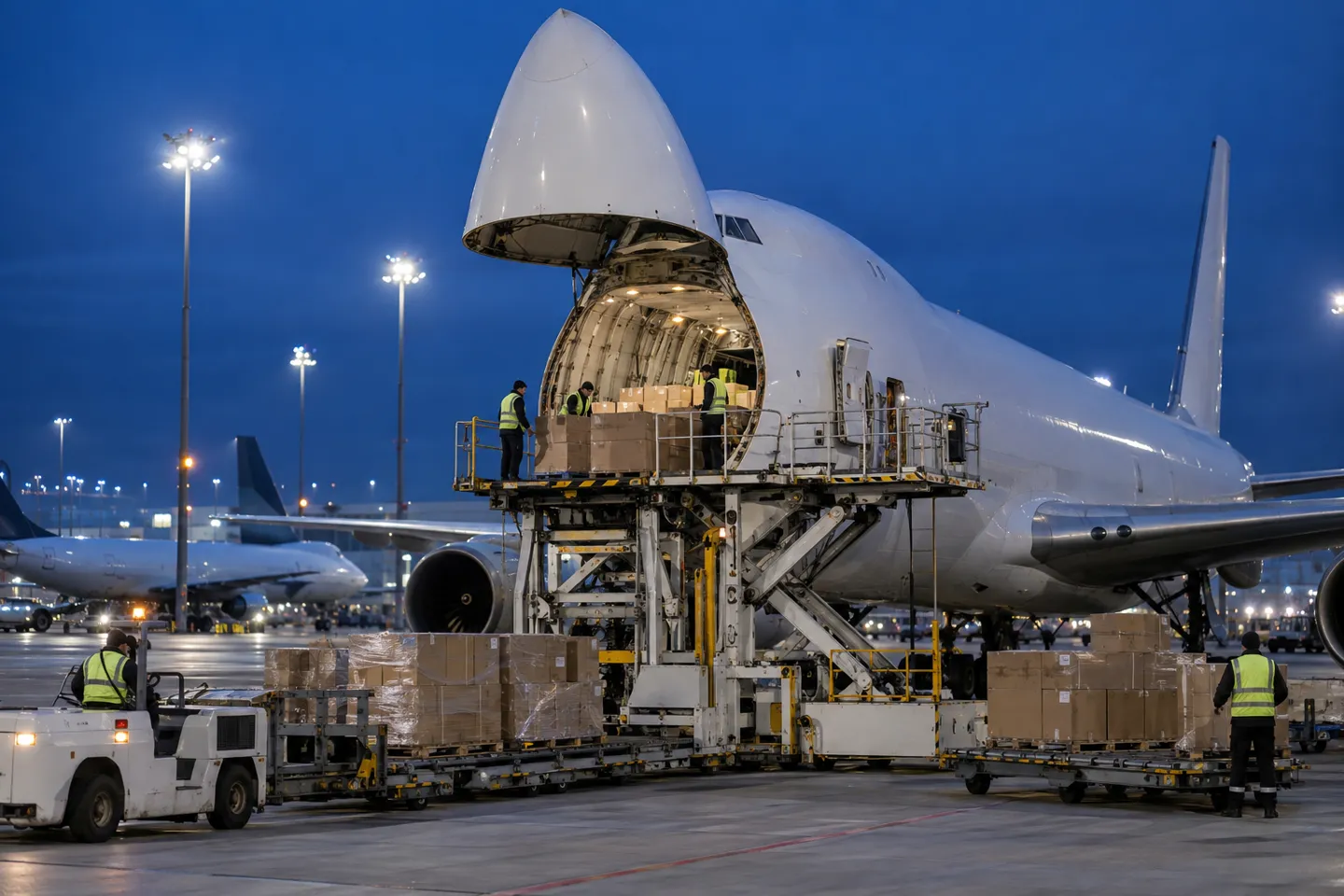
DHL and FedEx move a parcel from China in two to five days, but per-parcel cost breaks the economics of most dropship price points. The practical version of this tier is stock already sitting in Europe, which is the local supplier route from section one.
Shipping line tiers into France
| Line grade | Typical door-to-door | Customs handling | Who absorbs delays | Fits |
|---|---|---|---|---|
| Postal / economy | 15-35 days, worse at peak | Bulk clearance, recipient risk | Your customer waits | Low-ticket testing only |
| Dedicated line (DDP) | 4-7 days, UK as fast as 3 | Line operator clears, duties prepaid | The supplier’s line, before your customer notices | Steady stores with reviews to protect |
| Express courier | 2-5 days | Commercial fast-track | Minimal, but expensive | Premium AOV only |
| EU-stocked | 2-4 days domestic | Already cleared | Local courier, returns resellable | Proven winners |
Dedicated DDP is not unconditionally right. On a low-ticket test with thin margins, a postal line can be the rational choice. The number to run is delay cost per order: refund rate, support hours, and reviews lost against the freight saving. Then ask one question before you list a product: which line does this item default to, and can I pin it?
Customs and VAT: Who Actually Owes What in 2026
For consignments up to €150, the seller collects VAT at checkout under the IOSS scheme, and the parcel clears against that number. Stripe’s guide to French rules describes the flow directly: the dropshipper files and prepays the VAT through IOSS so the goods do not stop at the border (Stripe, 2026).
What changed this year is the case where the supplier never opted into IOSS. French tax authorities issued a ruling on exactly that gap, and KPMG’s April 2026 note summarizes it: the treatment now depends on whether goods enter the EU through France or straight into the destination member state, and on whether the intrinsic value sits below or above €150, with the ruling clarifying how import VAT liability is allocated between seller and final customer (KPMG TaxNewsFlash, 2026). The practical meaning for a store owner: your tax exposure depends partly on your supplier’s compliance setup, not only on your own registration.
The second lever is the delivery term. On DDP terms the supplier’s line clears customs and prepays duties, and the price the customer paid at checkout is final. On DDU terms the courier bills your customer at the door, which in France is a reliable generator of refusals and one-star reviews. This is why serious France lanes run DDP, and why the term appears in nearly every professional quote.
Before signing, get two answers in writing: 1) Does your quote include customs clearance and duty prepayment (DDP)? 2) Do you support IOSS for my price band? Both answers change your own tax liability, not just your landed cost.
This section is orientation, not tax advice. Consignments above €150, B2B sales, and returns each follow different rules, so match the scheme to your own price distribution before you commit.
Shared, Dedicated, or EU-Stocked: Picking an Inventory Model
Stockouts are not bad luck. They are the predictable output of an inventory structure, and the structure is something you choose when you choose a supplier.
Shared inventory pools
Marketplace platforms hold one pool of a product and sell it to many stores at once. When a video goes viral, the pool drains, listings break, and orders cancel. Price rises and discontinuations arrive without notice because nothing in the structure obliges the platform to warn a thousand small buyers. Returns travel back toward China, and in practice a returned dropship parcel is usually a write-off. One practitioner summed up the arithmetic on r/dropshipping: with 15-30 day China shipping, “every return costs you the item” (Reddit, r/dropshipping, 2026).
Dedicated stock in a China warehouse
The intermediate structure reserves the shelf for you. An agent buys against your forecast, your units sit in space allocated to your account, and price moves or discontinuations get flagged before they bite. The alternative practitioners discuss is renting space in Europe, described by one seller as ordering around 100 units minimum and paying roughly €300 per month for small warehouse capacity in Germany or France (Reddit, r/dropshipping, 2025). That number is a practitioner estimate rather than a rate card, but the shape is right: EU storage is a real fixed cost that only pays once sales are steady.
This is where our own model runs. SpeedBee assigns every client a dedicated space across five warehouses near Guangzhou, and our Sumool ERP syncs stock levels straight into Shopify in real time, so the number on your storefront is the number on our shelf. Storage stays free for six months, and clients who keep shipping keep it free beyond that. The honest trade-off is cash tied up in stock, so slow movers do not suit this route. You can review what a dedicated warehousing setup includes before you commit to it.
EU-stocked inventory
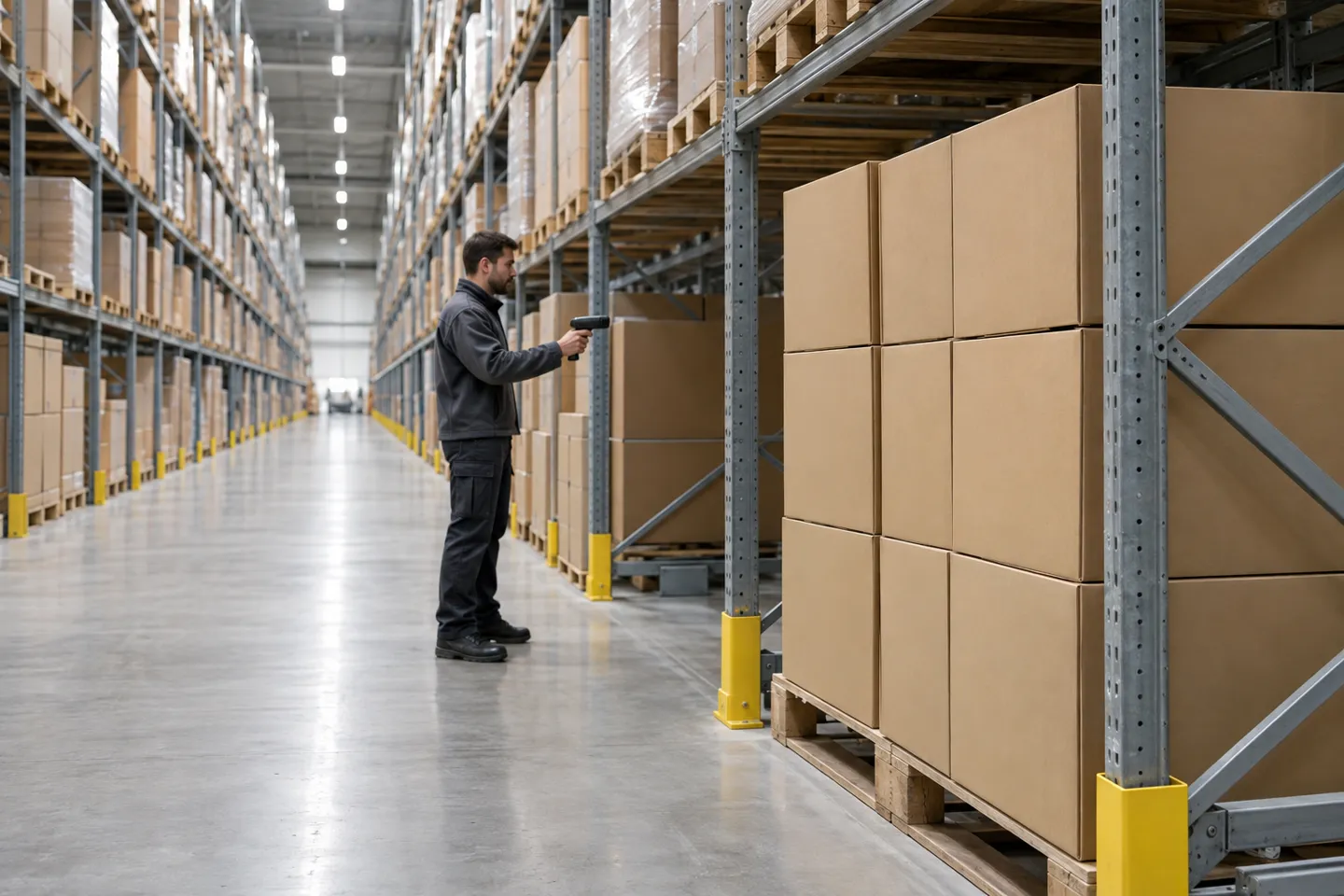
Stock already inside the EU delivers in two to four days, survives courier returns, and lets you resell returned units. The costs arrive early: capital tied up in two legs of logistics, and French VAT obligations that begin the moment goods enter the bloc. Stores usually earn their way into this tier rather than start in it.
Inventory model decision matrix
| Your stage or case | Suggested model | Where it fails | Confirm before signing |
|---|---|---|---|
| Testing under 10 orders/day | Shared pool, postal line | Fails on virality; stockouts burn ad spend | Refund policy on stockouts |
| Steady 10-50 orders/day | Dedicated stock, China warehouse | Ties up cash; wrong on slow movers | Free storage period, notice terms for price moves |
| Delivery complaints above 5% | Move up a line grade, then dedicated stock | Fails if product quality is the real cause | Line grade in writing, default line per SKU |
| Battery or sensitive goods | Dedicated stock, ex-Hong Kong lanes | Fails if supplier lacks HK air access | Ask which airport the line uses |
| Clothing and textiles | Dedicated stock with QC for GSM and threads | Fails without fabric checks; returns spike | Sample check, thread-trimming policy |
| Scaling with own brand | Dedicated stock, custom packaging, upgrade talks | Fails if you skip the pilot order | First order packed on video |
The Pre-Signing Checklist: Verifying a Supplier Before You Commit
A supplier list is a starting line, not a decision. Four checks separate operations that run supply chains from middlemen with a messaging app.
Start with the quote structure. Ask for product cost and shipping cost split into separate lines. Serious agents return an itemized quote within 24 hours, because the split is how you audit the line grade yourself; a single merged number is where slow lines hide.
Second, test the stock story. Ask whose shelf the goods sit on, whether the space is reserved for you or shared, and how many days of notice you get before a price rise or a discontinuation. Credible answers come in concrete numbers: named warehouses, stated notice periods.
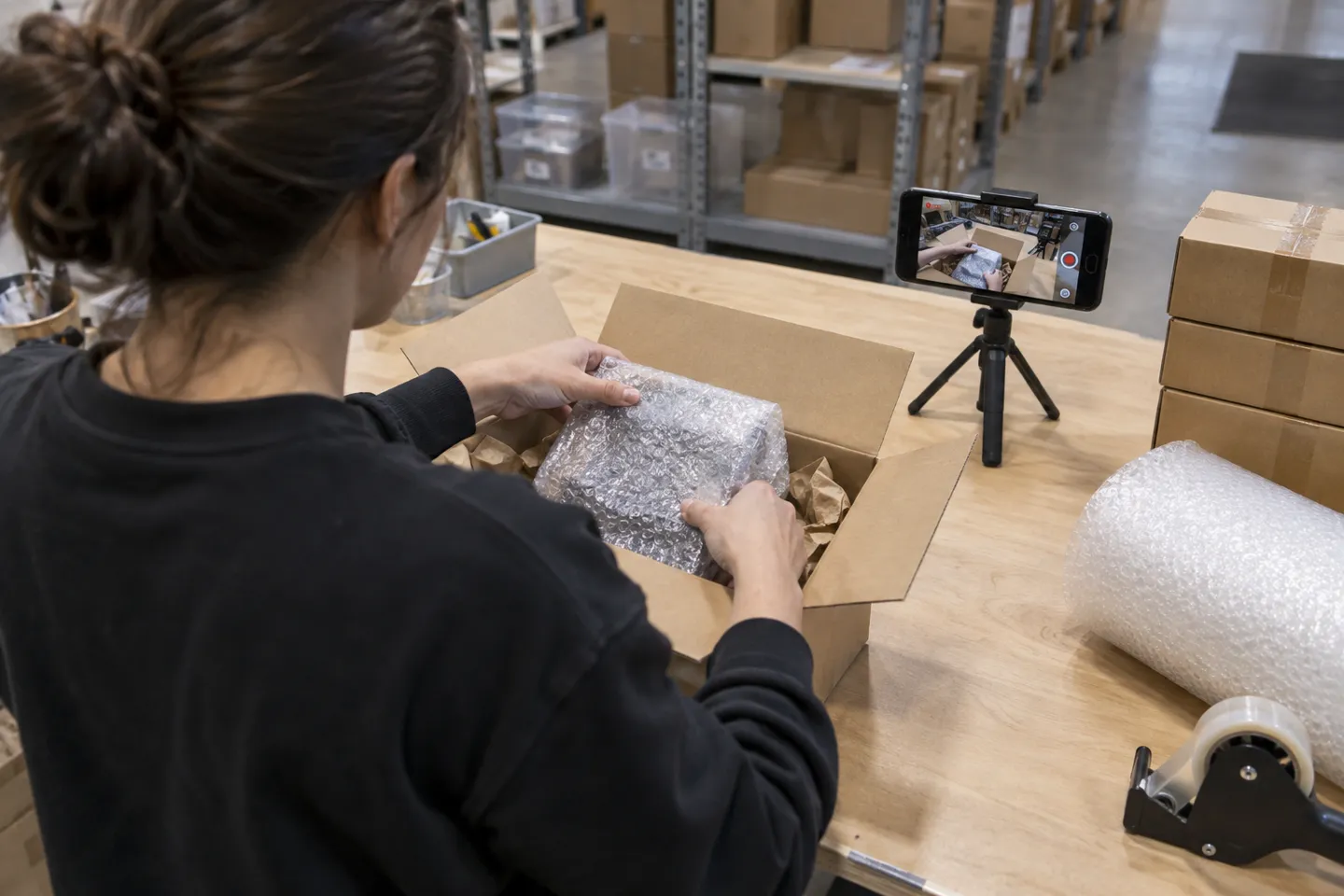
Third, demand packing and QC evidence. The standard among established agents is a first order packed on camera from several angles, plus category-specific checks: function tests including batteries for electronics, fabric weight and thread trimming for textiles.
Fourth, confirm the line and the compliance answers from the previous section: default line grade per product, DDP included in the quote, IOSS support for your price band.
- Itemized product + shipping quote returned within 24h
- Named warehouse and reserved space, notice period for price changes
- First order packed on video, category QC list in writing
- Default line grade per SKU, DDP confirmed, IOSS support confirmed
- Pilot order of 20-50 units before any volume commitment
Any check that fails leaves the risk on your side of the table. The list is a filter, and the pilot order is the part no list replaces.
When Parcels Go Wrong: After-Sales Terms Worth Locking In
Three incident types dominate after-sales on French orders: parcels lost in the last mile, damage in transit, and quality complaints. French buyers research before they purchase and complain formally when disappointed; sellers describe the market as demanding, “very attentive to the quality of the products,” and rewarding once you do things right (Reddit, r/dropshipping, 2025).
Four terms convert those incidents from your loss into the supplier’s obligation. Free reshipment or refund when a carrier loses a parcel, covering both the domestic leg and the last mile. Replacement or refund for goods that arrive damaged or fail quality checks. A price lock, so a confirmed quote does not drift upward after you have priced your store. A processing cap, with problem orders handled inside 48 hours.
Ask who answers when a case stalls. A supplier whose management sits in the client conversation cannot rotate your problem between departments; the “supplier ghosts you” complaint that fills dropshipping forums describes the opposite arrangement.
These terms are standard requests before you sign. After the incident, the same request becomes a favor.
What Supply-Chain Terms Are Worth to a France-Facing Store
Look back across the chain and the cost structure of a France-facing store comes into focus. The premium for a dedicated line over a postal line buys two things at once: delivery certainty your reviews can survive, and a customs process your customer never sees. That is the trade the 4-to-7-day band represents, and no catalog price captures it.
The compliance and after-sales terms work the same way. DDP and IOSS support move French tax exposure toward the party equipped to carry it. Free reshipment and price locks move incident risk off your balance sheet. Each clause is small; together they decide your refund rate before a single ad runs.
Inventory follows a ladder, not a leap. Shared pools fit testing. Dedicated stock in China fits steady sales that need control without European fixed costs. EU-stocked goods fit proven winners, paid for in capital and early VAT obligations. Each rung has an entry signal, and the matrix in section four lists them.
So the list you searched for decides almost nothing on its own. Four rows on a quote sheet do: the line grade per product, the customs term, the stock model, and the after-sales clauses. Negotiate those four rows and the supplier name takes care of itself. Take the checklist from section five into the conversation, and judge every answer by whether it arrives as a number, a document, or a video, rather than an adjective.
Lock the Four Rows Before You Sign
Send your product list — SpeedBee replies with an itemized product + shipping quote for France lanes: DDP, IOSS-ready, after-sales terms in writing, within 24 hours.
References
- Reddit, r/dropshipping. “How to deal with china suppliers delivery time or any suggestion…?” 2026. https://www.reddit.com/r/dropshipping/comments/1w6kxl3/how_to_deal_with_china_suppliers_delivery_time_or/
- Reddit, r/dropshipping. “Anyone here doing EU dropshipping?” 2025. https://www.reddit.com/r/dropshipping/comments/1if2imy/anyone_here_doing_eu_dropshipping/
- Reddit, r/dropship. “Customs and refunds, China to EU.” 2022. https://www.reddit.com/r/dropship/comments/s1n0h9/customs_and_refunds_china_to_eu/
- KPMG TaxNewsFlash. “France: VAT ruling on dropshipping.” 2026. https://kpmg.com/us/en/taxnewsflash/news/2026/04/tnf-france-vat-ruling-on-dropshipping.html
- Stripe. “Dropshipping and VAT in France: Regulations and how it works.” 2026. https://stripe.com/resources/more/dropshipping-and-vat-in-france
- YunExpress. “The Best Logistics Service Provider.” 2026. https://www.yunexpress.com/
- Parcelsapp. “Yun Express AM tracking.” 2026. https://parcelsapp.com/en/carriers/yun-express



 English
 Spanish
 French
 German
 Italian
 Polish