
Your pet store already sells the easy things. Toys ship in a padded envelope, collars weigh nothing, and a grooming glove survives the worst courier day. Then a customer emails to ask which puppy kibble you stock, and the category page you would need to answer her is empty. Not because you decided against food, but because none of your suppliers can actually ship it.
That gap is the real subject of pet food dropshipping. The model itself is simple: you list products, a supplier holds the stock, and each order ships from their warehouse to your customer. Add food to that equation and three properties change at once. Freight stops being a rounding error, because food is heavy, and somebody now has to watch dates on every batch because food expires. Most markets also regulate it as a feed or animal by-product, so paperwork travels with the parcel. A supplier built for toys can fail at all three.
So, can you dropship pet food? Yes, but not from everywhere. Most supplier lists answer this question with a four-sentence warning about regulations, expiration dates and shipping limits (Omnisend, 2026). The warning is correct and incomplete. The complete answer is that pet food is perfectly shippable from one specific layer of the supply chain and nearly impossible from the others. This guide walks through those layers: why the format of the food matters, where suppliers who can genuinely ship it are found, how to vet one, and what this category is worth to a store that gets the supply chain right.
The prize is real. The UK pet food market was estimated at USD 3.01 billion in 2024 and is forecast to grow at 3.8% a year through 2030 (Grand View Research, 2025). Around 37.7% of UK pet food purchases already happened online in 2022, and that share is projected to pass 43% by 2029 (Statista, 2026). The demand side has moved. The supply side, as you are about to see, has not.
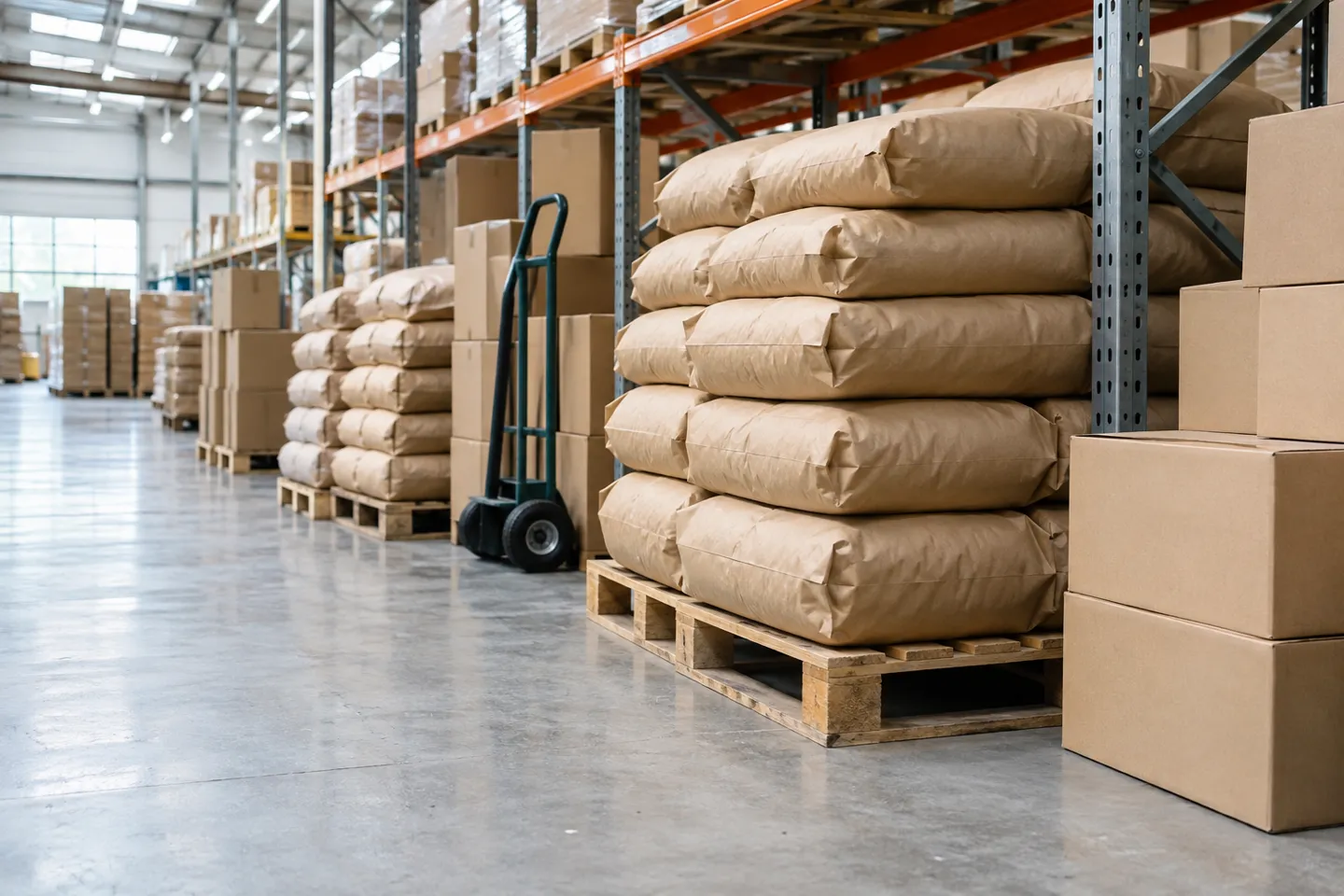
Why Pet Food Is Not Just Another Pet Category
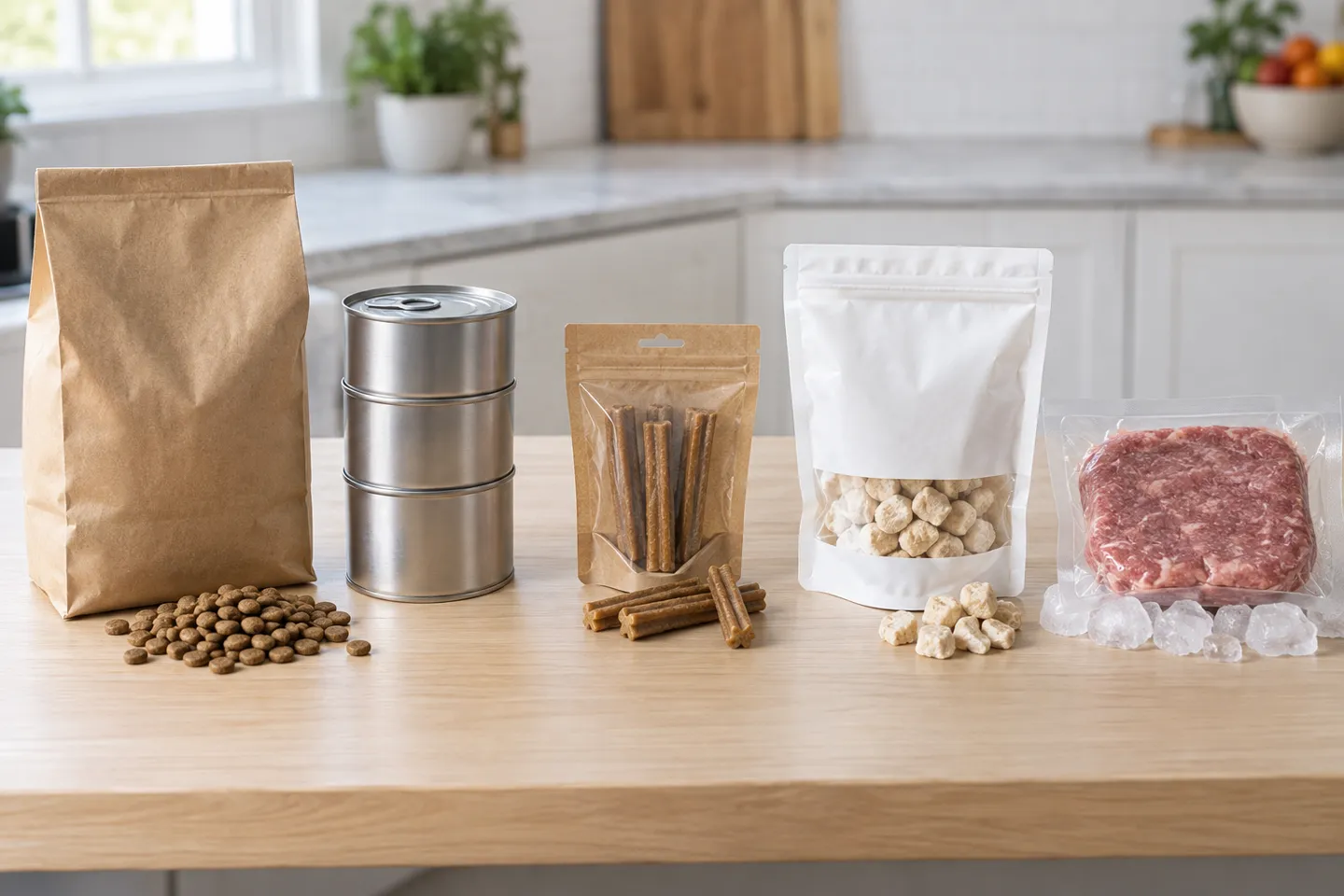
Scroll any “best dropshipping products” list and you will notice what is missing. The lists love pet beds, interactive toys and grooming kits, and they quietly skip the food aisle. One supplier guide even states its selection logic out loud: the best products to dropship are lightweight, low-return items (Super-DS, 2026). Food fails that test on weight alone. But “food is heavy” is a lazy summary, because food is not one product. It is five very different logistics problems, and the difference between them decides whether you can sell it across borders at all.
Pet food formats vs. cross-border dropship feasibility
| Format | Weight & bulk | Shelf life (unopened) | Logistics class | Cross-border dropship reality |
|---|---|---|---|---|
| Dry food (kibble) | Heavy multi-kilo bags | Long, months | Standard parcel or heavy-goods line | Workable with warehouse batching; worst cost-per-order ratio as a single dropshipped item |
| Wet food (cans) | Very heavy for its price | Long, canned | Heavy goods | Marginal; freight routinely eats the margin |
| Treats and chews | Light, small | Long | Standard parcel | The most workable format, which is why most catalogs stock treats and little else |
| Freeze-dried | Light to mid | Long without refrigeration | Standard parcel | Workable, and premium pricing helps absorb freight |
| Fresh, frozen or raw | Heavy and temperature-sensitive | Days to weeks, refrigerated | Cold chain | Not viable for standard cross-border dropshipping |
Read the table as three mechanisms rather than five rows. First, weight against order value: a 12 kilo bag of kibble can cost more to move than the margin it carries, which is why dry food dominates shelves at 59.2% of UK pet food revenue but dominates single-order dropshipping far less (Grand View Research, 2025). Second, shelf life against inventory model: long-dated formats forgive a slow turnover, while fresh formats punish it within weeks, so the format you pick decides whether you need a warehouse watching dates or just a parcel. Third, regulation scales with how animal-derived the product is. Treats sit at the light end. Complete foods carry feed-law obligations. Raw diets sit under the strictest import controls of all, which is why US customs guidance treats uncooked pet food as a controlled entry requiring freezing or refrigeration documentation (CBP, 2019).
The lists that skip food are not wrong about the difficulty. They are wrong about the conclusion. The difficulty is not a wall; it is a filter that eliminates specific supply arrangements. Prescription diets and raw feeding need dedicated licensed paths and stay outside this guide. Everything else, from kibble to freeze-dried bites, is sellable once the supply chain underneath it is built for food. Those two numbers decide more than any product research tool.
Confirm in writing before your first food SKU
- The remaining shelf life the supplier guarantees on dispatch.
- The minimum remaining validity your market requires.
Where Pet Food Suppliers Actually Live: The Four Layers
Ask where to find pet food dropshipping suppliers and you will get forty names, most of which will not ship a single bag of kibble to Birmingham. The names are not the answer. The layer each supplier operates in is the answer, because food availability is structural to the layer, not a detail of the vendor.
Layer 1: shared-platform dropshipping, where food structurally does not exist
The most common mistake is hunting this layer hardest. Shared platforms pool inventory across thousands of sellers, and pooled goods must survive long, unpredictable dwell times in shared warehouses. Shelf life, batch traceability and feed-safety paperwork are exactly what that model cannot carry, which is why sellers keep discovering the same wall. One shop owner described it plainly on the Shopify Community forum: already selling pet products sourced through AliExpress, they simply could not find pet food or treats that could be imported into their store (Shopify Community, 2023). If your catalog lists toys but the food page stays empty no matter which app you install, you have hit the structural limit of this layer. Switching platforms inside the layer changes nothing.
Layer 2: catalog dropshippers, treats mostly, and mostly US warehouses
The next layer up is the wholesale catalog dropshipper: a company with a product list, real warehouse contracts and an API. This layer can hold food, and some of it does, with two catches. The food is heavily skewed toward treats, chews and toppers rather than complete foods, because complete foods carry the heaviest obligations. And the warehouses are overwhelmingly domestic US. A UK seller browsing these catalogs finds the same wall one layer higher: the food exists, but it ships from New Jersey, not from anywhere that solves a British delivery. UK sellers describe the hunt for domestic pet food dropshippers as genuinely tough, and the platforms they pass around tend to have thin food sections of their own (Reddit, r/dropshipping, 2024). Layer 2 is not a scam. It is a layer built for a domestic market that happens not to be yours.
Layer 3: sourcing agent with dedicated warehousing and DDP, where food becomes workable
The third layer changes the arrangement instead of the vendor. A sourcing agent buys or has made the specific products you choose, stores them in dedicated warehouse space, and ships each order door-to-door with duties handled, known as DDP. Food becomes workable here because this arrangement answers all three problems at once. Batching goods into a warehouse before sale replaces the shared pool, so shelf life gets watched by someone whose job it is. Sourcing to order replaces the catalog, so the absence of food in a public product list stops mattering. And DDP freight with customs clearance included replaces the hope that a heavy parcel clears the border quickly. As a benchmark of what serious operators in this layer commit to: order confirmation to dispatch inside 48 hours, UK door-to-door delivery in 4 to 7 days with an express option around 3, customs and last-mile included in the quoted price. Those numbers, not a catalog page count, are what you are actually shopping for in this layer.
Layer 4: OEM and private label, when the brand is the product
The top layer adds your label to the formula. Private label pet food is how the boutique brands you see winning shelf space were built, and the same sourcing arrangements that make layer 3 work can carry custom packaging, hangtags and branded unboxing at the OEM stage. The honest constraint is sequencing. Custom tooling, label compliance and minimum order quantities lock you in before demand is proven, so this layer belongs after a food line has validated in layer 3, not before.
The four supplier layers at a glance
- 1
Shared-platform dropshipping
No food, and no path to it.
- 2
Catalog dropshippers
Treats, mostly, from US warehouses.
- 3
Sourcing agent + dedicated warehouse + DDP
Food becomes workable for UK and EU stores.
- 4
OEM and private label
Your brand, after the line has proven itself.
The gap is the opportunity
UK pet food purchases already made online. The demand moved online years ago; the supplier layers serving it have not — and layer 3 is the only one that both stocks food and ships it to a UK doorstep in under a week. Source: Statista, 2026.
The layers also set your decision order. If you are testing whether a UK audience buys food from your store at all, layer 3 with a modest first batch answers that question with real orders. If you already sell treats from a layer 2 catalog and the food page keeps emptying out, the fix is not another app. It is a move up one layer. Only when a food line is steady does layer 4 make sense, and by then the packaging conversation starts with data instead of hope. One caution before you commit capital to dedicated storage: confirm the minimum order quantity and the storage fee structure in writing, because dedicated space is what makes food possible and it is also what makes food different from dropshipping everything else.
How to Vet a Pet Food Dropshipping Supplier
Layer 3 suppliers do not publish review scores you can trust, so vetting replaces browsing. Generic supplier checklists ask about price, samples and response time. A food-ready operation has to survive harder questions, and every question below maps to a failure you would otherwise meet in the wild.
Vetting a supplier against this list is a five-minute email — send us your product list and we will answer it line by line.
Send Your Product ListOrder processing and stock-out notice: speed you can contract
Ask for hours, not adjectives. Food orders are time-sensitive twice over, because the customer is waiting and the clock on the batch is running. A committed operation confirms the order-to-dispatch window in writing, 48 hours to dispatch being a defensible benchmark, and pairs it with a notice commitment: if a SKU goes out of stock or a price changes, you hear it before the customer does. Silent stock-outs are the single fastest way to refund food orders, and food refunds sting double because the goods usually cannot go back on the shelf.
Inventory model and batch control: who watches the shelf life
This question separates layer 3 from everything below it. Ask whether your stock sits in dedicated space under your account, or in a shared pool, and who is responsible for rotating batches so older stock ships first. Dedicated storage, rather than shared pooling, is the mechanism that makes remaining shelf life a manageable number instead of a gamble; some operators even offer months of free storage on ongoing shipments, which tells you how central warehousing is to their model. Get the guaranteed remaining validity at dispatch in writing, and ask what happens when a batch approaches its floor while it is still on their shelves.

Freight and customs: DDP or do not bother
Heavy parcels cross borders badly on standard terms, so the freight question is really a customs question. Ask whether the quoted price is DDP door-to-door, with clearance and last-mile included, and what the delivery window to your main market is in days. A 4 to 7 day UK window with an express option near 3 days is a workable benchmark for food. Then ask about route exceptions, because certain goods move on special lanes: battery-inclusive products often route through specific hubs, and anything with animal-derived ingredients needs paperwork readiness on the lane it will actually travel.
After-sales and dispatch confirmation: returns you cannot resell
Food that comes back is food you throw away, so after-sales is a cost question, not a courtesy question. Ask who pays when a parcel is lost or damaged in transit, and look for free reshipment or refund terms rather than claim forms. Then ask what is verified before dispatch. A four-stage check that verifies the product against your sample, inspects appearance, tests function where relevant and confirms final cleaning and packing catches the errors that would otherwise become refunds. For food specifically, ask whether they record a packing video against your packing spec before a batch goes out, because that sixty-second clip settles most disputes before they start.
Ask before you commit:
- Order-to-dispatch window in hours, contractually stated.
- Stock-out and price-change notice before the customer notices.
- Dedicated storage under your account, with named responsibility for batch rotation.
- Guaranteed remaining shelf life at dispatch.
- DDP door-to-door pricing with customs and last-mile included, UK window in days.
- Free reshipment or refund for lost or damaged parcels.
- Packing video against your spec before batch dispatch.
Supplier layer × where it works × where it breaks × what to confirm
| Supplier layer | Works for | Breaks when | Confirm before committing |
|---|---|---|---|
| Layer 1 shared platform | Accessories, toys, low-risk tests | Food: shared pools cannot carry shelf life, batches or feed-safety paperwork, so listings barely exist | Ask whether the platform lists complete foods at all |
| Layer 2 catalog dropshipper, US warehouse | US-domestic treat shops | Buyer is UK/EU: US catalogs rarely solve GB import rules or week-long delivery | Warehouse location, food-safety documentation, UK delivery window in days |
| Layer 3 sourcing agent + dedicated warehouse + DDP | Serious food lines for UK/EU stores | Tiny test budgets: dedicated stock ties up capital and storage has terms | MOQ, storage fee structure, who manages batch expiry, guaranteed remaining validity |
| Layer 4 OEM / private label | Brand builders past validation | Early validation: tooling, labels and MOQs lock you in before demand is proven | Tooling cost, label compliance support, sample policy |
Our four-stage quality check works exactly this way, verifying each product against the customer’s own images and samples, inspecting appearance, testing function where it applies and finishing with a cleaning and packing review, and we record a packing video against your packing spec before any batch leaves the building (SpeedBee). Bring the checklist above to any supplier conversation, including one with us. The questions are the point; a supplier who answers them without flinching is the supplier you keep.
What Breaks in Practice — and What It Costs
The five failures below are ordered by how fast they find you. Stock-outs and shelf-life surprises surface within your first month. Compliance failures surface at the border, after the stock is already paid for.
Stock-outs hit first. In a shared pool, your “available” listing is somebody else’s stock too, and when it drains, you refund orders you already charged for. The fix is structural: dedicated inventory under your account, plus a supplier who notifies you of changes before customers feel them.
Shelf-life surprises come next. Stock that sat through a slow season ships with less remaining validity than your customers will accept, and the first you hear of it is a complaint. The fix is a guaranteed remaining validity at dispatch, a named owner for batch rotation, and a warning threshold that triggers while the batch is still sellable.
Returns cut deepest per incident, because returned food is destroyed, not restocked. Every refund on food is a total loss on the goods plus the freight. The fix is to make reshipment-or-refund a free, pre-agreed term for lost and damaged parcels, so the worst case is capped before it happens.
Cold chain failures are rarer and total. One lapse in temperature during storage or transit is enough to write off an entire batch of fresh or frozen product, which is why those formats stay out of standard cross-border dropshipping entirely (Reliant Dry Ice, 2025). The fix is not better packaging; it is declining to sell formats your supply chain cannot hold.
Compliance failures arrive last and cost most. Pet food entering Great Britain moves under retained animal by-product rules, Regulation (EC) No 1069/2009, with importers pre-notifying shipments through IPAFFS (gov.uk). Raw pet food faces the tightest controls of all, as US customs guidance makes equally plain (CBP, 2019). The fix is paperwork readiness before the first shipment, not after the first hold at the border.
The Business Case for Building the Supply Chain First
Add the mechanics back up. Food is heavy, dated and regulated, which eliminates the shared pool. The catalogs that do hold food serve domestic US sellers, which eliminates the easy answer for a UK store. What remains is layer 3: source to order, store in dedicated space, ship DDP with the clock and the paperwork handled. That is the entire difference between a pet store with an empty food page and one that competes for a category heading toward 43% online share (Statista, 2026).
The sequencing argument follows from the same facts. Stores that wait for food to “show up” on a platform are waiting for a structural change, not a product addition, and the 37.7% of purchases already happening online are being won by someone else’s supply chain in the meantime. Sellers who build the layer first, even modestly, start compounding reviews and repeat orders in a category where the competition has not shown up. And sellers who graduate from resale to their own label find that layer 3 was never a detour; it is the same machinery that private label runs on, one packaging decision later.
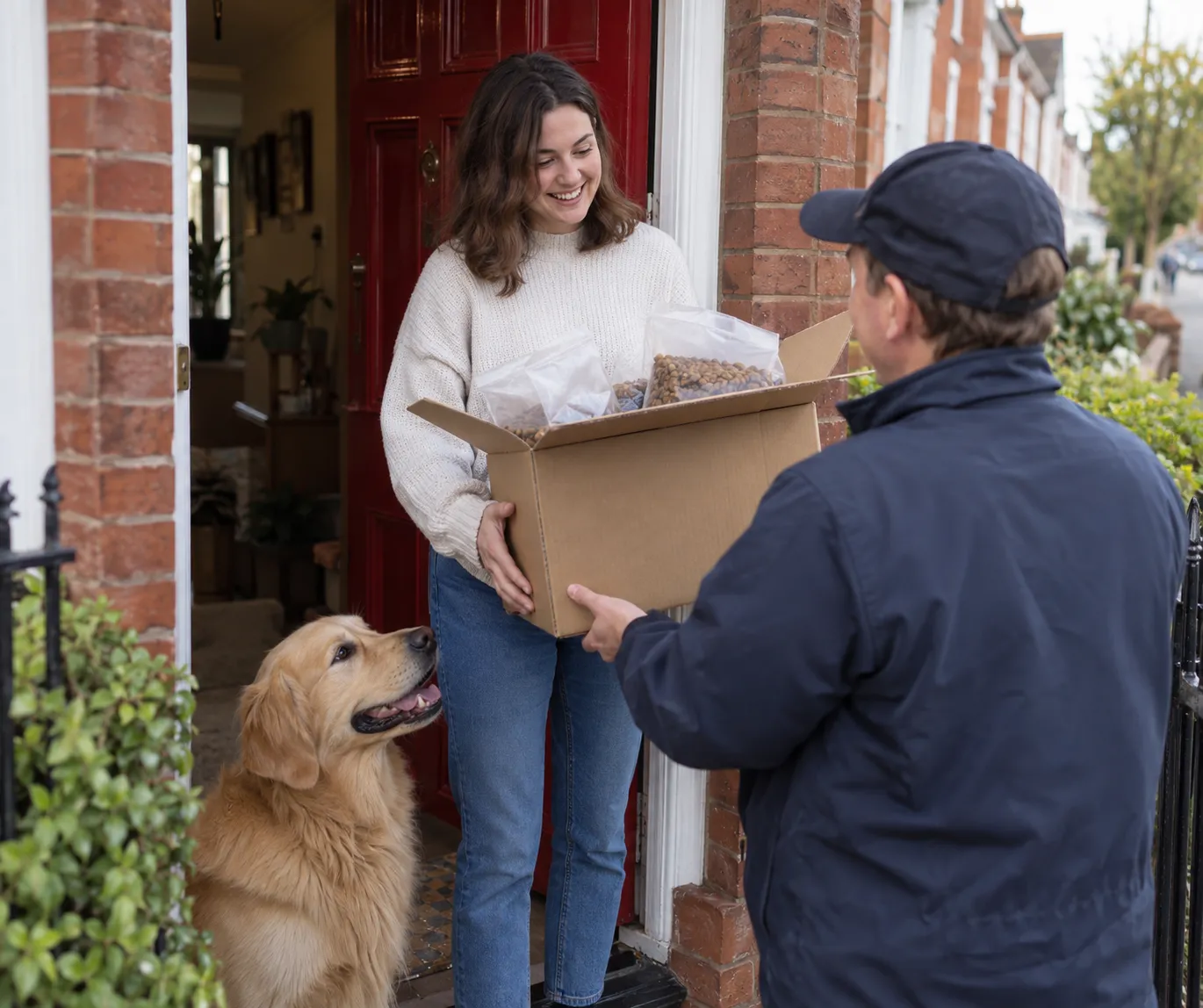
For a Shopify seller in the UK, the practical version of this argument is a supplier question set, not a product shortlist: order-to-dispatch in hours, dedicated storage with named batch responsibility, guaranteed remaining shelf life, DDP delivery in days, and free reshipment when parcels go wrong. Hold every candidate to those five answers. If you want to put that checklist in front of a team that lives on it, our pet supplies dropshipping programme runs on dedicated per-client warehousing, 48-hour order processing with dispatch inside 2 days, and UK door-to-door DDP in 4 to 7 days, express in as fast as 3, with customs and last-mile included in the quoted price. Stock and price changes are flagged to you before your customers feel them, and lost or damaged goods are replaced or refunded (SpeedBee). The category is wide open for exactly one reason: most of your future competitors still think the hard part is picking products.
Build the Food Layer First
Send your product list for a dedicated-warehouse, DDP sourcing plan — 48-hour dispatch, UK door-to-door in 4 to 7 days, customs and last-mile included.
Get a Sourcing QuoteReferences
- Grand View Research. “UK Pet Food Market Size And Trends, Industry Report 2030.” 2025. https://www.grandviewresearch.com/industry-analysis/uk-pet-food-market
- Statista. “Pet food market in the UK – statistics & facts.” 2026. https://www.statista.com/topics/10264/pet-food-market-in-the-uk/
- Omnisend. “How to Start Dropshipping Pet Products (2026 Guide).” 2026. https://www.omnisend.com/blog/dropshipping-pet-products/
- Super-DS. “Pet Supplies Dropshipping 2026: Best-Selling Niche.” 2026. https://super-ds.com/blog/pet-supplies-dropshipping-2026
- Shopify Community. “Where to find dropshipping suppliers for pet food and treats?” 2023. https://community.shopify.com/t/where-to-find-dropshipping-suppliers-for-pet-food-and-treats/263467
- Reddit, r/dropshipping. “Uk pet food.” 2024. https://www.reddit.com/r/dropshipping/comments/1h4v75u/uk_pet_food/
- U.S. Customs and Border Protection. “CBP issues guidance on bringing raw pet food into the United States.” 2019. https://www.cbp.gov/newsroom/local-media-release/cbp-issues-guidance-bringing-raw-pet-food-united-states
- gov.uk. “Import animal by-products from the EU to Great Britain.” https://www.gov.uk/guidance/import-animal-by-products-from-the-eu-to-great-britain
- legislation.gov.uk. “Regulation (EC) No 1069/2009 (retained in GB law).” https://www.legislation.gov.uk/eur/2009/1069/contents
- Reliant Dry Ice. “Maximizing Shelf Life in Frozen Pet Food.” 2025. https://www.reliantdryice.com/post/maximizing-shelf-life-in-frozen-pet-food-dry-ice-techniques-for-production-and-distribution


 English
  Spanish
  French
  German
  Italian
  Polish