
A store owner runs a $40 ad set against a product that scored perfectly on every research checklist. The clicks arrive. Two orders come in. Then the supplier’s listing shows the item out of stock, the next restock date is unknown, and the owner refunds both buyers out of pocket. Nothing was wrong with the product research. Everything was wrong with what the checklist never asked.

What a Winning Product Actually Is
This article walks through how to find winning products using five checks instead of the usual three. This is not the “award-winning” kind of product; it is the kind that sells and survives. That mix-up clutters the first page of results, so it is settled here in one line. The five checks run in order: demand, profit, competition, execution, and supply. Most guides stop after competition. The last two are where testing budgets actually die, and where the difference between a lucky store and a durable one gets decided.
- 1Demand: are people buying this, confirmed across at least two signal types
- 2Profit: does one unit survive all five cost lines after landing and advertising
- 3Competition: who else sells it, and how deep does their supply run
- 4Execution: does a sample-backed small test survive its kill metrics
- 5Supply: can your supplier keep it in stock, fast, intact, and at the quoted price once it starts winning
Demand Validation: Signals, Sources and Tools
Demand validation answers one question: is anyone buying this? Three families of signals cover it. Marketplace data shows purchases that already happened. Ad libraries and short-video feeds show attention forming right now. Research tools bundle both into dashboards that save time. Each family alone can mislead, which is why any product worth testing should show up in at least two.

The channels divide cleanly once you know what each is for. Marketplace best-seller lists on Amazon or AliExpress confirm proven demand, but everything on them has competitors attached. TikTok Creative Center and Instagram Reels reveal what is gaining attention this week. The Facebook Ad Library shows which competitor stores have been running ads for the same product, and for how long. An ad that has run for months usually means the store behind it is making money. Research tools such as Sell The Trend or Minea compress all of the above into one subscription. And there is a fifth route almost no guide mentions: sourcing agents and factories. They work category by category, so they can tell you which product lines have stock on hand right now and which categories are rising in their order books. When you already have a supplier relationship, ask them before you subscribe to anything.
Where product researchers actually look
| Source | What it shows | Lag | Cost |
|---|---|---|---|
| Marketplace best-seller lists | Purchases that already happened | Weeks to months | Free |
| TikTok Creative Center, Reels | Attention forming right now | Days to weeks | Free |
| Facebook Ad Library | Competitor ads and how long they ran | Days | Free |
| Research tools (Sell The Trend, Minea, Dropship.io) | Aggregated sales, store and ad data | Hours to days | Subscription |
| Supplier and factory recommendations | Category-to-origin mapping, live stock | Near zero | Included with an agent |
Two cautions keep this stage honest. First, every public signal lags. A product that tops a best-seller list has already collected its competitors, and a viral video has already seeded a dozen copycats. Read trend slope, not absolute numbers: a product climbing from 200 to 600 monthly orders is a better candidate than one sitting at 5,000 and flat. Second, tool data shows people who already got on the ride, so treat thresholds as filters rather than verdicts. The commonly published bar looks like this: demand trending up across 30 days, sales growing 20% or more week over week, and margins near 30 to 40% (Sell The Trend, 2026). One more filter completes it: skip anything hundreds of identical stores already sell. Products that fail this filter rarely deserve a test. Products that pass it have not yet earned one either. They have only earned the next check.
Profit Validation: The Margin Number Nobody Agrees On
Margin advice comes in two doctrines, both stated with total confidence. Tool platforms publish one: a 30 to 40% margin after costs, with 20%-plus weekly sales growth, is what makes a product worth scaling (Sell The Trend, 2026). Forums repeat the other: price at three times product cost or walk away. The arguments never resolve because the two rules count different things. Markup on product cost is not margin, and “after costs” means a different list of costs to every person repeating it.
The only durable version of the rule is a table. A unit’s landed cost has five lines, and every product’s survival depends on which lines dominate.
The five cost lines that decide a unit’s fate
| Cost line | What it includes | What hides it |
|---|---|---|
| Product cost | Factory price at your order quantity | Almost nothing; it is the line everyone counts |
| Freight in | Domestic pickup and international air line | The “3x” rule counts only product cost, so freight-in vanishes |
| Last-mile delivery | Destination-country courier or postal leg | Same; it never appears in markup math |
| Duty and clearance | Import taxes and brokerage, DDP if prepaid | Skipped entirely by most checklists |
| Ads and refunds | Cost per sale plus refund and chargeback losses | Treated as “scaling costs” instead of unit costs |
Duty is the line that changed most recently. Since 1 July 2026 the EU charges a temporary flat customs duty of €3 per item on low-value consignments up to €150 (European Commission, 2026). That duty sits on top of import VAT, which has applied to all parcels since the €22 exemption ended in 2021. A €12 product selling at €30 carries those charges into its margin whether the pricing spreadsheet noticed or not. This is why the useful question at quoting stage is not “what is your price” but “quote me product, freight, and duty as separate lines, DDP if possible”. A supplier quote that answers all three is a supplier who has shipped to your market before.
Delivery speed behaves like a cost line even though no invoice lists it that way.
The same product on a 4–7 day dedicated lane and a 10–20 day postal lane are two different businesses. Slower delivery means more refund requests, more “where is my order” messages, and a higher real cost per profitable order, which silently rewrites the margin percentage you calculated.
Two special cases bend every threshold above. Battery-powered goods often route through Hong Kong flights, adding days and cost that a spreadsheet built for general cargo misses. Bulky, lightweight items such as plush toys and storage boxes get charged by volumetric weight, so their freight line dwarfs their product cost. For those categories the honest move is to ask the supplier for an all-in door-to-door quote before believing any margin percentage. That single check, confirming what the quote includes, is the whole discipline of this stage.
Competition Validation: Early Entry vs. Category Depth
Competition checklists give one instruction: find products before they saturate, and avoid anything hundreds of stores already sell (Sell The Trend, 2026). Meanwhile, one of the more upvoted posts on r/dropship in recent memory argues the opposite: the seller only started making money after they stopped chasing winning products entirely (r/dropship, 2026). Both camps are describing real outcomes, which means neither timing rule is the actual variable.
The variable is supply depth. The early-entry play only works if you can run the full test-and-scale cycle before copies arrive. That means fast restocks, stable inventory, and enough per-day volume to ride the trend while it peaks. That is a supply-chain capability wearing the costume of a research skill. The category-depth play works the opposite way: pick a durable niche, accumulate reviews and repeat buyers, and let competitors fight over whatever trend is current. It rewards consistent quality and patient stock more than speed.
So the real self-assessment is not “am I early” but “what can my supply chain actually do”. If your restock cycle is measured in weeks and your supplier cannot reserve stock, an early trend is a trap. You will win the race to list the product and lose the race to deliver it. If your fulfillment is fast and your stock is committed, early entry stops being a gamble. Before chasing any trend, confirm your own replenishment timeline first. The check that matters is not on the product; it is on the pipeline that would carry it.
Before you commit ad spend to an early trend, get your candidate product’s restock timeline and lane speed in writing.
Check My Supply TimelineExecution Validation: Testing Without Burning Out
Test budgets die in patterns, and the patterns are public. One seller documented roughly $90,000 in ad spend before quitting, including about $2,500 on a single product for design, copywriting, and video ads that never turned profitable (r/dropship, 2020). Another lost around $14,000 across two failed attempts and traced most of it to ad spend (r/dropship, 2024). A third tested nine products in a row; all nine died (r/dropship, 2020). None of these people failed at finding demand. The demand check had, on paper, passed.
documented ad spend before one seller quit
spent on one product’s creatives — never turned profitable
products tested in a row; none survived
Run the Sample Before the Ads
The most repeated piece of process advice in r/dropshipping has hardened into community law: always order a sample before running ads. The reason is arithmetic. A sample costs the product price plus one shipping fee. An ads-first mistake costs the ad spend plus every refund it generates. Buy the sample as a regular customer, not through a sample request, so you see exactly what a buyer receives. Judge build quality against the listing photos. Check whether the packaging survives the trip. Log the real door-to-door transit time with dates. A five-day promise that arrives in eighteen days is data. The sample stage also tests the supplier: a vendor who answers sample-order questions in hours and confirms stock before payment is telling you something a product photo cannot.
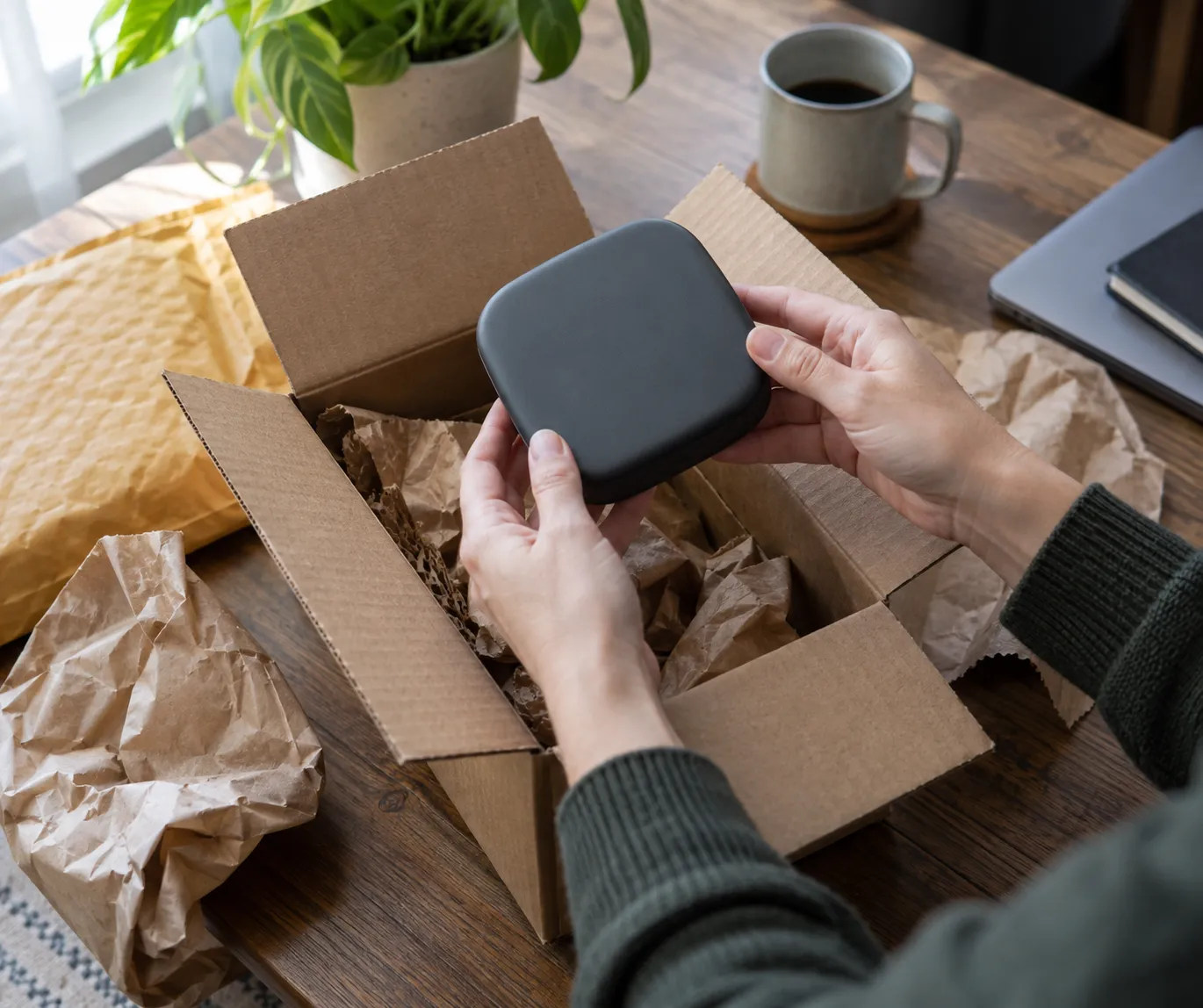
Design a Test You Can Afford to Lose
Tutorial economics say you can validate a product for a few dollars a day. The postmortems above say otherwise: real testing burns hundreds to thousands before the verdict arrives, because ads, creatives, refunds, and time all bill simultaneously (r/dropshipping, 2025). Plan the test as a fixed bet with a pre-written kill rule. Set a daily cap you will not raise, a window of five to seven days, and a kill line such as “no profitable order by day five at this CPA”. Write the kill rule before spending, when you are still objective. Small samples do carry limits; a week of data says nothing about return rates or repeat purchases. The test’s job is narrow: confirm or deny that strangers will buy this product at this price through this funnel. Everything longer-term gets checked by the fifth validation, not by extending the ad budget.
- 1Order one sample as a customer and log real transit days
- 2Inspect build, packaging survival and listing consistency
- 3Run a capped ad test with a pre-written kill rule
- 4Classify the death: demand, profit, execution, or creative
- 5Kill the product only if the death was demand-side
Read the Autopsy Before You Blame the Product
When a test fails, exactly one of four things killed it, and each death leaves different evidence.
- Demand death: clicks never became add-to-carts in any audience; the store got attention but no intent.
- Profit death: orders came in, but money after the five cost lines is negative at the achieved CPA.
- Execution death: CTR stayed healthy while shipping lagged, stock ran out mid-test, parcels arrived damaged, or refunds climbed; the product sold fine and the pipeline failed it.
- Creative death: CTR below benchmark on every angle; the product page lost people before the price showed.
Only the demand death convicts the product. Profit deaths point back to the table in check two. Execution deaths point at the supply chain, which no amount of product research can fix and which the next check exists to prevent. Creative deaths are a content problem in disguise, and retesting with new angles is cheaper than abandoning the item. The 9-failures poster’s own thread, read closely, is mostly executions and creatives dying; the products were rarely the thing on trial.
Supply Validation: The Fourth Criterion
Every check so far evaluated the product. This one evaluates the pipeline behind it, because at scale the pipeline becomes the product. The forum record is blunt about what actually kills winning items: shared inventories that vanish on the day orders spike. Listings get removed or repriced without notice, and three-week transit windows turn first-time buyers into refund requests. A product that passes demand, profit, and competition checks can still die here. This death is the most expensive kind, because it arrives after you have already paid for the proof.
Shared Listings Versus Reserved Stock
Platform-style dropshipping works from shared inventory: one pool of stock serving every store that lists the item. The model is frictionless right up until demand arrives. When twenty stores’ orders hit one pool on the same weekend, somebody ships from backorder, and the store holding the now-dead listing eats the refunds. Reserved stock inverts the commitment: a supplier holds your units, in space dedicated to you, bought before the demand shows up. The same logic covers the listing itself. Marketplaces can delist or reprice at will; a supplier who commits to advance notice before discontinuation or price changes removes two failure modes that no ad strategy can answer. Reserved stock costs capital earlier. That is the trade: it converts a public commodity into something closer to private infrastructure.
At scale, the pipeline becomes the product.
Delivery Lanes Change the Same Product’s Fate
Freight geography is a selection criterion that research tools never score. Stores serving the UK on a dedicated lane measure door-to-door delivery in as fast as three days. General EU and US lanes run four to seven days with customs cleared before delivery. Unallocated postal routing can stretch past two weeks. Recall the margin table: transit time feeds the ads-and-refunds line. The same pillow, the same gadget, the same ad creative produces a different refund rate on each lane. Products with batteries complicate this further, since they often must fly out of Hong Kong regardless of origin. When comparing suppliers, ask which lane your parcels actually fly on and what the door-to-door days are for your market. The answer belongs in the same cell of your spreadsheet as the product cost.
The Terms to Put in Writing
Quality and compensation are checkable before a single order ships. On quality: does the supplier inspect per category, with a written list covering appearance, function, dimensions, and color, and what happens to a failed unit? One workable signal of seriousness is the first-order packing video. A warehouse that films how it packs your first order, from several angles, is a warehouse with nothing to hide. The payoff for this discipline is measurable. One bedding product line that suffered wrinkle and filling complaints saw its monthly complaint rate collapse after a supplier-side upgrade of fabric and filling; the product itself never changed. On compensation: who pays when a parcel is lost or arrives damaged, does a confirmed order’s price ever move afterward, and how fast are orders processed? These clauses decide whether the execution deaths from check four are your recurring cost or the supplier’s.

Three questions pressure-test any candidate supplier before a test order:
- How many units of this product do you hold in your own warehouse right now?
- If my daily orders triple next month, how many days can you keep up, and what is the reorder lead time?
- How much notice do I get before a price change or a discontinuation?
Answers that dodge, hedge, or arrive a day late are answers.
The three common supply routes compare like this:
Three ways to source a product, and where each one dies
| Supply route | Fits | Saves you | Kills you |
|---|---|---|---|
| Self-ordering from marketplaces (AliExpress, 1688) | First experiments and one-off orders | Zero commitment and a huge catalog | Stock-outs at scale, no QC, no leverage on defects |
| Platform dropshipping apps | Testing many products quickly | Automation, breadth, low upfront cost | Shared inventory vanishing on your best day, generic packing, peak-season queues |
| Reserved-stock agent (one client, one warehouse space) | Products you intend to scale | Dedicated inventory, category QC, custom packing, advance notice on changes | Capital tied up in stock and a slower first move |
No route is wrong; each one simply fails differently. Self-ordering dies at scale, platform apps die on your best sales day, and the reserved-stock route trades flexibility for reliability. Most stores that last run the first route while experimenting, then graduate to committed stock for the one or two products that earn it.
- 1Units of this product in their warehouse right now.
- 2Peak daily volume they can hold for you and the reorder lead time.
- 3Which lane your parcels fly on and door-to-door days for your market.
- 4Who pays when a parcel is lost or arrives damaged.
- 5Notice period before a price change or discontinuation.
Running the Numbers Like a Business
Put the five checks together and a store’s testing budget starts to behave like an investment portfolio rather than a slot machine. The real cost of one product test is sample fees, ad spend, plus fulfillment losses. That third line is zero or large depending entirely on who absorbs lost and damaged parcels. Reread the four death causes with that in mind. Demand deaths are unavoidable experimentation. Profit deaths are accounting homework. Execution deaths, though, are the only category a supplier switch eliminates outright. The forum postmortems suggest they are common enough to decide whether a testing budget dies or compounds.
The bedding case deserves its number. The same product line, before and after a supply-side upgrade:
That spread, 0.56% to 0.077%, is what the fourth check buys. No new product was found, no new ad angle was tested; a supplier visited the factory, changed materials, and the refund line shrank by roughly seven times. This is the habit that separates stores that survive their first year. They run all five checks as a fixed routine before any order is placed. Demand goes through signals and tools, profit through the five-line table, competition through supply depth, execution through sample-first capped tests, and supply through the five confirmations. The five checks cost an afternoon. A dead testing budget costs a quarter.
This is the lens we built SpeedBee around. Our UK lane delivers in as fast as 3 days; our EU and US lanes run 4–7 days door-to-door with duties prepaid (delivery timelines by lane). When a parcel goes missing or arrives damaged we reship or refund at no charge, and a confirmed order’s price never moves (what happens when a parcel goes missing). Those are the exact terms check five asks any supplier to put in writing; we just prefer to volunteer them.
If you want a candidate product held as reserved stock before your first order even ships, SpeedBee‘s reserved stock model, one client to one dedicated warehouse space, was built for exactly that stage.
Put Reserved Stock Under Your Next Winning Product
Send SpeedBee your candidate product — you get a dedicated warehouse space, category QC, DDP lane speeds, and written notice periods before your first test order ships.
Request a Reserved-Stock QuoteReferences
- European Commission, Taxation and Customs Union. “Guidance and Legal Text on Temporary Flat Fee on Low-Value Imports Which Will Apply Until 1 July 2028.” 2026. https://taxation-customs.ec.europa.eu/news/guidance-and-legal-text-temporary-flat-fee-low-value-imports-which-will-apply-until-1-july-2028-2026-06-08_en
- r/dropship. “Tested 9 Products, All of Them Failed, What Now?” 2020. https://www.reddit.com/r/dropship/comments/hvdane/tested_9_products_all_of_them_failed_what_now/
- r/dropship. “How Much Did You Lose Attempting to Run a Dropshipping Business?” 2024. https://www.reddit.com/r/dropship/comments/1f82xpv/how_much_did_you_lose_attempting_to_run_a/
- r/dropship. “$90,000 Ad Spend: My Failed Dropshipping Journey!” 2020. https://www.reddit.com/r/dropship/comments/g3vn2u/90000_ad_spend_my_failed_dropshipping_journey/
- r/dropshipping. “I’ve Been Wasting Money Testing Dropshipping Products for 3 Months.” 2025. https://www.reddit.com/r/dropshipping/comments/1p5jbyc/ive_been_wasting_money_testing_dropshipping/
- r/dropship. “Stopped Chasing ‘Winning Products’ and Finally Made Money.” 2026. https://www.reddit.com/r/dropship/comments/1qiyws7/stopped_chasing_winning_products_and_finally_made/




 English
 Spanish
 French
 German
 Italian
 Polish