
What Custom Packaging Actually Means When You Dropship
A customer in Manchester opens a parcel and finds your product inside a plain poly bag, with a Chinese-language label half peeled off and nothing that says who you are. The product works. The customer is fine. Six weeks later they cannot remember your store’s name. When they want the matching accessory, they buy from whoever shows up first in their feed. That is what unbranded packaging costs you. Not a refund. A repeat purchase. One jewelry seller described the ceiling of that world precisely. On AliExpress standard shipping, his supplier told him, there was simply no choice beyond the plain plastic bag (Shopify Community thread on dropshipping packaging, 2021).
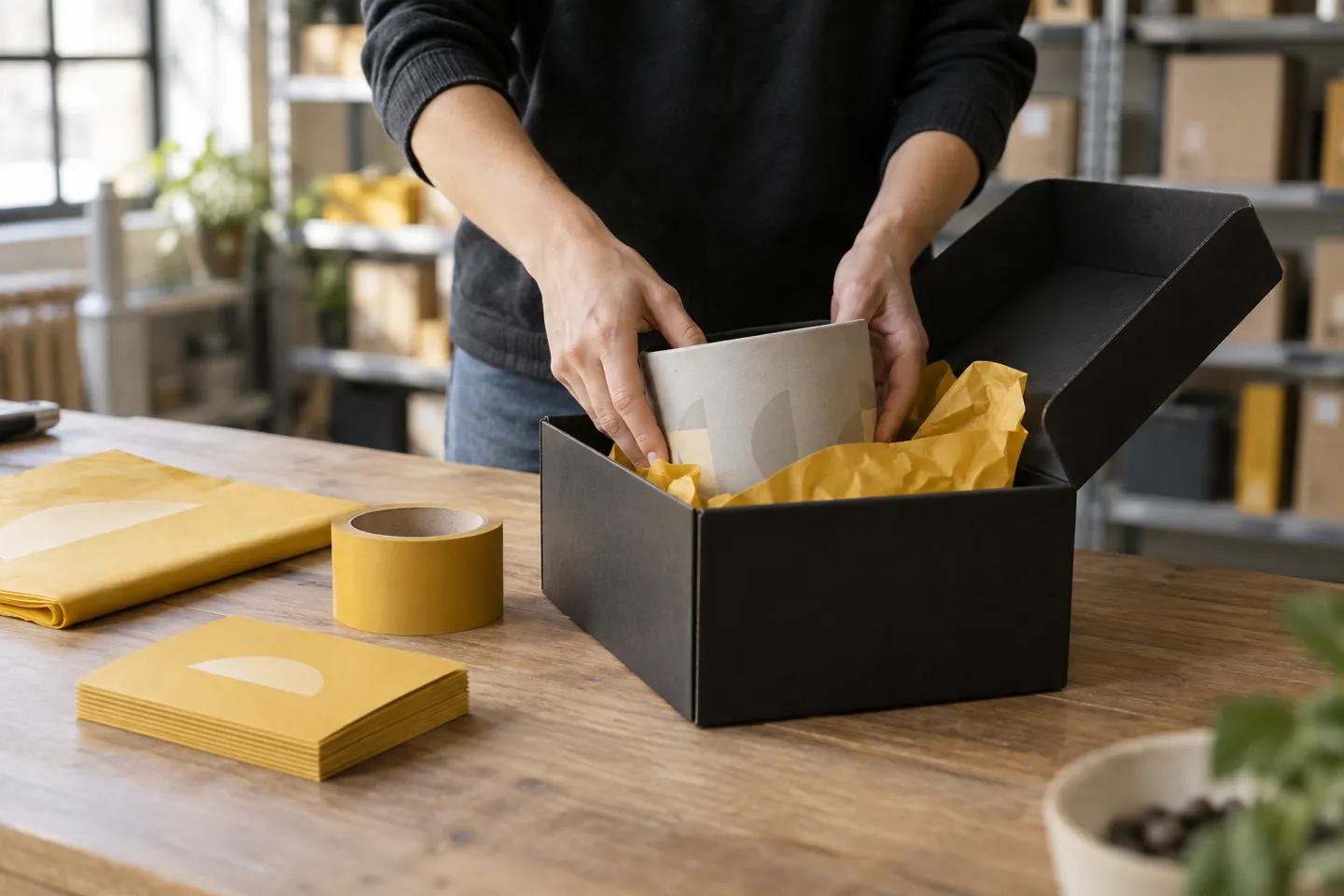
Custom packaging is the fix, and in dropshipping it covers three layers. You do not need all three to start, but you need to know what exists before you can price any of it.
The Three Layers of Custom Packaging
| Layer | What Goes Here | Typical Items | What It Does |
|---|---|---|---|
| Outer packaging | The shipping box or mailer the carrier handles | Custom printed boxes, branded mailer bags, logo tape | Carries your brand through delivery and protects the product |
| Inner packaging | What the customer sees when they open the box | Logo inner boxes, dust-proof branded bags, tissue paper | Shapes the unboxing moment and perceived value |
| Inserts | Everything you add inside | Thank-you cards, personalized message cards, coupons, brochures, gift bags | Drives reviews, repeat purchases and referrals |
One clarification before anything else, because it will save you from badly mismatched quotes. This article is about dropshipping scale: runs of a few dozen to a few hundred units, ordered by people who do not want a garage full of boxes. The custom packaging industry also serves established brands. Those brands order 5,000 to 20,000 printed units at a time, and small-business owners quote exactly those minimums on Reddit, sticker-shocked (r/smallbusiness thread on custom packaging MOQs, 2026). If you are stocking retail shelves, those figures apply to you. If you are dropshipping, they do not, and the rest of this article stays in your world.
The cheapest legitimate starting point sits in the inserts layer: a printed thank-you card or a logo sticker. It costs pennies per order, almost no supplier refuses it, and it already changes what the customer remembers. Everything past that is a question of depth, and depth has a price structure most articles never explain.
The Four Depth Levels, and Why the Price of Entry Jumps
“Custom packaging” is one phrase covering four very different purchases. The word does not change. The minimum order, the unit cost and the workload behind it jump by an order of magnitude each time you go one level deeper. Here are the four levels, with the numbers sellers report paying.
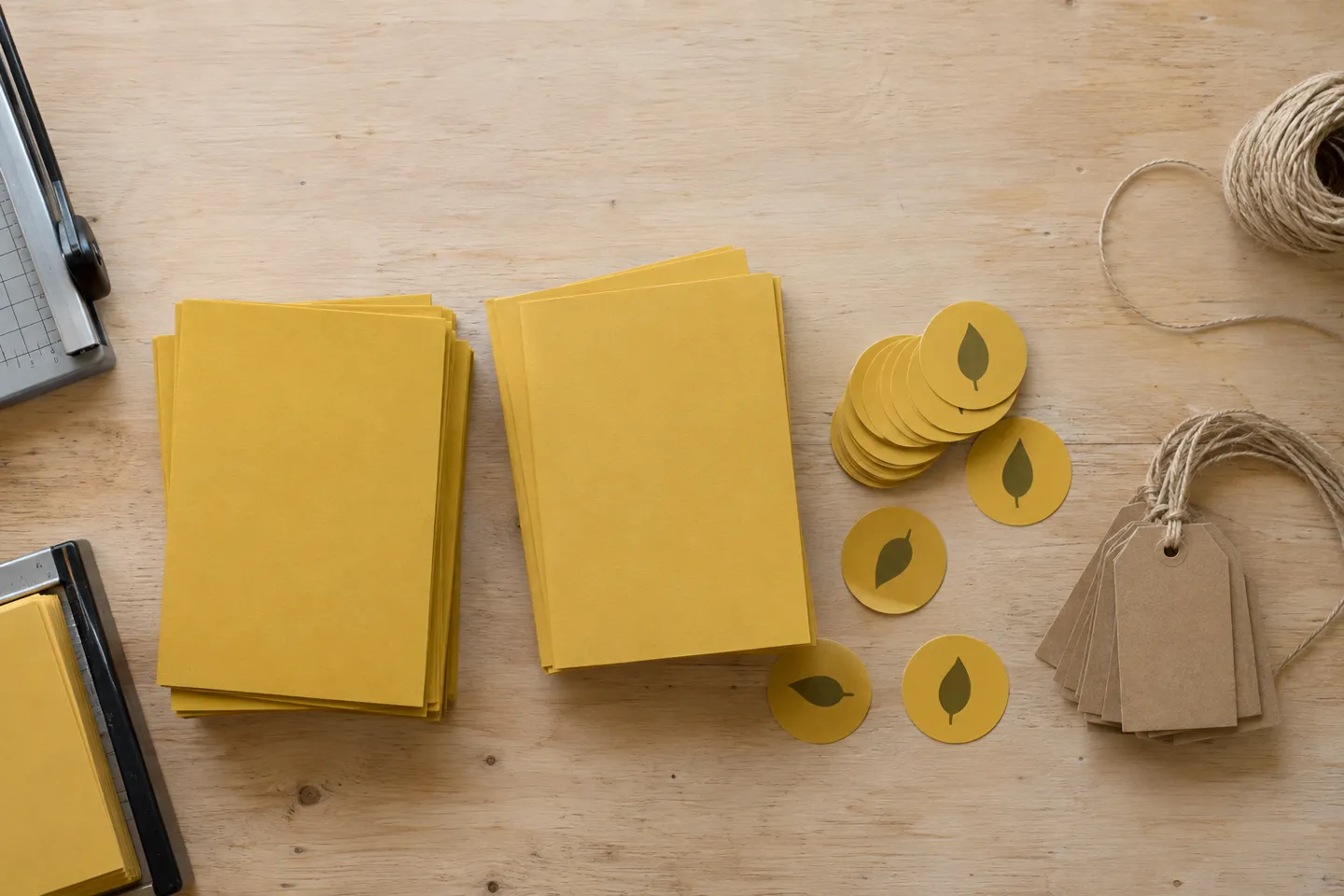
Level 1: Cards, Stickers and Inserts
The entry level. Thank-you cards, personalized message cards, coupons, logo stickers. Minimums run from a few dozen to a few hundred pieces, and unit costs sit in the cents range. Nearly every supplier or agent can produce them, including a regular AliExpress seller as a side service. What you get is a branded touch inside an otherwise generic parcel. Where it fails: a beautiful card inside a battered, anonymous mailer reads as an afterthought on high-ticket products. The card works with the package around it, not instead of it.
Level 2: Printed Mailers and Inner Packaging
The first level where your brand wraps the product itself. Printed poly mailers and branded inner bags typically start around 100 pieces, at roughly half a dollar per bag. That matches what one seller reported paying for exactly that run (r/dropship thread on custom packaging costs, 2023). This is also the level where print quality first becomes a real risk, because your artwork is now on the outside of every parcel. You will need a proper artwork file for the first time, and you should demand a pre-production sample before the full run prints. Where it fails: cheap mailer prints can come back faded or smudged. One dropshipper documented being unsatisfied with exactly that on a mailer bag order from a large platform.
Level 3: Fully Custom Boxes
A rigid box with your logo, your colors, your pattern. The jump in price has a mechanical cause. A custom box needs plates and tooling, and that setup cost gets spread across the run. This is why customized options commonly raise per-unit costs by 30% or more (Trendsi packaging guide, 2025). Digital printing handles short runs without plates but charges more per unit. Plate printing charges less per unit and more up front. That single tradeoff explains most of the contradictory MOQ figures you will read. One seller summed up the quotes he was seeing: about $100 of minimum commitment for a printed logo, about 1,000 pieces for a custom box. His conclusion: it “makes no sense to do it” (r/dropship thread on customized boxes, 2023). Boxes also add dimensional weight, which pulls shipping costs up at exactly the same time.
Level 4: The Full Brand Kit
Outer box, inner packaging, cards, gift bag, consistent colors across all of it. This is the private-label tier, where the parcel itself becomes marketing and the unboxing gets filmed for social feeds. It applies the same mechanics as levels one to three, across every component at once. That means it inherits every minimum and every quality risk at the same time. We will cost it out properly near the end, because at this level the question stops being “what does it cost” and becomes “how does it fit into fulfillment”.
The Four Depth Levels at a Glance
| Depth Level | Typical MOQ | Typical Unit Cost | Easiest Route | First Pitfall You Hit |
|---|---|---|---|---|
| Cards and stickers | tens to low hundreds | cents per piece | Any supplier incl. AliExpress sellers | Reads as cheap on high-ticket items |
| Printed mailers | around 100 | about $0.5 per bag | Supplier negotiation or agent | Print fades or smudges |
| Fully custom boxes | hundreds to 1,000+ | dollars per piece plus setup | Dropshipping agent with warehouse | Dimensional weight raises shipping |
| Full brand kit | follows components | bundled | Agent with dedicated inventory | Fulfillment slows as components pile up |
You will see “custom packaging from 1 piece, no MOQ” on platform landing pages and “5,000 units minimum” in small-business forums. Both are real quotes from real sellers, and neither is lying. The difference is the order model behind the quote, which we untangle in the routes section below.
And the boundary conditions, because each level has a point where it stops making sense:
Where Each Level Breaks
| Depth Level | Fits This Stage | Breaks When |
|---|---|---|
| Cards and stickers | Testing products, pre-launch, no consistent sales yet | Your price point is high enough that customers expect more than a card |
| Printed mailers | First consistent sales, one winning product | You sell fragile goods that a mailer cannot protect |
| Fully custom boxes | One product proven, repeat purchases appearing | You are still testing products and may change direction next month |
| Full brand kit | Building a brand around a proven category | Your SKU count explodes and every SKU needs its own materials |
When Custom Packaging Starts Paying for Itself
Two sayings circulate in every dropshipping community, and each one is half right. “Wait until sales are consistent” is half right. It correctly says you should not print 1,000 boxes for an unproven product. It is wrong about waiting forever: every parcel shipped without branding is a missed repeat-purchase trigger. “Packaging is profit infrastructure” is right about the direction. It is wrong about the starting point, because it pushes beginners toward custom boxes when a card teaches the same lesson for 2 percent of the cost.
Three checks tell you where you stand. First, category. Repeat-purchase categories like beauty, pet supplies and apparel earn back packaging investment faster than one-and-done gadget stores. The same customer sees your box twice. Second, price point. On products selling above roughly $30, an insert-only package starts to feel disjointed, so plan to move up a level sooner. Third, signal. Upgrade one level when repeat purchases or return complaints show up in your data. Not when you feel behind on branding. Returning customers are the audience your packaging actually performs for.
Where are you?
- Still testing products: stay at cards and inserts.
- One product with steady sales: move to printed mailers, order a sample first.
- Repeat purchases showing up: custom box territory, quote it against an agent’s warehouse model.
- A category you plan to build a brand on: full kit, and read the fulfillment section before you order anything
For honesty’s sake: sellers do ship in bubble wrap and a business card for years without a single complaint about it. Packaging is not the only growth lever in your store. But once repeat purchases exist, an anonymous parcel throws away a free branded touchpoint on every single order. That is the specific waste this article eliminates.
Getting It Made: Four Routes and the One That Changes the Math
Four Routes Compared
Every route to custom packaging answers the same three questions. Who holds the materials? Who packs each order? Who is responsible when the print comes out wrong?
Four Routes to Custom Packaging
| Route | Typical MOQ Behavior | Upfront Commitment | Who Packs Per Order | Print Quality Responsibility | Fits |
|---|---|---|---|---|---|
| AliExpress supplier direct | Small minimums, quality varies by seller | Lowest | The supplier | You and the supplier argue | Testing branding on one product |
| Private-label platform services | Low advertised minimums, check conditions | Low to medium | The platform | Split, unclear | Beginners wanting one dashboard |
| Dropshipping agent with warehouse | MOQ applies to stocked materials, not per order | A batch of packaging stock | The agent’s team | The agent, contractually | Sellers with a proven product |
| Packaging manufacturer + self-fulfillment | From 50 units at about $0.35 per piece for simple boxes (dropshipping packaging supplier quote) | A full run of boxes | You | You | Sellers already holding inventory |
Two footnotes on that table. Platforms advertise custom packaging with minimums “as low as one unit” (CJdropshipping custom packaging page). Read the conditions: per-order on-demand customization and stocked custom materials are two different services with two different price structures. The manufacturer route is real too. American packaging vendors quote custom boxes from 50 units at around $0.35 per piece. That becomes viable the moment you are already holding inventory anyway.
The Inventory Model Behind Every MOQ Quote
Here is the mechanism nobody explains. Setup costs are real: plates and tooling cost money, and a factory will not fire a press for ten boxes. On top of that sits the order model. A pure dropship supplier never holds your stock, so he has no reason to warehouse your custom materials for a handful of orders a day. That is why the classic community answer to “how do I get custom packaging” was “you need an agent, and realistically 20 to 30 orders daily” (r/dropship thread on custom product packaging, 2020). The quote was honest about the constraint and misleading about the cause.
The 1,000-piece MOQ is not a law of packaging. It is a fact about where the boxes sit.
Stock the same custom box inside a fulfillment warehouse and the full run turns into a small batch of materials, consumed one order at a time.
That single reframe is the difference between the quotes you have been comparing. Your upfront commitment stops being a full production run and becomes a batch of packaging stock sitting next to your products. Your per-order workflow stops depending on one seller remembering to slap on a logo bag. And your quality recourse stops being a dispute button, because the team packing your orders packed the sample you approved.
The Per-Order Workflow
Once materials are stocked, the running workflow looks like this:
Approve artwork: final logo files, color codes, dieline for the box.
Approve a pre-production sample: physical proof before the run prints.
Stock the materials: packaging enters the warehouse beside your product inventory.
Orders sync automatically: your store pushes orders straight into the fulfillment system.
Pick, pack, brand: each order is packed with your materials against your packing instructions.
Confirm and dispatch: first parcel filmed from several angles for your sign-off, then orders dispatched against the processing SLA
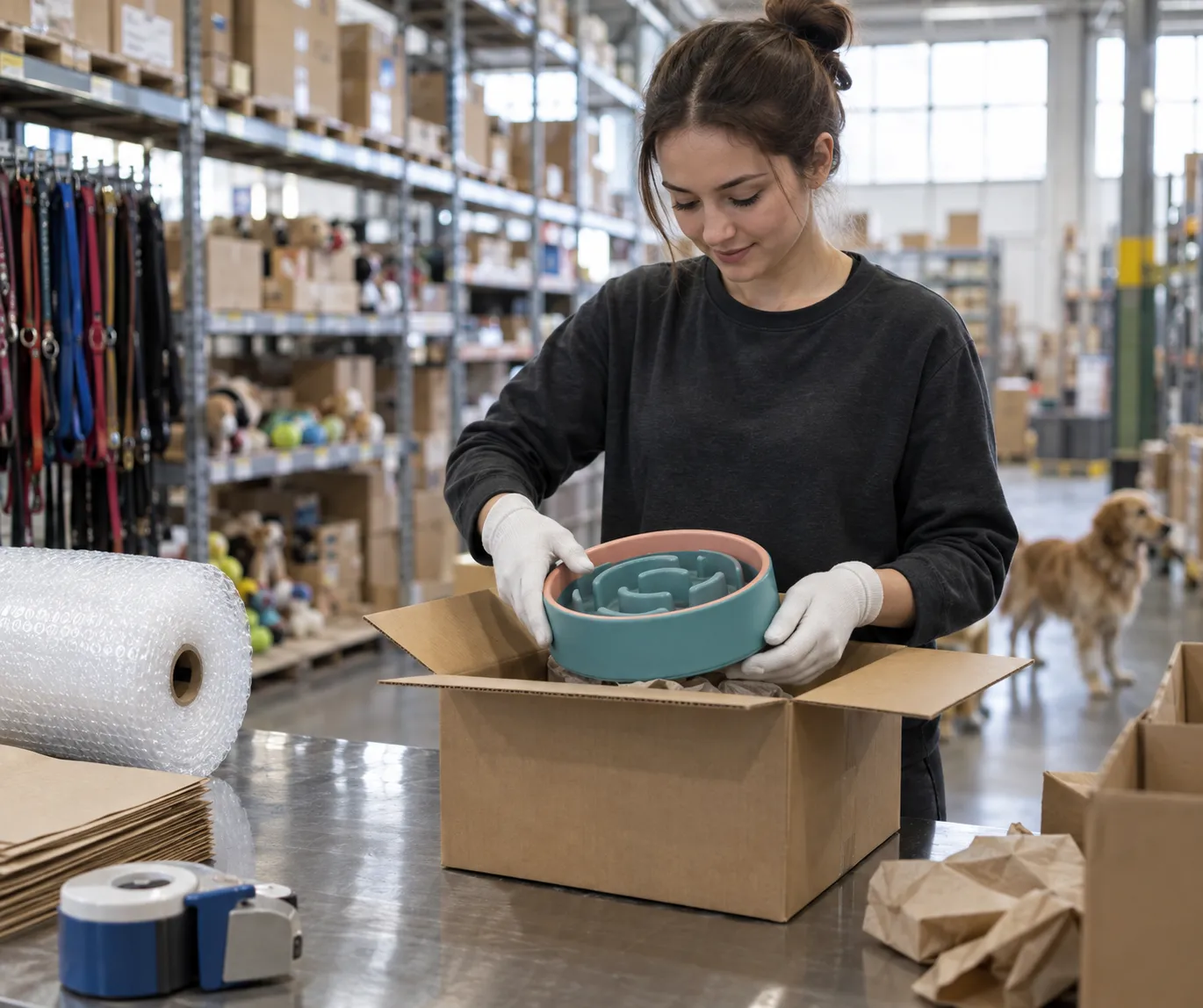
SpeedBee runs this exact model. Your branded materials live in dedicated stock at our Guangzhou warehouses, and orders sync from your store automatically. Each one is processed under a 48-hour workflow before handover to the carrier (48-hour processing workflow). Before any batch ships, we film the first packed parcel from several angles and send it to you for approval. Folding, card placement and protection get settled while corrections are still cheap (packing standards with video confirmation). We would rather reshoot the first box than reprint a thousand of them.
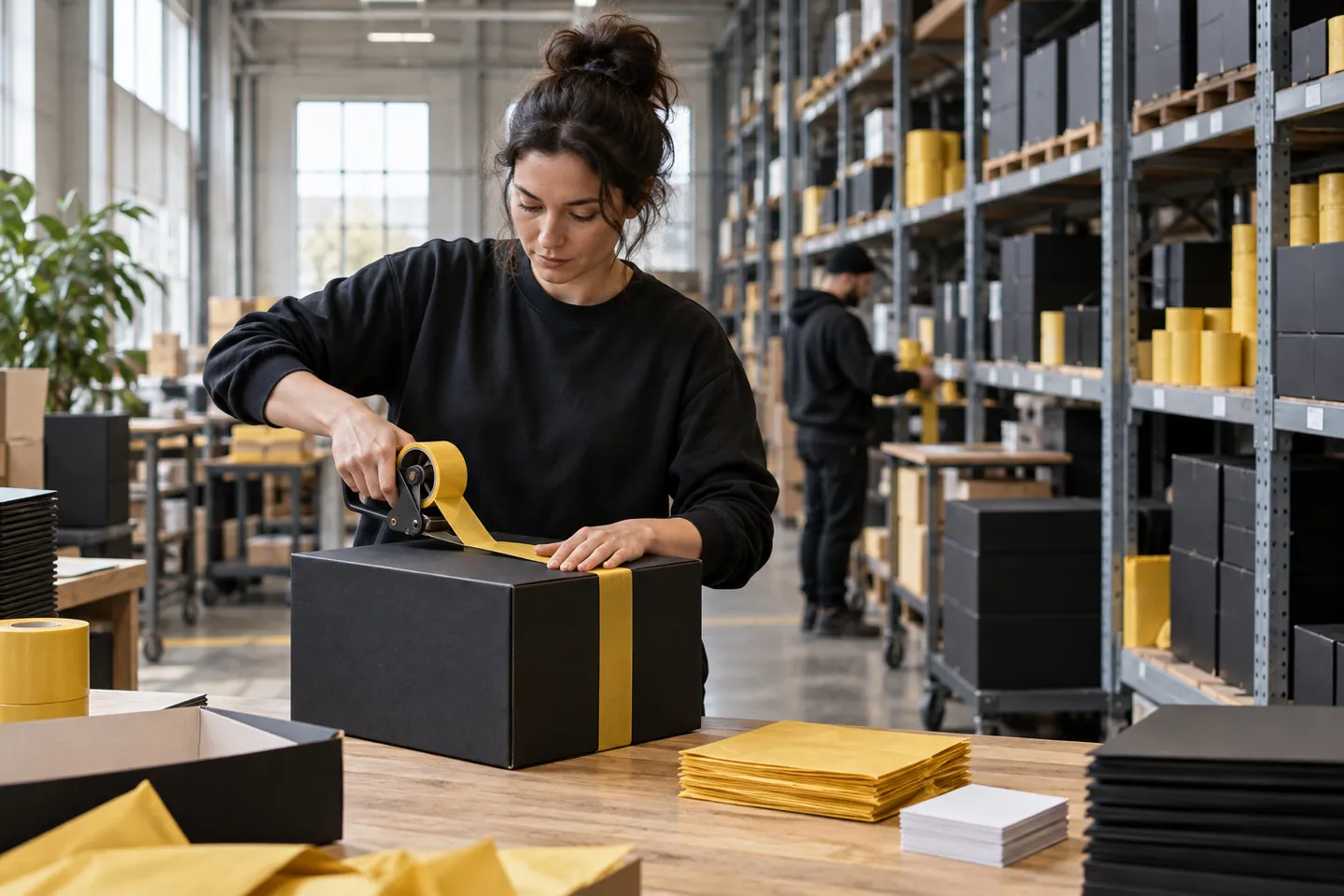
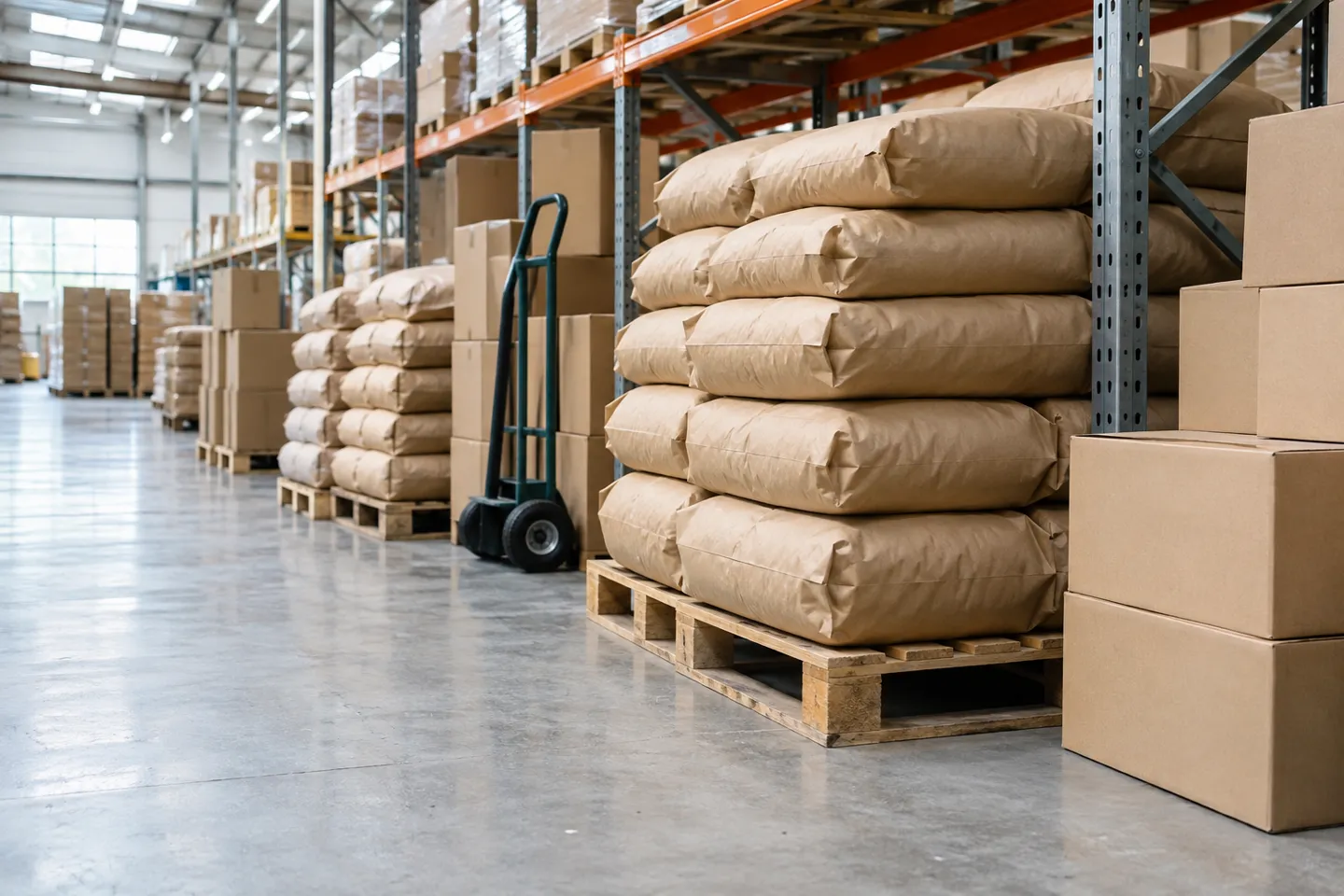
One boundary to respect: stocked materials occupy warehouse space, and every additional box size, bag color and card variant multiplies that footprint. Stores running fifty unrelated SKUs should stay at the insert level, where variety is cheap.
A proven product plus a fulfillment partner turns custom packaging from a print order into a working system.
Get a Custom Packaging QuotePrint Quality, Shipping Weight, and Damage: Where the Money Leaks
Custom packaging leaks money in three places, and all three are cheaper to prevent than to discover.
The first leak is print quality. The failure mode is documented in the wild. A dropshipper ordered custom mailer bags through a large platform and was not satisfied with the print quality when they arrived (r/dropship thread on custom packaging, 2023). The prevention is mechanical, not hopeful. Approve a physical pre-production sample. Make that sample the standard every batch is checked against. Require a packing video of the first parcel before the rest of the batch ships.
The second leak is dimensional weight. Carriers bill on the space a parcel occupies, not just what it scales. A custom box that adds two centimeters of padding on every side can quietly raise your shipping cost per order, across thousands of orders. Ask your logistics provider to quote the merged parcel, product plus packaging, at dimensional weight before you commit to a box size. Favor box designs that fold flat or pack tight.
The third leak is damage. U.S. retailers expected 16.9% of annual sales to come back as returns in 2024. That is $890 billion worth of merchandise, per the NRF and Happy Returns annual report (NRF/Happy Returns 2024 returns report, 2024). Transport damage is a significant slice of that. Protection is a per-category decision: corner guards and reinforced edges for fragile goods, thicker bubble wrap for electronics, thread-trimming and dust treatment for textiles. Put responsibility in writing: who reships when a carrier loses the parcel, and who eats the cost when a print arrives smudged.
Pre-shipment checklist: sample approved as the standard, merged dimensional-weight quote in hand, protection matched to category, reshipment responsibility written into the agreement. Four lines that prevent all three leaks
A one-line note for battery-powered products. They route through specific air corridors with compliance paperwork. Packaging changes for those SKUs need a check with your logistics partner before the boxes are printed, not after.
The Full Brand Kit: Premium Unboxing Without Breaking Fulfillment
At the top of the ladder sits the kit premium unboxing videos are made of. Here is the full component list in one table:
The Full Brand Kit, Component by Component
| Layer | Component | What It Does |
|---|---|---|
| Outer | Logo shipping box in your brand colors | Owns the doorstep moment |
| Outer | Custom printed mailer bags | Brand carrier for soft goods |
| Outer | Logo packing tape | Cheap consistency upgrade |
| Inner | Branded inner box | Lifts perceived product value |
| Inner | Dust and moisture-proof branded bags | Protection plus branding in one |
| Inserts | Thank-you card | Closes the sale politely |
| Inserts | Personalized message card with customer name and order number | Makes mass orders feel personal, single cards usually cost nothing extra |
| Inserts | Coupon or promo card | Buys the next order |
| Inserts | Branded gift bag | Turns the parcel into a giftable object |
Premium does not mean all of it. A brand kit reads as premium through consistency: one outer box, one inner element and one card in the same colors beat seven components in almost-matching shades. Pick the three components your category actually rewards, and let the rest go.
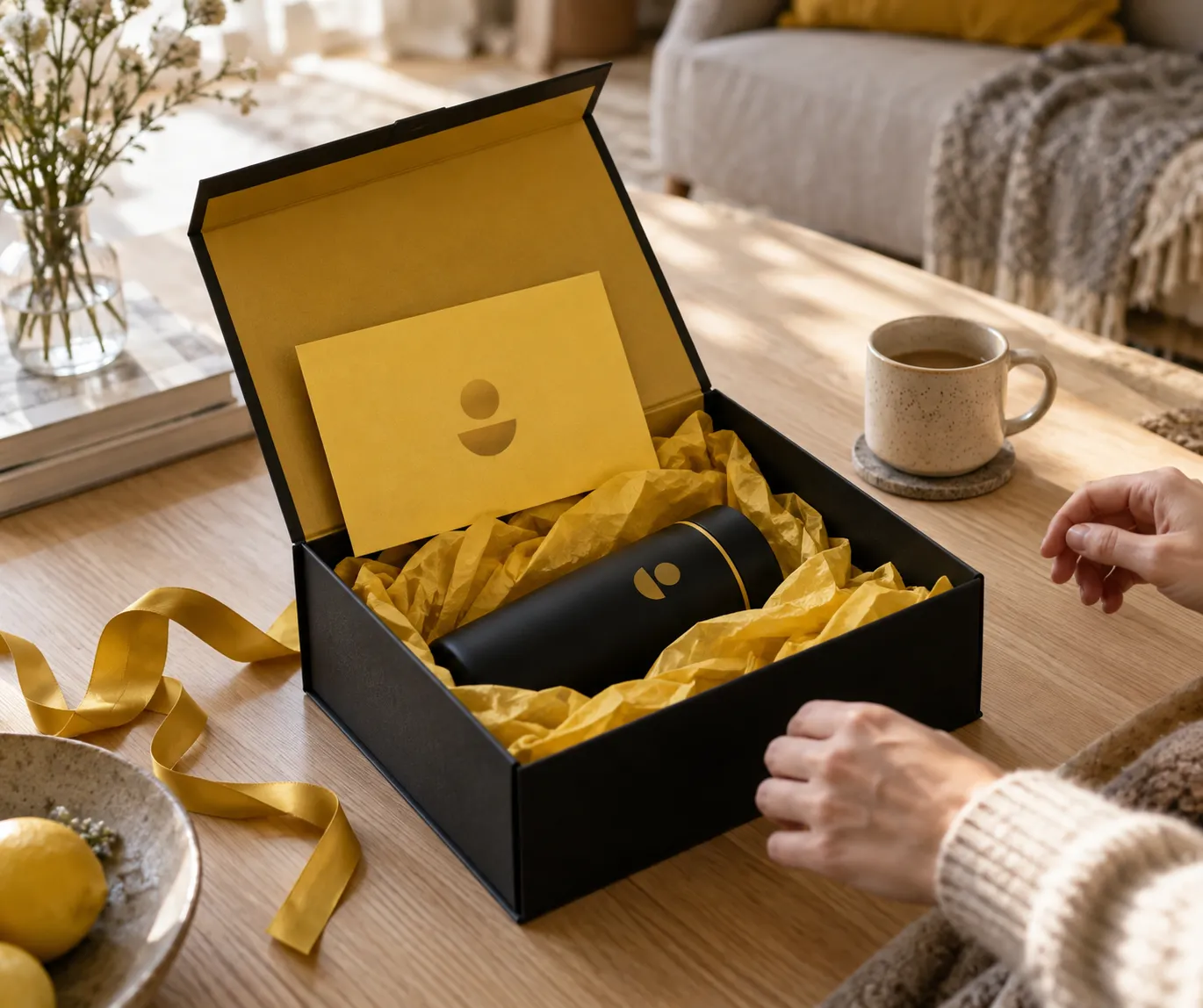
What you must guard is fulfillment speed. Every component adds seconds of handling to every order, and seconds multiply. A reasonable rule: any component must survive the question “what does this add to the per-order workflow”. Confirm the processing guarantee in the agreement, keep materials stocked beside your products, and premium stops competing with speed.
There is a natural next step after packaging, and it uses the same supply chain: upgrading the product itself. The same factory-visit logic that fixes your box fixes complaint-prone products, which is where the numbers in the final section come from.
What This Means for Your Store
Read back through the facts this article has established. MOQ jumps by an order of magnitude at each depth level because setup costs are real. The MOQ bites hardest in a no-stock dropshipping model because nobody holds your materials. Print, dimensional weight and damage are the three places custom packaging leaks margin. Consistency beats component count.
Together they reframe the decision. Custom packaging is not a purchase you make. It is a structure you build: where the materials sit, who packs against them, and who answers for the print. Once the materials live in a fulfillment warehouse next to your products, three things change. The 1,000-piece quote becomes a batch of stock. The anonymous parcel becomes a branded one. The per-order cost of the whole upgrade is minutes of handling.
Fix the inventory model: branded materials stocked with your dedicated inventory, consumed per order.
Fix the sequence: cards while testing, mailers on first traction, boxes when repeats appear.
Fix the accountability: sample-approved standards, packing videos, reshipment terms in the agreement
The boundary is real: multi-SKU generalist stores multiply packaging variants until the model collapses, so stay at inserts until a category proves itself. And once packaging is stable, point the same logic at the product. One bedding case cut complaint rates from 0.56% of orders to 0.077% in three months by upgrading filling and fabric. A desk lamp case went from 1.02% to zero after a battery and packaging change. Same supply chain, same discipline, applied one layer deeper.
This is the structure we built SpeedBee around. We produce the full range of custom outer and inner components, from logo boxes and printed mailers to personalized message cards that carry your customer’s name and order number (custom outer and inner packaging components). Your branded materials sit with your dedicated inventory rather than a shared shelf, with six months of free storage while your orders keep moving (dedicated inventory with six months of free storage). When a print disappoints, the packing video tells us whose problem it is. We do not hand that argument to you.
Before you commit, compare at least one more supplier’s packaging components and warehousing terms against this list, whichever way you go.
Put Your Brand on Every Parcel
Custom outer and inner packaging, stocked beside your dedicated inventory and packed under a 48-hour workflow with video confirmation.
Get a Packaging QuoteReferences
- National Retail Federation & Happy Returns. “NRF and Happy Returns Report: 2024 Retail Returns Total $890 Billion.” 2024. https://nrf.com/media-center/press-releases/nrf-and-happy-returns-report-2024-retail-returns-total-890-billion
- r/dropship. “Should I Have a Customized Box? Or Just Dropship It in the…” 2023. https://www.reddit.com/r/dropship/comments/18swrab/should_i_have_a_customized_box_or_just_drop_ship/
- r/dropship. “Custom Packaging.” 2023. https://www.reddit.com/r/dropship/comments/1483ldd/custom_packaging/
- r/dropship. “Custom Product Packaging: How Do You Get It?” 2020. https://www.reddit.com/r/dropship/comments/f09xy4/custom_product_packaging_how_do_you_get_it/
- r/smallbusiness. “How Do Small Product Brands Handle Custom Packaging Without High MOQs?” 2026. https://www.reddit.com/r/smallbusiness/comments/1rdcfyf/how_do_small_product_brands_handle_custom/
- Shopify Community. “How Can I Improve My Dropshipping Packaging?” 2021. https://community.shopify.com/t/how-can-i-improve-my-dropshipping-packaging/32320


 English
 Spanish
 French
 German
 Italian
 Polish