
A customer in Melbourne orders a set of resistance bands from your Shopify store at 9 pm. You never touch the product. Your supplier in China does: it pulls the item, packs it, hands it to a freight line, and a couple of weeks later a driver leaves it at her door. That chain is the entire business model. Running it with Australia as your market has its own shape. The tax rules, the shipping lanes, and the supplier landscape all differ from the US playbook.

One distinction first, since search results blur it constantly. This is about selling into Australia from a store built on Shopify, not about a founder based in Melbourne expanding into the US or UK. The supplier types and the lane economics are different questions. If you are an Australian seller heading overseas, the compliance logic below still applies to you; the shipping analysis is written for parcels landing in Sydney, Melbourne, Brisbane, and Perth.
The mechanics themselves are simple. You list products you do not hold. When an order comes in, your supplier picks, packs, and ships it directly to the buyer. Your margin is the spread between what the customer paid and what the supplier plus freight cost you. Shopify’s role is the storefront, the checkout, and the app layer that forwards orders to your supplier without manual entry. Shopify’s own Australian dropshipping hub covers the setup basics if you want the official walkthrough.
Three steps take you from nothing to a first testable store:
Pick one product you can explain in a sentence, and check how deep the supplier pool for it actually is.
Build the store: Shopify plan, payments, shipping zones for Australia.
Connect one supplier and run a single order end to end before spending a dollar on ads.
Two ground rules sit under everything else. First, dropshipping is legal in Australia; there is no rule against selling goods you do not hold. What exists are the ordinary obligations of running a store, including consumer guarantees under Australian Consumer Law and tax registration once you cross the threshold. That threshold is the number worth memorising on day one. Once your GST turnover reaches A$75,000 across a rolling 12 months, you must register within 21 days and start charging GST on sales to Australian customers (Australian Taxation Office). Non-resident sellers are covered by the same rule. Many stores avoid the arithmetic entirely by pricing GST-inclusive from the start.
The Three Supplier Types Behind An Australian Shopify Store
Every parcel that lands in an Australian letterbox comes from one of three supplier structures, and the real difference between them is who holds the inventory. Once you see that difference, most supplier decisions stop being taste calls and become staging decisions.
Local directory platforms hold stock in Australian warehouses. Services like Dropshipzone and BuyersCircle let you list goods that are already sitting in Sydney or Melbourne. The last mile then runs on Australia Post and takes days rather than weeks. The trade-off sits in the catalogue: you can only sell what someone has pre-stocked locally, and local fulfilment costs squeeze your margin. Test a niche here before you commit to it, and check category depth before assuming the platform can grow with you.
China-based platforms work the opposite way. AliExpress listings pushed through DSers, or the huge catalogues at CJdropshipping, give you effectively unlimited products with no inventory cost. The parcel, though, is sourced only after your customer orders it, and the stock you saw in the listing may be gone by the time the order arrives. This is the default starting point for Shopify dropshipping to Australia, and it works until it does not.
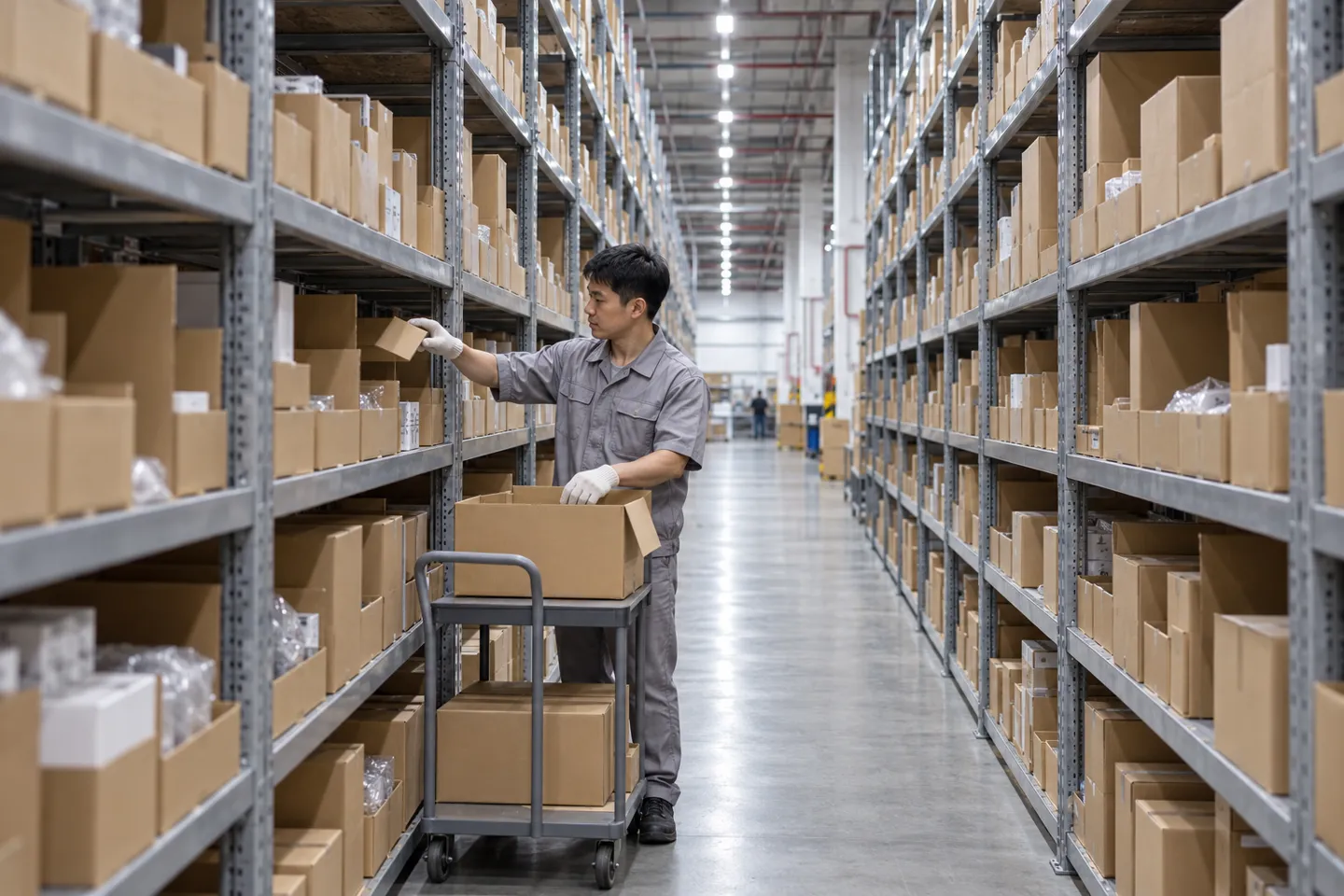
Private agents hold the third structure. Based around Guangzhou and the Pearl River Delta, they quote you products and buy wholesale into stock that belongs to you alone. They inspect it before it goes on a shelf, and they book freight lines on your behalf. In effect they become your offshore warehouse department. Nothing is shared with other stores, which changes what you can truthfully promise customers, and that change compounds through everything else in this article.
Three supplier structures at a glance
| Structure | Inventory held by | Promise you can keep | It breaks when | Best stage |
|---|---|---|---|---|
| Local directory platforms (Dropshipzone, BuyersCircle) | Australian warehouse | 2-5 business days domestically | catalogue runs out of depth or margins squeeze out | testing a niche fast |
| China platforms (AliExpress via DSers, CJdropshipping) | nobody, sourced per order | vague, 2-5 weeks realistic | orders spike and shared stock vanishes | first sales and product validation |
| Private agent with dedicated stock | you | quoted per lane, 4-7 day express possible | you stop feeding it stock data or the product dies | scaling a proven product |
The shipping numbers that trip most stores up are a direct consequence of where that inventory sits. So the numbers deserve their own honest look.
China To Australia Shipping Times: What The Numbers Really Say
China to Australia has three honest answers, and the one you got depends on which lane your parcel actually booked. Operator reports put routine per-order parcels at 2 to 5 weeks (Reddit, r/ShopifyeCommerce, 2026). Industry guides describe standard lines as 15 to 30 days door to door (ecopy, 2026). The international courier tier, the DHL Express and FedEx International Priority product, delivers in 3 to 7 business days (Couriers & Freight, 2025). None of these figures is wrong. They are three different products, sold at three different prices, with three different failure modes.
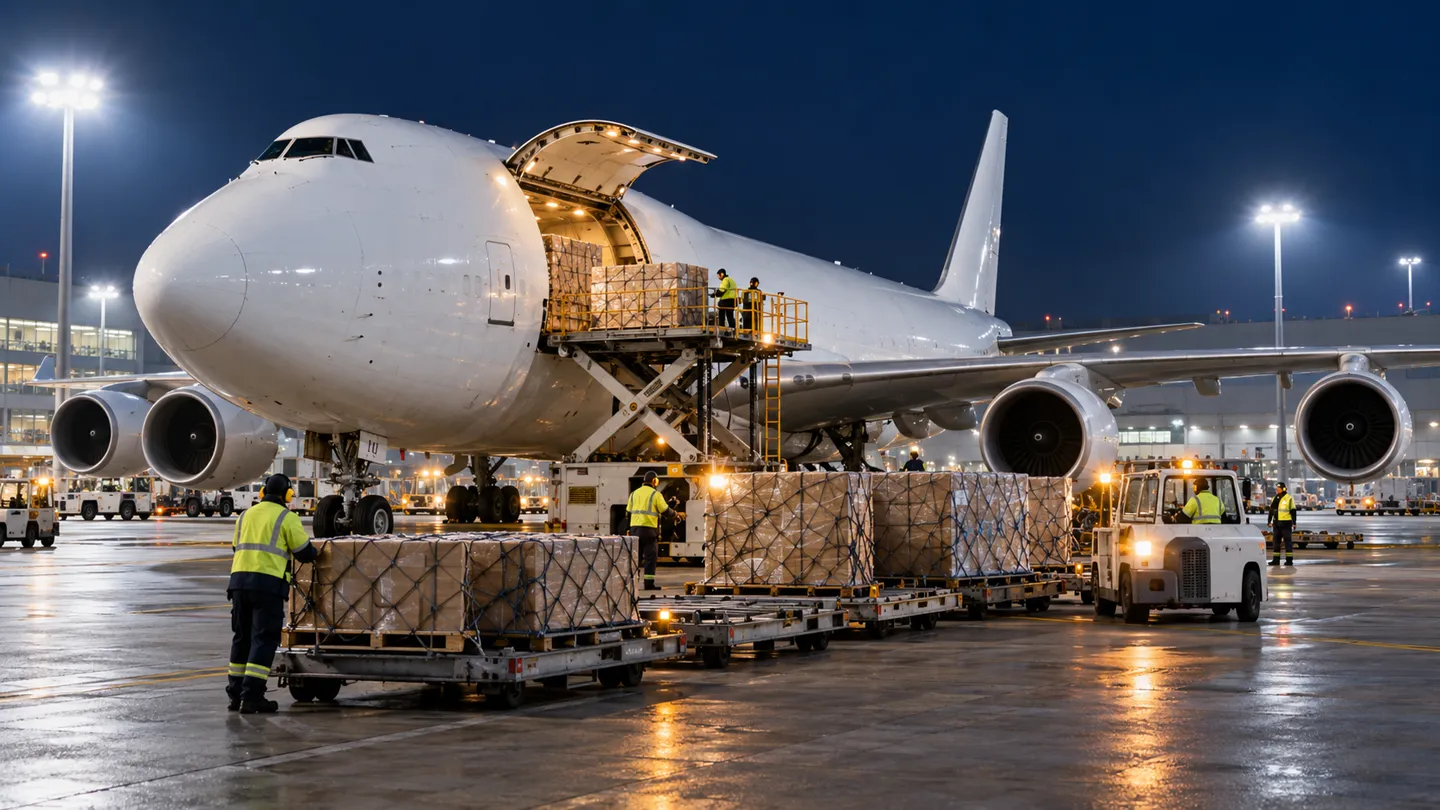
The gap between what a supplier quotes and what a customer experiences usually forms before the parcel ever flies. A quote of 7 to 10 days is often line transit alone. When the supplier sources each order only after you receive it, your parcel waits in a purchase queue, then a packing queue, and then the line. One operator documented the pattern precisely: suppliers who promised 7 to 10 days but shipped past day 20 (Reddit, r/dropship, 2026). That is the structural reason per-order stores end up apologising for 2 to 5 weeks. Their supplier still insists it quoted a week (Reddit, r/ShopifyeCommerce, 2026).
China to Australia: what each lane actually delivers
| Lane | Door-to-door window | Promise risk | It fails when | Best for |
|---|---|---|---|---|
| International courier express (DHL, FedEx tier) | 3-7 business days | low, but expensive per parcel | parcels over 2 kg, where cost per unit kills margin | high-value urgent items |
| Private-agent express line | 4-7 days quoted, ask fastest vs typical | medium, depends on the agent’s queue | agent batches parcels before the flight | your main product line once volume is steady |
| Standard freight line | 15-30 days | high, quoted times routinely slip | you promise 2 weeks and customers need 4 | cheap bulky goods with patient buyers |
| Australian local warehouse | 2-5 business days | low | catalogue depth runs out | testing demand for a narrow niche |
The other end of the promise problem is the customer who finally receives a parcel on day 30.
A 30-day delivery is not a shipping preference. It is a refund request, a chargeback risk, and a one-star review, usually all three. In one documented thread, a buyer’s 30-day wait ended with an angry parent, a demanded refund, and a store owner asking Reddit what went wrong (Reddit, r/shopify, 2026). Delivery promises leak directly into your dispute rate.
The fixes are unglamorous and effective. Label the lane you actually booked, and give a fastest-to-typical range rather than a best-case single number. One seller who built a seven-figure Australian brand puts normal delivery at 3 to 4 weeks on per-order lanes, and shows an honest estimate at checkout (Reddit, r/dropshipping, 2026). Price GST-inclusive so the number at the door matches the number at checkout. That is how most experienced sellers configure Australia after getting burned on GST at delivery (Reddit, r/dropship, 2026). And get the failure protocol in writing before you scale ads: who reships a lost parcel, how fast, and at whose cost. Whatever the answer is, that clause becomes your customer service script.
When To Switch From Per-Order Dropshipping To Dedicated Stock
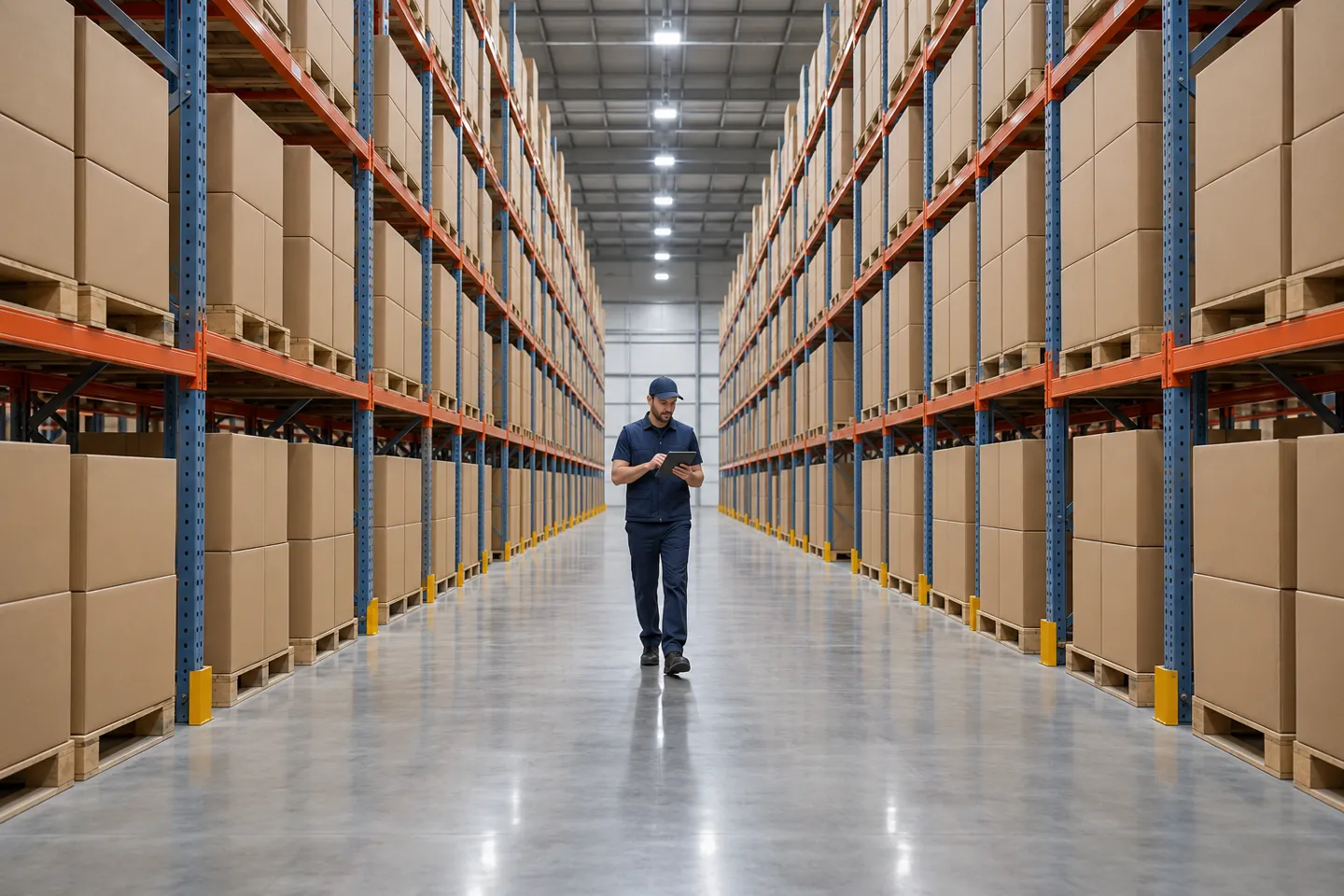
Three signals say the per-order model has hit its ceiling, and they are all observable from your own dashboard. Complaints about delivery promises are trending up even though your quotes have not changed. A paid-ads push, a Q4 campaign, or a Black Friday run is about to send volume through a supply chain that already leaks. Or monthly units on your hero product cross roughly 50. That is the point where fulfilment guides suggest moving stock into an Australian warehouse or a 3PL rather than sourcing each order (ecopy, 2026). Treat that figure as a rule of thumb, not a law; the direction matters more than the number.
The timing matters more than it looks, because the market is moving away from patience. Australians spent A$82.6 billion online in 2025, up 14% year on year, from 9.8 million households (Australia Post, 2026). Growth at that pace funds faster local delivery everywhere, which resets what a normal delivery time feels like. A three-week promise reads differently in 2026 than it did in 2021, and no amount of checkout copy changes the reference point customers now carry.
A$82.6B
online spend in Australia, 2025
+14%
year on year
9.8 million
households shopping online
Source: Australia Post eCommerce Report 2026
Dedicated stock is the structural answer, and the payoff is documented rather than theoretical. One Manchester-based home fitness seller ran a Shopify store on per-order supply, hit Black Friday stockouts, then moved his hero products into stock he owned in a partner’s warehouses. Sales rose 35% the following December and complaints fell 20% by January (SpeedBee’s published case). Stock that exists before the ad converts is the entire difference between those two lines.
Per-order dropshipping vs dedicated stock
| Dimension | Per-order | Dedicated stock |
|---|---|---|
| Delivery promise control | supplier’s queue, not yours | you set the clock: packing SLA plus a booked lane |
| Stockout risk | shared pools vanish at the worst time | your units are reserved; stockouts become a reorder task, not a crisis |
| Cost per unit | low, nothing held | wholesale pricing, usually better per unit, paid up front |
| Cash flow | nothing tied up | stock paid before it sells; dead-stock risk if the product was never proven |
| Right stage | validation and first sales | a proven product being pushed with ads |
The costs are real and worth saying plainly. Cash that becomes inventory cannot become ads. Storage windows, typically six months of free storage before fees, bound how long you can hold unsold units. And a product that never proved demand turns dedicated stock into dead stock, which is the most expensive way to learn a niche was wrong. The reverse test protects you. If monthly orders are low and irregular, and fewer than a handful of SKUs ever stock out in 30 days, keep the money in your ad account. Dedicated stock is a growth tool, not a default.
+35%
sales, the following December
−20%
complaints by January
One home-fitness seller, after Black Friday stockouts forced the switch to dedicated stock.
How To Vet A China-Based Fulfilment Partner For The Australia Lane
Vetting a fulfilment partner is not about reading reviews. It is about demanding numbers they can quote in writing, because every number on this list decides something your customers will feel. Take the list to the sales call and tick it line by line.
The Australia-lane vetting checklist
| Demand a number for | What good looks like | Why it decides your experience |
|---|---|---|
| Order processing SLA and carrier handover | processing within 48 hours, handed to the domestic carrier within 2 days | these are two separate numbers; merged ones hide queue time |
| Australia-lane express quote | 4-7 days door to door, DDP, with fastest and typical stated separately | a single best-case number is a marketing figure, not a schedule |
| Inventory ownership and sync | dedicated stock per client, synced to Shopify in real time | shared pools are where stockouts are born |
| Quality control stages | at least 4: sample match, appearance, function test, cleaning, with defects returned to the factory | every defect caught there is a refund you never process |
| Packing confirmation | a multi-angle video of your first packed order, approved before batch packing | your unboxing is your brand; videos settle disputes before they exist |
| Failure clauses | free reshipment or refund for lost or damaged parcels, replacement or full refund for quality issues | the clause is your customer service script when a lane fails |
| GST and compliance handling | DDP with duties handled, plus advice on GST-inclusive pricing and battery-goods routing | surprise fees at the door land on your reviews, not the carrier’s |
| Branding options | custom outer and inner packaging, inserts, with the first message card usually free | the marginal cost is small; the repeat-purchase effect is not |
A partner who quotes these numbers without hedging has already separated itself from the ones selling speed and hoping you never audit. Ask for each figure in writing. Whatever a supplier will not put on paper is the apology you will later write to your own customers.
Take this list to your next supplier call — or send it to a fulfilment partner and ask for every number in writing.
Get the Australia-lane answersThe Business Case: Your Fulfilment Structure Is Your Growth Model
On the Australia lane, the ceiling is set by fulfilment structure before it is set by product selection or ad craft. The evidence in this article points one way. A market growing 14% a year is training customers to expect more (Australia Post, 2026). Per-order supply leaks promise after promise, and the leak sits in the structure, not in any single bad supplier. The stores that scale are the ones that moved stock ownership, and therefore the delivery clock, onto their own side of the table before the ads demanded it.
The playbook is short. Watch for the three switch signals and treat them as a purchase order for inventory. Vet partners with the checklist above and take the numbers as contract terms rather than sales talk. Budget honestly for the cost of holding stock, including the dead-stock risk of an unproven product. Neither failure mode is exotic: scaling ads on a leaking supply chain burns money through refunds, and locking cash into an unproven product burns it through clearance sales. Both are avoidable with one clear look at your own order data.
This is the model we built SpeedBee around. Your stock sits as dedicated inventory in our five Guangzhou warehouses, never a shared pool, and syncs to your Shopify store in real time. Storage stays free for six months and keeps being free while orders keep flowing (our dedicated inventory setup). If you are weighing the switch, bring your last 30 days of order data and we will tell you what we see. Sometimes that answer is to stay per-order a while longer.
See if your store is ready for dedicated stock
Dedicated inventory in five Guangzhou warehouses, synced to your Shopify store in real time — and a straight answer on whether the switch makes sense yet.
Get an Australia-lane assessmentReferences
- Australian Taxation Office. “Registering for GST.” https://www.ato.gov.au/businesses-and-organisations/gst-excise-and-indirect-taxes/gst/registering-for-gst
- Australia Post. “eCommerce Report 2026.” https://auspost.com.au/business/ecommerce/ecommerce-report
- Reddit, r/ShopifyeCommerce. “Struggling with China Shipping Times.” https://www.reddit.com/r/ShopifyeCommerce/comments/1ri40vk/struggling_with_china_shipping_times_whats_your/
- Reddit, r/dropship. “How Do You Guys Deal with Inconsistent Shipping Times?” https://www.reddit.com/r/dropship/comments/1lsdpaa/how_do_you_guys_deal_with_inconsistent_shipping/
- Reddit, r/shopify. “30 Day Delivery Time.” https://www.reddit.com/r/shopify/comments/f72so9/30_day_delivery_time/
- Reddit, r/dropship. “I Need Help with Tax Settings in Australia.” https://www.reddit.com/r/dropship/comments/rdpsbc/i_need_help_with_tax_settings_australia/
- eCopy. “Dropshipping Shipping Times to Australia.” 2026. https://ecopy.app/blog/dropshipping-australia-shipping-times/
- Reddit, r/dropshipping. “AMA: I Turned My Dropshipping Store into a Seven-Figure Brand Just in Australia.” https://www.reddit.com/r/dropshipping/comments/1hwzfca/ama_i_turned_my_dropshipping_store_into_a_7fig/
- Reddit, r/Entrepreneur. “For Those Who Dropship from China, How Do Your Customers React to Shipping Times?” https://www.reddit.com/r/Entrepreneur/comments/84qpq1/for_those_who_dropship_from_china_how_do_your_customers_react_to_shipping_times/




 English
 Spanish
 French
 German
 Italian
 Polish