
A parcel sits in a French depot with a notice taped to it: €23.80 due on delivery. Your customer already paid you, VAT included, at checkout. The box left a warehouse in Guangzhou with the customs declaration filled out wrong, so French customs treated it as an unpaid import and billed the recipient at the door. Your customer sends you a screenshot, then a refund request. You eat the product cost, the shipping cost, and the review.
That single failure has a boring name: an IOSS number that never made it onto the paperwork. Operators who sell into France keep running into versions of it, and the fixes are rarely about finding a cheaper product. They are about how the fulfillment chain behind your store actually executes, line by line, parcel by parcel. This guide walks the whole chain in the order you will meet it. First, whether dropshipping in France is legal and how to set it up. Then where your goods should come from, what delivery times you can honestly promise, and how the tax layer executes on real parcels. It ends with stockouts, lost parcels, and the four checks that vet a supplier before you hand over your France line.

What Dropshipping in France Actually Means (and Whether It’s Legal)
Dropshipping means you sell to a French customer and a supplier ships the order directly from their warehouse, so you never stock the goods yourself. That model is legal in France. What the law does not excuse is distance-selling obligations. As the seller of record, you carry pre-contractual information duties, warranty handling, and the 14-day withdrawal right that French consumer law grants online buyers (DGCCRF, 2021).
One clarification saves confusion later. “Dropshipping in France” covers two different situations: living in France and running a store, or running a store anywhere and selling to French customers. The obligations overlap but the registration path differs. This guide focuses on the second situation, shipping into France, because that is where the operational traps live. If you reside in France, you will typically register as a micro-entrepreneur or a company before your first sale, and the same fulfillment chain below applies to you (eurostartentreprises, 2025).
The setup itself takes four steps. Register your business status. Pick your sourcing route. Open your store on Shopify or similar. Connect a fulfillment route and your VAT scheme. Note the VAT threshold while you plan. Self-employed sellers under the exemption ceiling (€85,000 for goods, on the prior-year basis) can defer VAT registration, but that ceiling never suspends the import rules that apply to every parcel crossing a border (Stripe, 2026).
Most of the pain in dropshipping France concentrates in steps two and four: where the goods come from, and whether the fulfillment chain executes cleanly. The rest of this guide takes them in order.
Where Your Goods Come From: EU-Local Suppliers vs Shipping From China
Search for French dropshipping suppliers and most listicles hand you European wholesalers: BigBuy, BrandsDistribution, CDiscount Pro and similar names dominate those lists (CJ Dropshipping, 2025; dropship.io, 2023). Those are real options. They ship inside the EU in two to five days, returns are simple, and customs never enters the picture. What the lists understate is the trade-off: catalog width and unit price. A French or Spanish wholesaler carries a narrow range at prices built for margin-stacking, which squeezes the single biggest cost advantage dropshipping has.
The other route, shipping from China, is what working sellers actually run. Forum threads and Reddit posts from operators selling into France describe China-direct almost by default, because the catalog is effectively unlimited and unit costs leave room to advertise. The cost is everything this guide covers below: longer transit, and a customs and tax layer that must be executed correctly on every single parcel.
Both routes in one table:
Sourcing routes for a France-facing store
| Dimension | EU-local supplier | China direct |
|---|---|---|
| Catalog width | narrow, category-focused | very wide, near-unlimited selection |
| Unit price | high | low |
| Delivery time | 2–5 days | express 5–7 days, standard 7–15 days, economy 2–6 weeks |
| Compliance load | none (intra-EU) | IOSS, customs declarations, HS codes on every parcel |
| Returns | simple, domestic | cross-border, often uneconomic |
| Best for | fast-moving hero products | long-tail selection with margin room |
Whichever route you pick, verify two things before signing. Ask whether the supplier holds stock or aggregates other sellers’ inventory, because a shared pool can vanish the day your ad starts converting. And ask what their quality check covers, because a China-direct supplier who never inspects goods makes your store the last line of defense for defects. Many experienced sellers end up hybrid: local suppliers for proven hero products, China-direct for the long tail.

Delivery Times: The Number That Makes or Breaks a French Store
French shoppers now treat delivery speed as a default expectation, not a bonus. Operators who lived through the early era are blunt about it: the classic AliExpress model with six-week delivery is finished, in the words of one long-running answer on the topic, because nobody waits a month for a parcel anymore (Quora FR, 2020; Web&SEO, 2020). What replaced it is a ladder of transit options, and each rung has a real number attached.
What the Real Numbers Look Like
Estimates for China-to-France transit vary wildly between sources because they measure different service tiers. Lined up with their sources, the spread looks like this:
China-to-France transit, by service tier
| Service tier | Realistic range | What it fits | Source |
|---|---|---|---|
| Economy postal | 2–6 weeks | low-price items, buyers who don’t chase | operator verdict: “c’est mort” (Quora FR, 2020) |
| Standard line | 7–15 days | the honest default for China direct | industry estimate (Copyfy, 2026) |
| Optimized dedicated line | 10–14 days | corridor-specific routing, China to France | operator report (r/dropshipping, 2025) |
| Express fulfillment line | 5–7 days | France-focused fulfillment agents, DDP | agent commitment (Speed Ecom, 2026) |
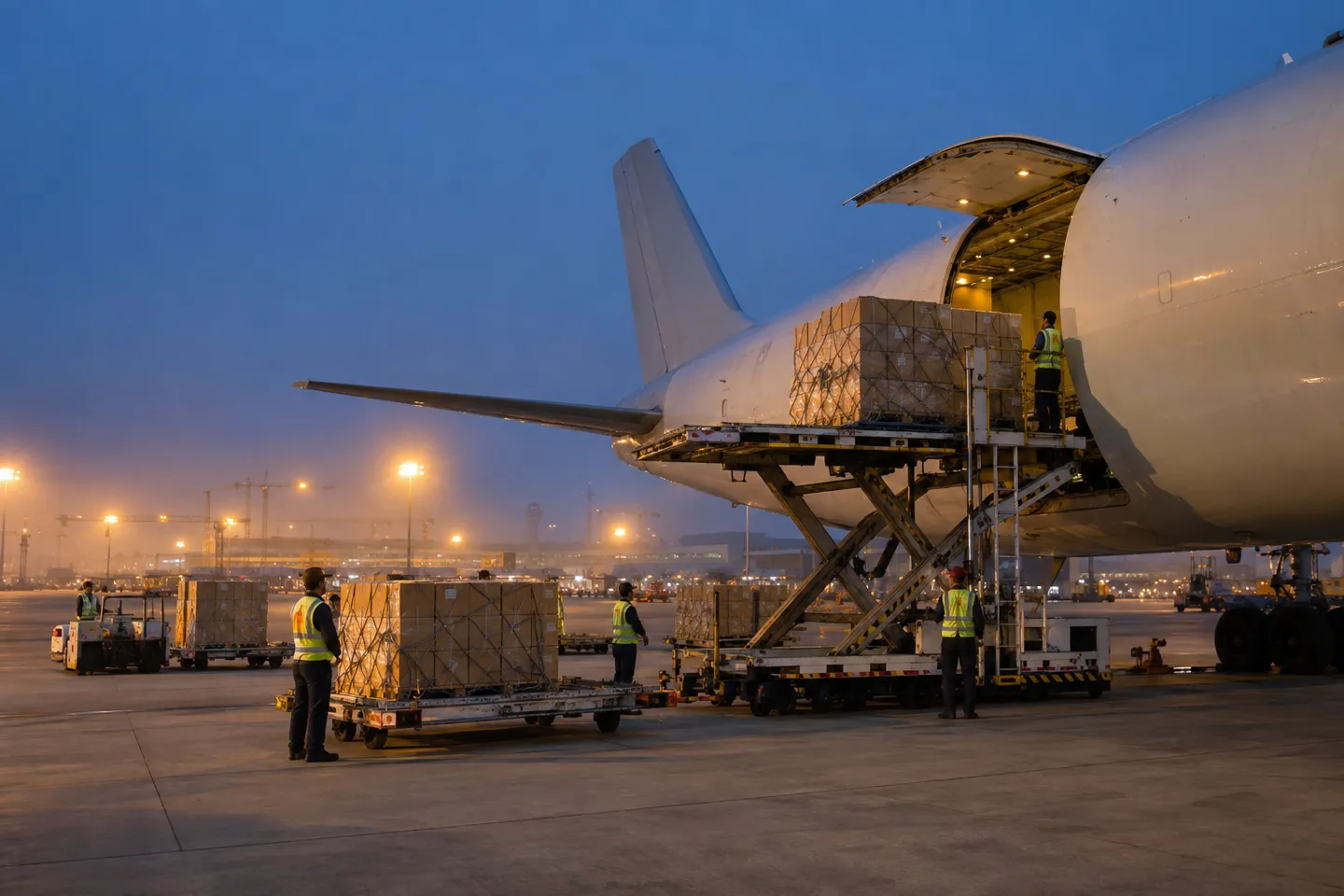
Two structural facts sit behind those ranges. Southern China’s airport cluster (Guangzhou, Shenzhen, Hong Kong, plus Zhuhai and Macau) gives the region more freight departures than any other part of China. That is why corridor agents cluster there. And battery-powered goods, a huge share of consumer electronics, can only fly from specific airports under dangerous-goods rules, which narrows your options before price ever comes up.
What Slow Delivery Actually Costs
The cost of a slow line never shows up as “slow delivery” in your dashboard. It shows up as where-is-my-order tickets, chargebacks, refunds, and a review score that drags your ad conversion down. A parcel at day 25 generates support work every single day it is late, and French buyers file disputes easily through their bank. By the time a six-week parcel arrives, a meaningful share of customers have already been refunded and no longer want it.
The market backdrop makes this sharper. Volume is not the constraint. Fulfillment is. And the squeeze peaks exactly when it hurts most: warehouse backlogs and full flights stretch the first leg of the journey, from warehouse to departure airport, before anything else slips. The stores that survive a Q4 peak are the ones whose delivery promise survives it too.
French e-commerce, 2025
€196.4B
annual revenue, up 7% year on year
3.2B
online purchases — more than 100 orders per second
22%
of annual product sales land in November and December
Source: Fevad via EcommerceMag, 2026
So treat a supplier’s delivery claim as a question, not a fact. Ask which tier the quote assumes, what the on-time rate looked like last Q4, and who reroutes a parcel when a flight bucket fills up. The answers separate agents who run a line from agents who resell one.
The Tax Execution Layer: IOSS, the €150 Line, and DDP
Every parcel from China to France crosses a tax line, and the rules are public. What breaks is not the rules. It is the execution, at the parcel level, by whoever ships the box.
Who Handles What: IOSS, OSS, and Import VAT
Three schemes divide the work. IOSS (Import One-Stop Shop) covers consignments of €150 or less: you charge VAT at checkout, the parcel carries your IOSS number, and it clears customs without the customer paying anything. OSS handles your EU-wide B2C sales reporting once goods are already in free circulation. Above €150, IOSS does not apply; the parcel goes through standard import clearance, where customs duties and import VAT come due. Since standard French VAT sits at 20%, the amount at stake is never trivial (Stripe, 2026).
France has also formalized how dropshipping itself is treated. The 2024 Finance Act (Law 2023-1322 of December 29, 2023) classifies dropshipping as distance selling of imported goods. That makes the seller, you, the person liable for VAT on the goods you import and resell. Skipping the filing runs €750 to €1,500 per violation, and deliberate fraud scales to €75,000 with up to five years of prison (Stripe, 2026).
The €150 Line in Practice
Below €150, everything hinges on one detail: your IOSS number being present and correct on each parcel’s customs declaration. This is where China-direct breaks in real life. Suppliers say “yes, we handle IOSS,” but what they mean varies; per-parcel execution ends up inconsistent, and French customs is strict about checking (r/dropship, 2026). Beginners hit the same wall from the other side, arriving at forums to ask who is even supposed to declare what at French customs (Pragmatic Entrepreneurs, 2025).
Above €150, the default hurts quietly. Duties and import VAT fall on your customer unless you ship DDP, and plenty of stores discover this from the complaint rather than the contract. The tax wiring also multiplies in confusing ways. One EU-based seller selling into France laid out a real order where the customer paid €87.70 including €14 VAT, while the platform-side setup separately charged the seller €5.15 in VAT on the product cost, with monthly IOSS filings on top. No one in the thread could say which payment was right (r/dropship, 2025).
A missing IOSS number bills your customer VAT at the door
Every parcel that ships with a broken declaration is a refund, a chargeback risk, and a review — waiting in a depot. Verify per-parcel execution before you sign, not after (r/dropship, 2026).
The Full Matrix, and Where DDP Fits
Pulling the scenarios into one view, with the check you should run before signing anything:
France-bound orders: execution, failure points, and pre-signature checks
| Order scenario | Execution route | Who pays tax and fees | Typical failure point | Pre-signature check |
|---|---|---|---|---|
| ≤€150 with IOSS: IOSS number on each declaration | seller collects VAT at checkout, files monthly | seller | supplier claims IOSS but executes per-parcel inconsistently | ask for recent parcel labels and match the IOSS number |
| >€150 non-DDP: standard import clearance | customer | customer pays duties + import VAT | customer refuses the fee, parcel is abandoned or returned at your cost | get refusal-handling terms in writing |
| >€150 DDP: seller-of-record delivery | seller | seller pays duties + VAT | quote excluded taxes, bill arrives later | require an all-in DDP quote written into the contract |
| Battery / sensitive goods: restricted air lines | specific Southern China airports | unchanged | parcel rejected or stranded on the wrong line | confirm the departure airport and DG paperwork |
| Returns: cross-border return or local disposal | case-by-case | depends on terms | return freight exceeds product value, re-export needs its own declaration | lock return options into the contract before launch |
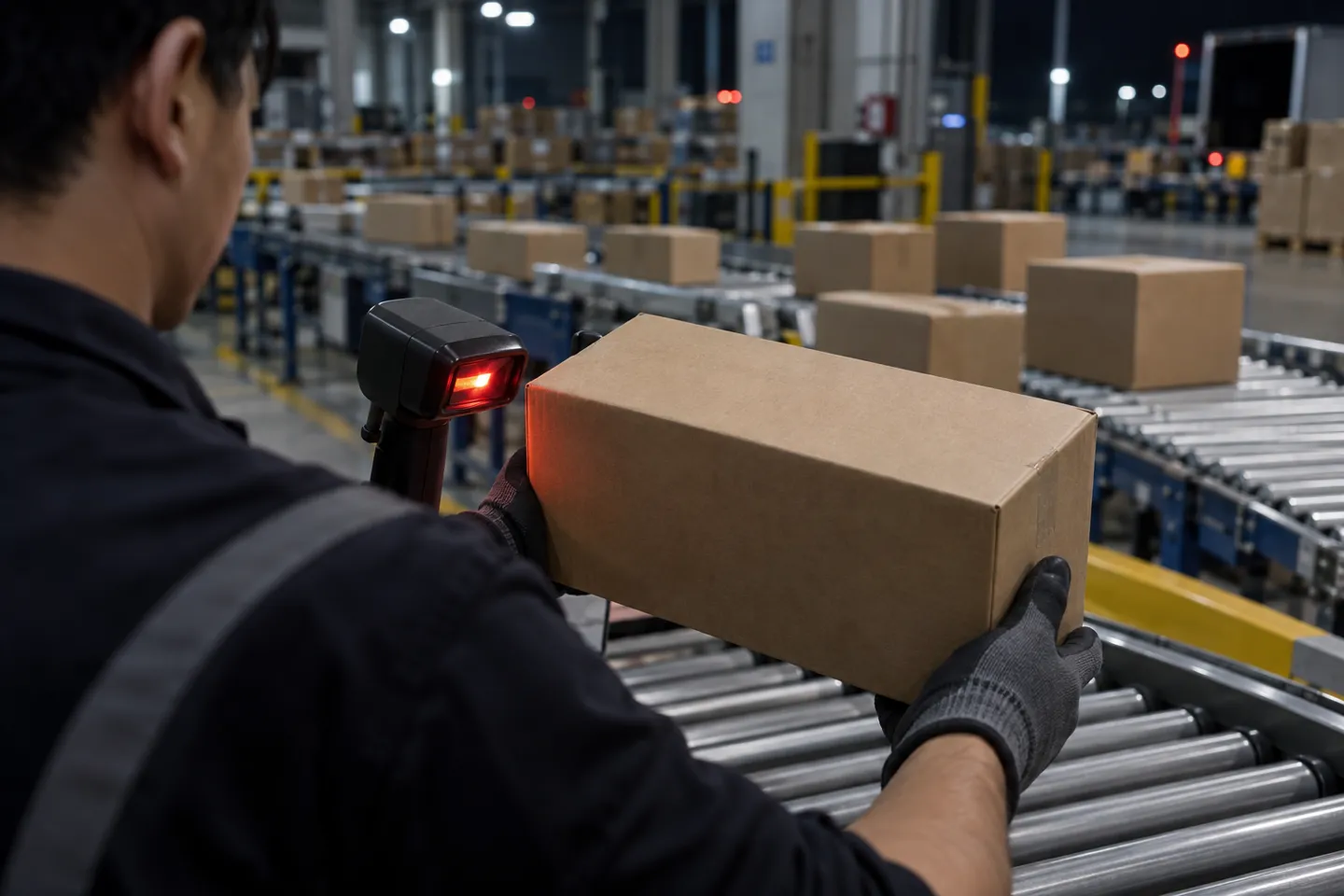
DDP (Delivered Duty Paid) belongs in that matrix as the scenario where the seller takes the tax burden back in-house. Read it as a control decision, not a shipping surcharge. DDP moves the VAT and duty handling away from your customer’s doorstep, where it generates refunds, and into your fulfillment chain, where it can be managed, priced, and batched. It only works, though, when the chain behind it is fast and disciplined: orders processed in hours, parcels handed to a carrier within a day or two. A slow DDP line just moves the disappointment earlier in the timeline.
When Things Go Wrong: Stockouts, Lost Parcels, and Returns
Failures in a France line come in three kinds, and each has a chain of judgment you can walk before the panic starts.
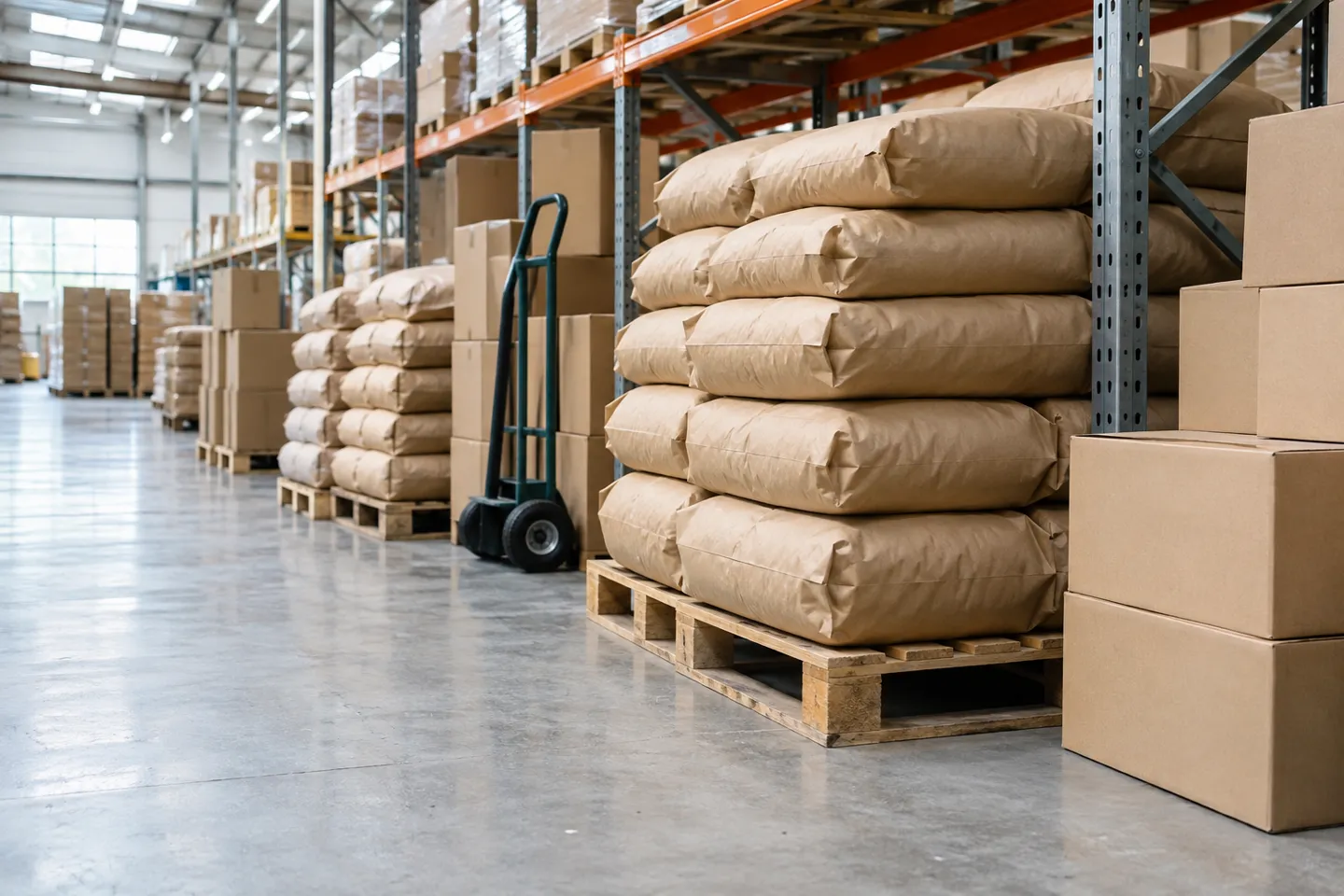
Stockouts start with inventory structure. Platforms that pool inventory across thousands of sellers can show stock that is already spoken for. When your ad converts, the goods are gone, and the platform’s departments pass your ticket around. The prevention runs the other way: tell your supplier before you scale ad spend so stock can be reserved or purchased ahead, and prefer arrangements where inventory is allocated to you rather than shared with everyone. One operator-side rule of thumb: the moment a product proves out, move it from a shared pool to dedicated stock, because that is exactly when stockouts start costing real money.
Lost and damaged parcels resolve through the chain of custody. A parcel still visible in the domestic network can be traced by the shipper; one that went silent after handover needs the carrier chased, and the outcome depends on what your agreement says, not on goodwill. Damaged goods need photo evidence from the customer and a decision: refund or reship. All of that goes smoothly or badly depending on one contract clause, who bears the cost when the carrier is at fault. Fix it in writing at signing, while you have leverage.
Returns are where cross-border models bleed the most. French online buyers hold a 14-day withdrawal right, no justification needed (DGCCRF, 2021). But shipping a return from France back to China often costs more than the product earned you, and returned goods may need their own customs declaration to re-enter. The workable options, priced honestly: a local return address that consolidates returns, partial refunds that let the customer keep the item, or a free reshipment that skips the return entirely. Each fits a different price point, and all three beat a €25 return label on a €12 product.
Every chain above ends at the same place: whether the responsibilities were written into the supplier agreement before launch, or negotiated over chat after something broke.
Failure playbook
Stockout
Confirm whether inventory was shared; escalate for reserve or dedicated stock; pause spend on that SKU.
Lost parcel
Locate the last scan; domestic segment = shipper traces, international = carrier claim per contract; refund or reship per your written terms.
Damage request
Collect customer photos; refund or reship per contract; log the defect rate by SKU.
Return request
Apply the 14-day rule; choose local return address, partial refund, or reshipment by economics.
How to Vet a Supplier for Your France Line
Everything above reduces to one business judgment: for a France line, the supplier’s execution certainty matters more than the geography label or the catalog price. A cheap unit cost that ships with broken customs paperwork returns its savings as refunds. A fast lane that runs out of stock in week three of your campaign wastes the campaign. The four checks below turn that judgment into a script you can run in a single call or email thread.
The four-point execution check
- IOSS per parcel — will every ≤€150 parcel carry your IOSS number on its declaration? Ask for a recent label photo.
- Over-€150 terms — are heavier orders shipped DDP with duties included, and is that written into the quote?
- Inventory structure — is stock dedicated to you or shared with other sellers, and what compensation applies on a stockout?
- After-sales liability — who pays for reshipment when a parcel is lost, damaged, or held in customs?
Run the script and read the answers literally. A supplier who hesitates on two or more of the four is telling you, at the cheapest possible moment, how their chain behaves under load. Price advantage will not survive the refund rate that follows. Conversely, a supplier who answers all four with specifics has just paid for your refund rate before you spent a euro on ads: a label photo, a written DDP clause, a stockout policy, a reshipment guarantee.
Once a supplier clears the four checks, the last decision is structural. Move your proven, higher-volume products onto dedicated, reserved inventory with that supplier, and keep the long tail on lighter arrangements. That is the line between a France channel that merely ships and one you can scale ad spend against. It is also the point where a fulfillment partner’s numbers stop being marketing claims and become your unit economics. On our France line at SpeedBee, orders are processed within 48 hours, parcels leave for carriers within two days, and DDP delivery to French doorsteps runs 4–7 days (worldwide-shipping). Lost, damaged, or held parcels are reshipped or refunded free of charge, because we carry the carrier risk ourselves (after-sales-support).
If you want to pressure-test a supplier against this checklist, SpeedBee’s catalog of 30,000+ dropshipping products and its dedicated-inventory model are open to compare (SpeedBee).
Hand your France line to a chain that already passes the four checks
SpeedBee runs dedicated inventory, processes orders within 48 hours, and delivers DDP to French doorsteps in 4–7 days — lost, damaged, or held parcels are reshipped or refunded free.
Get a France-line quoteReferences
- DGCCRF. “Dropshipping : comment respecter la réglementation.” 2021. https://www.economie.gouv.fr/dgccrf/les-fiches-pratiques/dropshipping-comment-respecter-la-reglementation
- Stripe. “Dropshipping and VAT in France: Regulations and How It Works.” 2026. https://stripe.com/resources/more/dropshipping-and-vat-in-france
- FEVAD, via EcommerceMag. “L’e-commerce français frôle les 200 milliards d’euros en 2025.” 2026. https://www.ecommercemag.fr/retail-1220/le-commerce-francais-frole-les-200-milliards-deuros-en-2025-55806
- Dropship.io. “14 Best Dropshipping Suppliers in France.” 2023. https://www.dropship.io/blog/best-dropshipping-suppliers-in-france
- EuroStart Entreprises. “How to Start a Dropshipping Business in France.” 2025. https://www.eurostartentreprises.com/en/business-advice/how-to-start-a-dropshipping-business-in-france
- Copyfy. “Dropshipping avantages inconvénients.” 2026. https://www.copyfy.io/blog/dropshipping-avantages-inconvenients
- Quora France. “Comment qualifiez-vous le délai de livraison en Dropshipping.” 2020. https://fr.quora.com/Comment-qualifiez-vous-le-d%C3%A9lai-de-livraison-en-Dropshipping
- Web & SEO. “Mon avis sur le Dropshipping : faut-il se lancer en 2026 ?” 2020. https://www.webandseo.fr/opportunite/
- Speed Ecom. “Dropshipping livraison rapide 2026 : livrer en 5–7 jours.” 2026. https://speed-ecom.eu/blog/dropshipping-la-solution-pour-livrer-entre-5-a-7-jours-ouvres-sans-stock-et-sans-agent/
- r/dropship. “Dropshipping Tax & Customs Issues?” 2026. https://www.reddit.com/r/dropship/comments/1u8z8vq/dropshipping_tax_customs_issues/
- r/dropship. “EU Dropshipper Completely Lost with IOSS/OSS/VAT.” 2025. https://www.reddit.com/r/dropship/comments/1pt8m3h/eu_dropshipper_completely_lost_with_iossossvat_cj/
- r/dropshipping. “AliExpress Business — Trouble for EU VAT for French Dropshipper.” 2025. https://www.reddit.com/r/dropshipping/comments/1oo7xdi/aliexpress_business_trouble_for_eu_vat_for_french/
- Pragmatic Entrepreneurs Forum. “Dropshipping et Frais de Douanes.” 2025. https://forum.pragmaticentrepreneurs.com/t/dropshipping-et-frais-de-douanes/24300


 English
 Spanish
 French
 German
 Italian
 Polish