
The third one-star review of the week says the same thing as the first two: the medium fits like an extra-small. Your ads are still profitable, your photos look fine, and the problem sits two links upstream, with a supplier that lists Asian sizing as if it were US standard.
That is the normal way a clothing store dies. Not slow traffic, and not weak creatives. The killers are fabric that doesn’t match the listing, a restock that never arrives, and a returns rate quietly eating the margin.
Apparel is the most-returned category in e-commerce, and the supplier you choose decides how much of that lands on your balance sheet instead of theirs. So the useful answer to “best clothing dropshipping suppliers” is not another ranked list. It is knowing which kind of supplier you are actually looking at, what breaks in clothing specifically, and what to verify before you sign. This guide covers exactly that, in that order.

The Four Forms of a Clothing Dropshipping Supplier
Search for clothing suppliers and you will find four different businesses hiding under one word. They differ in who holds the inventory risk, how fast they deliver, and how much of the quality problem they intercept before it reaches your customer. Mixing them up is the first reason sellers pick a supplier that was never built for their store.
Print-on-demand producers make each garment after your customer orders it. You upload designs; they print, pack, and ship under your label. Delivery runs 5 to 10 days from US or EU print partners, and there is no inventory risk at all. Printful and Apliiq are the familiar names here. The boundary matters though: POD fits design-led stores, not stores chasing trending ready-made styles, because nobody holds stock of a dress that hasn’t been printed yet.
Marketplace and platform suppliers hold ready stock of curated catalogs, often in US warehouses, and ship in 2 to 5 days domestically. Trendsi and Spocket lead this form. You get speed and clean Shopify integration, but the catalog rules: if the platform doesn’t carry it, you don’t sell it, and quality control rarely goes deeper than platform-level vetting.
Local warehouse networks connect you to verified UK or EU wholesalers with 1 to 3 day domestic delivery. Avasam and Syncee operate here. Customs friction disappears, but fashion catalogs run smaller and margins are usually tighter than direct-from-factory sourcing.
China-based agents with their own warehouse and QC are the fourth form, and the least understood. They source from factories, inspect before shipping, and hold stock so orders never wait on a factory run. Door-to-door delivery to the UK, Europe, and the US takes 4 to 7 days. CJ’s agent services and EPROLO are the large platforms; smaller dedicated agents occupy the same form with deeper involvement per account.
| Form | Ships from | Typical delivery | Quality interception | Familiar names |
|---|---|---|---|---|
| Print-on-demand | US/EU | 5–10 days | None (made to order) | Printful, Apliiq |
| Marketplace platform | US/CN | 2–15 days | Light (platform vetting) | Trendsi, Spocket |
| Local warehouse network | UK/EU | 1–5 days | Light (supplier vetting) | Avasam, Syncee |
| China agent with warehouse & QC | China | 4–7 days door-to-door | Medium to deep (per-order inspection, stocking) | CJ, EPROLO, dedicated agents |
This guide follows the ready-made apparel path, so the China agent form and its neighbors get the most attention. If you are building a design brand, the POD section was your whole answer, and you can stop here.
What “Best” Actually Means for Clothing
Every listicle scores suppliers on quality, shipping, margins, integration, and branding. Those categories are fine, but in clothing each one hides a question that decides money.
Quality consistency means the restock matches the sample: same fabric weight, same stitching, same measurements. It is the heaviest criterion in this category. A customer who loved order one and got something different in order two leaves a review that outlives your ad account.
Shipping speed matters through the season window, not in absolute days. A summer dress that arrives in three weeks missed the summer. Speed also feeds conversion, since long promised delivery times depress add-to-cart rates on fashion items.
Margins need the returns cost inside the equation, which is where most new sellers fool themselves. The honest version has five lines.
Retail price minus supplier cost, minus shipping, minus platform fees, minus returns loss equals true margin per order.
That last line is not a rounding error in this category. Coresight Research measured the US online apparel return rate at 24.4% for the twelve months ending March 2023 (Coresight Research, 2023). That is the highest of any major e-commerce category. A supplier who prevents sizing and fabric errors is not a nicer option; they are the difference between the margin math working and not working.
The honest margin equation
retail price − supplier cost − shipping − platform fees − returns loss = true margin per order
In clothing, plan returns loss at 20–30% of orders unless your supplier actively intercepts sizing and fabric faults before dispatch.
One caveat keeps this honest: the weights shift with your stage. In the testing phase, delivery speed matters less because order volume is small. Once a style is selling daily, stock depth and delivery speed jump to the top. We turn that into a concrete matrix in the verification section.
The Three Failures That Kill Clothing Stores
Clothing is the most-returned category in e-commerce. Roughly a quarter to a third of online clothing orders come back, so every supplier decision is really a returns decision. Almost all of those returns trace back to three failure types, and each one concentrates in a specific supplier form.
Online clothing return rate
25–33%
of online clothing orders come back — every supplier decision is really a returns decision.
Size charts that lie by region
A seller on r/dropshipping put it in a thread title: “CJ Dropshipping sizing is ruining my clothing store.” Their problem was structural, not bad luck. Garments sourced for Asian markets are cut smaller than US or EU equivalents at the same letter size, so a listed Medium fits like a Small, and every unit sold generates a sizing lottery.
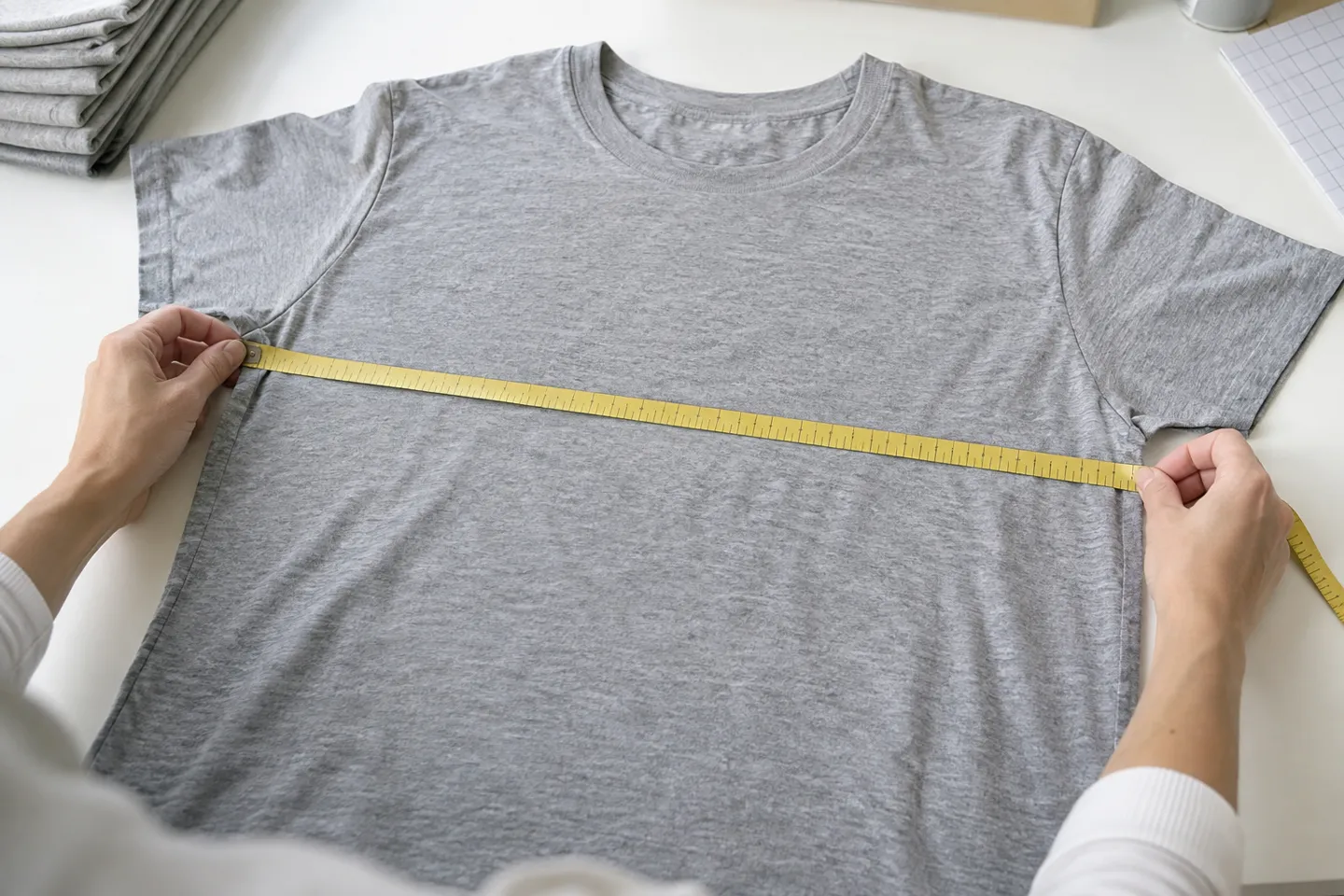
The interception happens before you list, not before you ship. Ask the supplier for actual garment measurements in centimeters for every SKU: chest width, length, sleeve. A letter code on a catalog page is not a size chart. Reputable suppliers produce measurement tables per item; if a candidate can only send you a conversion chart, you have learned something usable about how they will handle the next dispute.
Fabric that isn’t the fabric in the photos
The listing says cotton; the parcel holds something that pills after two washes. Fabric quality has an actual unit, grams per square meter (GSM), and suppliers who know apparel speak in it. As reference points, a summer t-shirt sits around 120–160 GSM, a regular tee 160–190, and heavier winter cuts 200–300 (SANVT, 2023). If a supplier cannot state the GSM and composition of a garment, they are reselling blind, and so are you.
Verification is physical and cheap. Order the sample, weigh it if you want the truth, wash it twice, and check for shrinkage, color bleed, and shape loss. This ten-minute ritual catches the failure that customer reviews would otherwise catch for you, publicly.
Stock that was never really yours
Marketplace listings often sit on shared inventory pools. The same stock is visible to every seller on the platform, so a viral week on someone else’s store empties yours. Worse variants include silent substitutions, where a restock ships in a different fabric weight, and peak-season stockouts that no one flags until orders pile up.
The failure concentrates where no one holds dedicated stock. Ask a direct question: is inventory shared across sellers or reserved per account, and what happens to my listings if a style runs out? The answer separates forms of supplier more cleanly than any price comparison. The full verification workflow comes next.
The failure-to-form map
Sizing lottery — intercept with per-SKU garment measurements in centimeters, before you list.
Fabric switch — intercept with declared GSM and composition, plus a two-wash sample test.
Vanishing stock — intercept with shared-vs-dedicated answers and stockout notice in writing.
How to Verify a Supplier Before You Sign
Talk is cheap in this industry, so verification has to be behavioral: make the supplier demonstrate the promise before money moves. The sequence below costs a few hundred dollars and a couple of weeks, which is the cheapest insurance a clothing store can buy.
Sample gauntlet
Measure, wash twice, inspect, photograph, record.
Stock and fulfillment
Place a test batch of 20–50 units; clock every handoff.
Four terms in writing
Sizing, GSM, reship responsibility, claim window.
Step one: run the sample gauntlet
Order samples of your top candidates and put each through the same gauntlet. Measure the garment and compare against their stated table. Wash it twice and inspect. Pack and unpack it to see how it travels. Photograph everything and keep a dated record per supplier, because in three months you will not remember which sample came from whom. Free samples are rare in agent-form sourcing, so budget the fee and shipping as a screening cost, not a loss.

Step two: interrogate stock and fulfillment
Ask how inventory is held, what system syncs it to your store, and whether they notify you before a style runs dry rather than after. Then place a test batch, 20 to 50 units, and clock the whole chain: order confirmation, processing, handoff, and delivery. Strong agent-form suppliers commit to written numbers. Quotes go out within 24 hours, orders are processed within 48, parcels reach the line-haul carrier within two days, and UK door-to-door delivery lands in about 4 to 7. A candidate who won’t put those numbers in writing has answered your question anyway.
Step three: get four terms in writing
Four clauses convert promises into obligations. First, size charts stated as actual garment measurements per SKU. Second, fabric composition and GSM declared per item. Third, lost or damaged parcels reshipped at the supplier’s cost across the whole journey, carrier segment included. Fourth, quality faults refunded or reshipped within a stated window. Each clause exists because its absence is a known failure: without them, the sizing lottery, the fabric switch, and the vanishing parcel all become your cost.
Before committing the whole store, match the form to your stage:
| Store stage | Form that fits | Confirm before signing |
|---|---|---|
| Testing styles | Zero-inventory POD or platform listings | Print quality, return of unsold risk |
| First consistent sales | Platform or local network | Stock depth on your winners, exchange handling |
| Scaling a proven line | China agent with warehouse & QC | Dedicated stock, per-order inspection, written timelines |
| Building a brand | Agent with factory-direct upgrades | Restock consistency, labeling, material upgrade path |
The matrix is also a boundary: running the full gauntlet for every test product is overkill. Samples of the top candidate, yes; contract clauses, once a style proves itself.
Shortlisting now? The sequence above is exactly the first conversation to have with each candidate.
Start with SpeedBeeWhat a Brand-Capable Supplier Looks Like
At some point the question changes from “who ships it” to “who can build with me.” A brand-capable supplier clears three bars, in order.
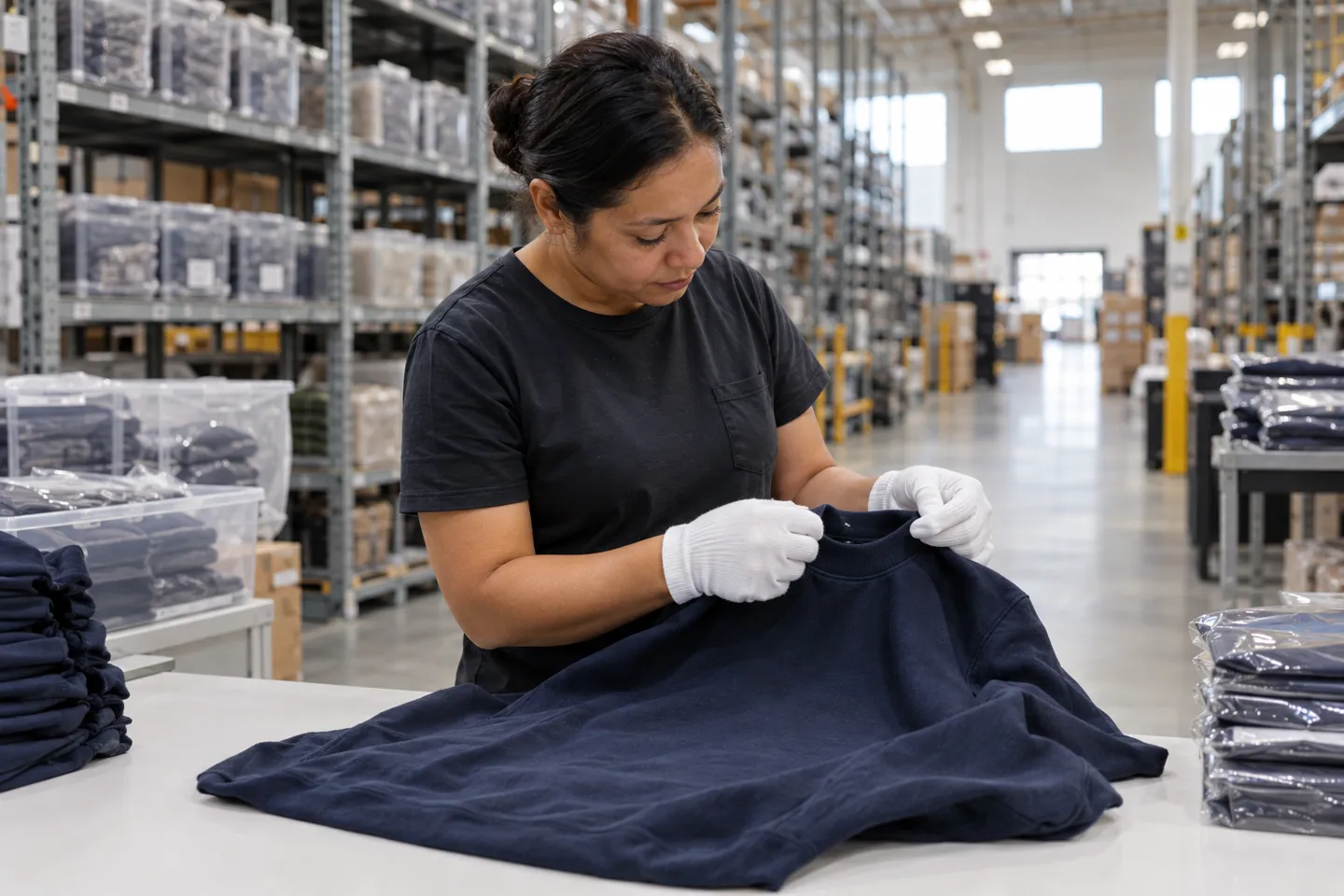
The first bar is restock consistency: the 500th unit matches the sample the 5th unit came from. Without that, every review you earn is a coin flip and branding spend amplifies the risk. The second bar is brand carriage: woven labels, custom packaging, insert cards, your name on the unboxing. Most mid-size suppliers manage this once volumes justify setup.
The third bar is the real separator: the ability to upgrade the product itself by changing materials or processes at the factory, without re-cutting molds. One China-based agent’s client records show a home-textile product’s complaint rate falling from about 0.56% to about 0.08% after switching to a heavier filling and a wrinkle-resistant fabric. The upgrade needed no mold change. The exact numbers come from that supplier’s own case notes, so treat them as a demonstrated capability rather than an industry average. The mechanism is the point: a supplier with factory access can fix a product; a platform listing can only replace it.
This capability has a premise, and it is fair to state the boundary: upgrade work makes sense for proven products with steady reorder volume. During testing, it is premature. Brands are built on the styles that already sell.
When Things Still Go Wrong
Verification lowers the odds; it does not abolish them. Parcels get lost, carriers damage boxes, and factory batches slip through. What separates a managed store from a drowning one is the response path.
When a customer reports a problem, collect evidence first: photos of the item and packaging, the tracking trail, and the order timeline. Then assign the liability segment. Loss before line-haul, damage in transit, and faults present at dispatch are three different responsibilities. A supplier who absorbs all three as standard is showing you their margin can carry risk. The remedy decision is usually simple: reship rather than refund when the buyer still wants the product, because a second parcel that arrives fast converts a complaint into loyalty.
Run this self-check against any supplier you use or are evaluating:
- Lost parcel: is replacement free, and at what tracking age can I claim?
- Damaged parcel: who pays, and what evidence do they require?
- Quality fault: what is the claim window, and is the reship free?
- Peak season: will they flag delays before I have to ask?
- Borderline cases like customs holds: whose problem is that in writing?
The last item protects the boundary that matters: buyer’s-remorse size exchanges are not the supplier’s fault, and a good agreement says so. Price those returns into your margin instead of into the relationship.
The Supplier Structure That Scales
Everything above leads to one conclusion. Clothing punishes quality failures harder than any other category. The failures concentrate where nobody inspects and nobody holds stock. A supplier’s interception depth can be tested before you commit. Follow that logic through and “one best supplier” was never the right question.
The structure that scales uses different forms for different jobs. Test new styles on zero-inventory platforms where being wrong is cheap. When a style proves itself, move its stock to an agent-form supplier who holds it dedicated to you, inspects per order, and reaches the factory when a product needs improving. Keep the platform accounts; they become your testing bench instead of your fulfillment backbone. The one move to resist is running a scaling store entirely on shared marketplace stock, which re-creates every failure from the last section at your expense.
There is a boundary on the other end too. At very low monthly volumes, dedicated stocking costs more than the stockouts it prevents, and platform forms remain the rational choice. Switch forms when the math switches, not before.
| Job | Use | Non-negotiable |
|---|---|---|
| Testing styles | Zero-inventory platform | Cheap to be wrong |
| Scaling winners | Agent with warehouse & QC | Dedicated stock, per-order inspection |
| Brand building | Agent with factory access | Restock consistency, upgrade path |
| Very low volume | Platform listings | No fixed storage costs |
We built SpeedBee around the scaling row of that table. Our clients keep inventory dedicated to their account rather than a shared pool, and it syncs to Shopify in real time, so stock levels update themselves. Quotes go out within 24 hours; orders are processed within 48. On the delivery side, our UK parcels run door-to-door DDP in as fast as 3 days, typically 4 to 7. Check any candidate against that baseline (dedicated inventory and warehouse operations, UK door-to-door delivery times). If your store is past the testing stage, that is the conversation worth having with any agent-form candidate, including us.
Run your shortlist through the sample gauntlet, the stock questions, and the four contract terms, and the “best” answer stops being a matter of opinion. If you want one more agent-form supplier to compare against, SpeedBee’s catalog (https://www.speedbeedropship.com/) is an easy starting point.
Compare your current supplier against the SpeedBee baseline
Bring your current stock, delivery, and inspection terms — we will show you what a dedicated warehouse and per-order QC change.
Talk to SpeedBeeReferences
- Coresight Research. “The True Cost of Apparel Returns: Alarming Return Rates Require Loss Minimization Solutions.” 2023. https://coresight.com/research/the-true-cost-of-apparel-returns-alarming-return-rates-require-loss-minimization-solutions/
- SANVT. “Fabric Weight: A Guide to GSM.” 2023. https://sanvt.com/blogs/journal/fabric-weight-a-guide-to-gsm
- r/dropshipping. “CJ Dropshipping sizing is ruining my clothing store, what suppliers actually use US sizing.” 2026. https://www.reddit.com/r/dropshipping/comments/1sc7qnt/cj_dropshipping_sizing_is_ruining_my_clothing/




 English
 Spanish
 French
 German
 Italian
 Polish