
Dropshipping in Germany Is Legal. The Paperwork Is the Easy Part.
A Shopify order lands from Stuttgart on a Tuesday night. Your supplier in Shenzhen has the item in stock, a DDP line picks the parcel up within two days, and it reaches the customer’s door the following week with customs and VAT already paid. Nothing in that sequence is illegal in Germany. Very little of it is exotic. The legal baseline is three items most first-time sellers clear inside a month: register a trade (Gewerbeanmeldung, the same duty any German online shop carries), get a tax number, and charge 19% VAT on sales (Federal Foreign Office, n.d.).

The demand side also holds. German B2C e-commerce revenue has run at roughly €85 billion a year, the largest online market in the EU (Statista, 2026). So when a seller says “dropshipping in Germany is finished,” they are not describing the market. They are describing a supply arrangement that stopped working. The legal and demand fundamentals still reward new entrants; what decides whether you survive is where your stock sits and who carries which obligation.
That distinction matters because the two things sellers blame, legality and competition, are cheap to fix or irrelevant. Legality is a checklist. Competition is a marketing problem. Supply structure is neither: it is the part of a Germany dropshipping business that quietly sets your delivery promise, your refund exposure, and whether an order you already paid ads for can even ship. The rest of this article stays on that one question.
Four Ways a German Store Gets Stocked (and What Each Really Costs)
Every “top dropshipping suppliers in Germany” list you have read is really selling one of four supply models, dressed up as a brand ranking. Once you see the models, the contradictions between lists stop being confusing, because each list earns a commission from a different model.
Supply models for the German market, compared
| Model | Transit time (typical claim) | Cost per order | Stock reality | Compliance burden | Where it fits |
|---|---|---|---|---|---|
| AliExpress direct | 2–3 weeks+ | lowest | shared listings | seller carries all | testing product ideas only |
| Big-platform shared warehouse (CJ-type) | 8–15 days | low | shared pool across thousands of sellers | seller carries all | starter volume |
| EU bulk supplier (BigBuy-type) | 1–3 days domestic | highest product cost | their warehouse stock | seller still carries duties | fast repeats in narrow catalogs |
| China agent with dedicated stock | 3–8 days line-dependent | product + logistics split | your reserved inventory | seller carries duties, agent assists | steady selling |
AliExpress direct is the entry drug: no upfront cost, no barrier, and a transit claim that starts at two weeks and degrades in peak season. Its structural problem showed up publicly in 2025, when sellers on r/dropshipping reported that many AliExpress suppliers simply stopped shipping to Germany because tax and registration duties made small orders uneconomical for them (r/dropshipping, 2025). When your supplier’s compliance math kills your market, you find out from a canceled shipment.
Big shared-warehouse platforms fix the supplier problem by pooling inventory, and create a quieter one: the pool is shared across thousands of sellers, so “in stock” means “in stock right now, for whoever orders first.” EU bulk suppliers invert everything. Delivery is fast and domestic, but you pay wholesaler margin on every unit and the catalog stays narrow, which is why those services cluster in print-on-demand, apparel, and electronics accessories. A China agent with dedicated stock is the fourth model: it exists precisely because the other three leave a gap, cheap products, real reservations on your units, and one operator accountable for the line. The model, not the brand name, is the unit of comparison. Any list that skips this step is a brochure.
Which Supply Model Survives the Next Two Years
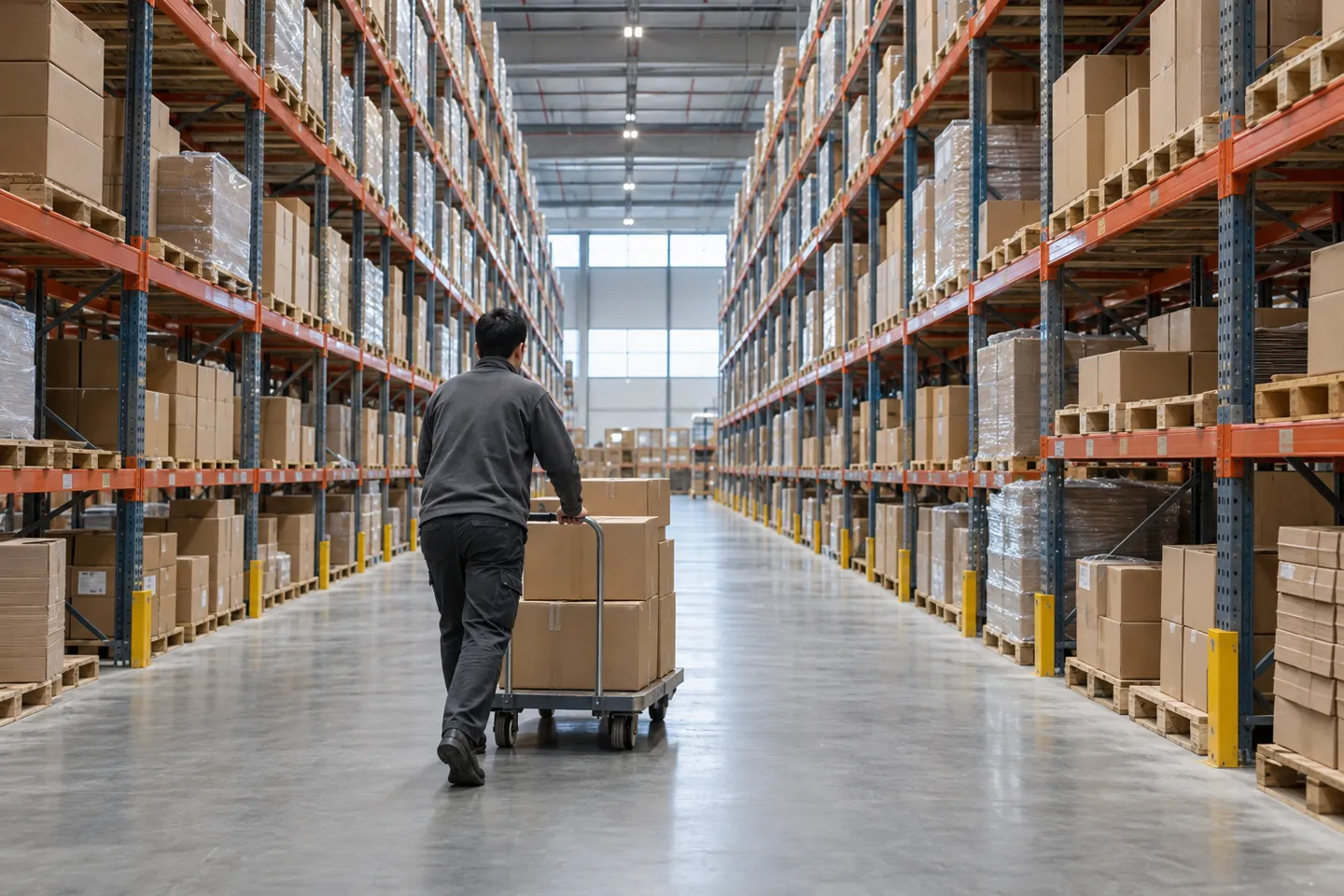
Trend one: the pure-resale middle is being squeezed out of Germany from the supply side. Suppliers with low German volume are exiting rather than pre-funding German tax compliance, which removes the informal bottom of the market (r/dropshipping, 2025). Trend two: compliance obligations keep tightening in one direction. Since 13 December 2024, the EU’s General Product Safety Regulation has required a responsible economic operator inside the EU for consumer products (European Commission, 2024). Germany’s packaging register goes further on quantity: there is no minimum-quantity exemption, and one parcel a year already obliges you (epr-one, 2025).
The direction is one-way: supply-side exit at the bottom, regulation tightening at the top. The sellers squeezed from both ends are the ones who only relay orders. The ones who hold stock and can produce compliance paperwork get harder to compete with every quarter.
Read those two trends together and the forecast writes itself. Relaying orders from a marketplace to a German customer is becoming a role with all of the liability and none of the control. Holding stock through an operator who can execute compliance-adjacent tasks (correct labels, documentary support, consistent QC) is becoming the only version of the China line that scales. Model choice is not a price comparison. It is a decision about which side of that squeeze your store sits on.
Inside the China–Germany Line: How It Actually Runs
If the fourth model is where you are heading, it helps to know what the line actually consists of, because “we have an agent in China” covers everything from a WhatsApp contact to an operation with an ERP, dedicated racks, and named freight partners. The six links below are the full chain. Each comes with the one judgment that matters at that step.
The six links from quote to doorstep
Inquiry and quote
Sampling and purchase
Quality inspection
Packing and handover
Trunk line and customs
Last mile
Link one is the quote. Get product cost and logistics cost split into two numbers rather than a bundled price, because a bundled quote hides the commission and makes it impossible to renegotiate freight when volumes grow. German-speaking sellers used to bundled EU wholesale quotes find this unusual; it is standard practice on the China line and any agent should offer it without being asked.
Link two is sampling and first purchase. Ask the agent to confirm factory stock in writing before pricing, not after wiring. First cooperation on an out-of-stock factory turns your product launch into their procurement delay.
Link three is inspection. A seven-point check is the working standard for consumer goods. It covers appearance against your sample photos, color difference, stains and damage, size and color variants, metal surface condition, powered function tests including battery operation, and moving parts. You will never watch every parcel, so the inspection standard has to live in your agreement, with photos or video on request as the enforcement mechanism.

Link four is packing and handover. Contract-grade numbers look like this: orders processed within 48 hours, parcels handed to the carrier within two days, and a filmed packing of your first parcel from several angles so you approve the standard before volume starts. These are the numbers to write into a service agreement, and they are also the numbers to ask any prospective agent for in the first call.
Link five is the trunk line and customs. DDP (Delivered Duty Paid) means you prepay duty and VAT and the customer just receives a parcel. DAP means your German customer gets a bill from the courier before release, and a meaningful share of them refuse the parcel instead. DDP costs you more per shipment and converts far better; on the China line it has become the default for good reason. One physical constraint is easy to miss: products with built-in batteries can only fly out of Hong Kong, so your agent’s battery-goods routing is worth checking before you launch a powered product.
DDP vs DAP for a German customer
| DDP | DAP | |
|---|---|---|
| Who pays duty/VAT | seller prepaid | customer on delivery |
| Customer experience | parcel just arrives | bill before release |
| Refusal risk | low | meaningful share refuse and pay return leg |
| Best use | steady selling | rarely worth it |
Link six is the last mile. Established agents do not run their own aircraft; they place freight with lines like Yanwen, YunExpress, or 4PX, each strong on different routes (broadest coverage, dedicated country lanes, or bulky-item pricing). Tracking runs through aggregators like 17track, and the practical question to ask an agent is which line your product profile lands on, not which logo is prettiest.
Dedicated stock vs shared stock
Shared stock breaks in one specific way: the pool belongs to everyone, so the unit you just sold can be sold again to someone else before yours ships. Your customer experience a “suddenly out of stock” after the ad spend is already spent. Dedicated stock removes the mechanism entirely. Your units sit in your own zone, counted separately, with the agent purchasing a small buffer over your orders to absorb defects. Storage itself is rarely the cost people fear; six months of free storage while orders keep moving is a common arrangement, which means holding a German market’s worth of buffer stock costs nothing until you stop selling. Pre-stocking before a campaign is not optional caution in this model. It is the whole point.
Why the same line runs 3–8 days for some and 2–3 weeks for others
The same China–Germany line, two arrangements
Engineered line: dedicated stock, DDP, a named operator
3–8 days
Platform-default setup: shared pool, DAP surprises
2–3 weeks
One route, two promises. Which number you can put in front of a customer is decided before the parcel ships.
Sellers comparing notes on the China–Germany route report 3 to 8 days on a good line, 5 to 15 on an average one, and almost never beyond 10 when things are normal (r/dropshipping, 2022). The variables are boring and decisive: which airport the freight exits, whether the product rides a dedicated lane, how customs treats the commodity, and whether it is November. The same physical route cannot explain a threefold spread. The arrangement can.
On a dedicated-stock, DDP line this collapses to a promise you can publish: 4–7 days door-to-door across most of Europe, and we run it daily at SpeedBee. Your units sit in their own zone in our warehouse, never in a shared pool, and we hold them free for six months while orders keep moving. We film the first parcel of every new product from several angles, because the cheapest moment to fix a packing mistake is before two hundred German customers see it. When a carrier loses a shipment or a defect slips past inspection, we reship at our cost, which is what “take responsibility for the line” has to mean in a contract rather than in a slogan.
That promise is contract language at SpeedBee: 48-hour processing, filmed first parcels, and reshipment at our cost — ask for the terms before you commit a line to it.
Ask for the line termsWhere Each Model Breaks: Compliance Duties and Failure Modes
No supply model removes your obligations. That sentence is the whole compliance section for sellers who already know it; the rest of this section is for the others, because the most expensive misunderstanding in cross-border dropshipping is believing that a supplier, German or Chinese, absorbs duties that German law attaches to the seller.
Who registers what: the compliance division of labor
Packaging (VerpackG / LUCID). You register, as the seller putting packaged goods into Germany. There is no minimum quantity, no small-business mercy, and marketplace platforms now check the LUCID number for sellers shipping into Germany (epr-one, 2025). A China agent can pack to your spec; the registration cannot be delegated to them.
Product safety (GPSR). Since 13 December 2024, every consumer product needs a responsible economic operator established in the EU, with their name and address on the listing (European Commission, 2024). Your Shenzhen factory cannot fill that role. Practically, sellers use an authorized representative service, and what your agent owes you is documentary support: product information and test evidence you can hand that representative.
CE marking and documentation. For products in CE scope, the mark plus its technical file travel with the product, and under GPSR the seller increasingly carries importer-level duties for what they sell. Ask an agent for the documentation before you list, not after a platform asks.
Withdrawal right (Widerrufsrecht). German consumers have 14 days to withdraw from a distance purchase (Stripe, 2025). On a China line the return physically lands back in a Chinese warehouse. Your real decisions are three: the return address you publish, who eats the return freight, and whether your agent’s inspection can resell a returned unit. Decide all three in writing before the first return happens.
Failure modes and what to check before they happen
Failure modes across the China–Germany line
| Failure | Early signal | Action that prevents or limits it | Which model hurts most |
|---|---|---|---|
| Supplier exits German shipping | supplier hesitates on DE orders | contract a second supply route early | AliExpress direct |
| Stockout after ads | shared-pool “in stock” flickering | dedicated stock with buffer units | big shared warehouses |
| Customs hold or return | vague commodity descriptions | DDP with honest declared values | all China-direct models |
| Lost or damaged parcel | no reshipment clause in agreement | free-reshipment terms in writing | every model without a clause |
| Return lands in China | no return workflow defined | agree return address and resale rules up front | every China-line model |
| Compliance penalty | no LUCID/GPSR entries on your checklist | register and appoint a representative before listing | sellers who think the supplier handles it |
Before you scale a Germany line
- LUCID number active
- GPSR responsible person appointed
- CE file requested from agent
- DDP confirmed in writing
- Reshipment clause signed
- Return address decided
The pattern across all six failures is the same: the cheap version of the model is the one without the clause, the registration, or the buffer. Every model breaks somewhere. The workable ones tell you where, in writing, before it happens.
The Business Math Your Supply Model Decides
Three accounts decide whether a Germany dropshipping business is worth running, and all three are set by the supply structure rather than by the product.
The stockout account comes first. An order you cannot ship is ad spend already spent plus a refund plus a customer who will not test you twice. Shared pools produce this failure mechanically; dedicated stock eliminates the mechanism, and buffer units absorb the defect rate.
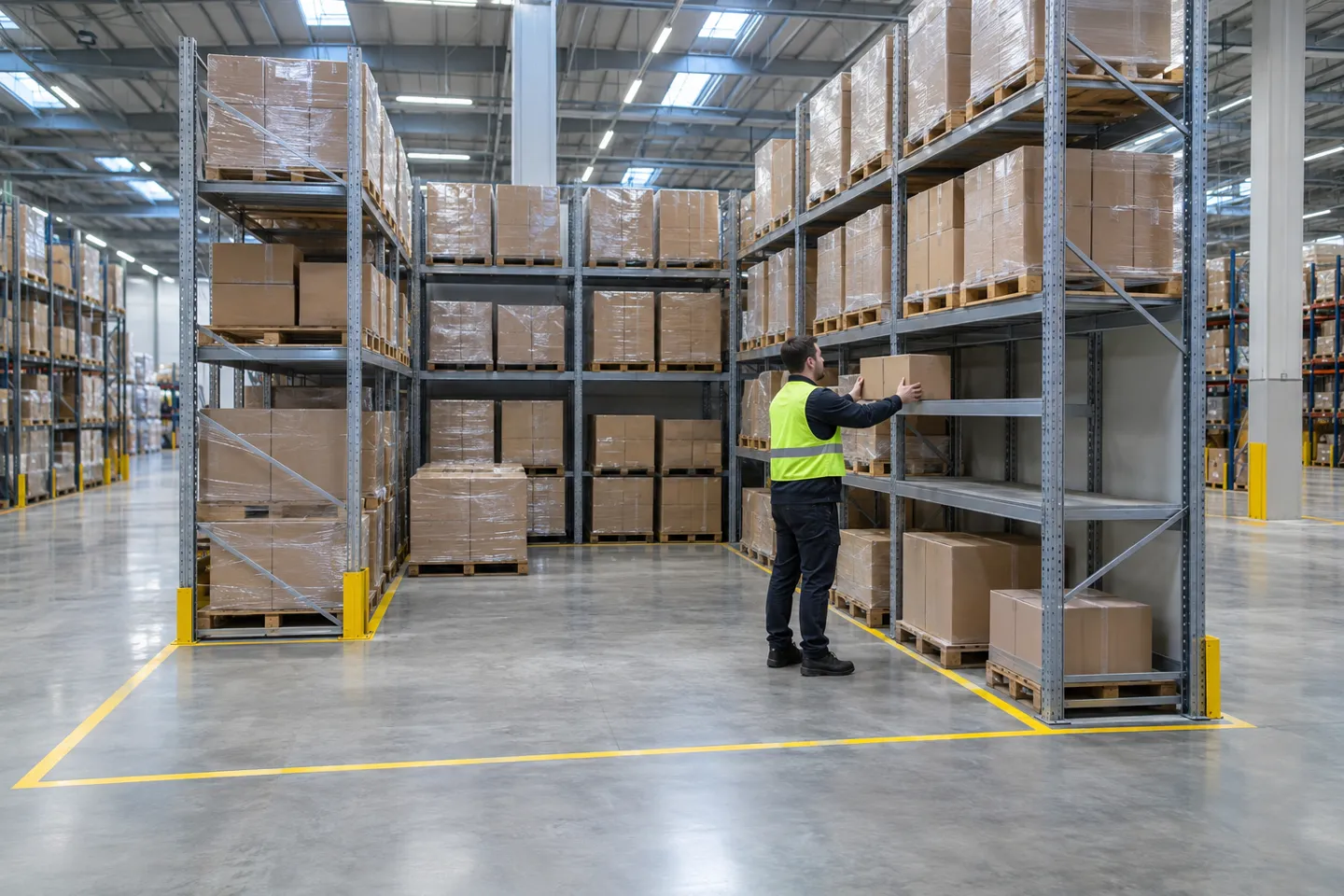
The transit account is the one customers actually experience. When the same route runs at 3–8 days for a prepared seller and 2–3 weeks for a default setup, the second seller does not just deliver slower; they carry a higher refusal rate, more support tickets, and a worse refund profile for the identical product.
The quality account compounds quietly. A documented product-upgrade case in the bedding category cut complaint rates from 0.56% of orders to 0.077% within a quarter, by changing filling and fabric rather than by changing suppliers. On 500 monthly orders that difference is roughly 25 compensated parcels a month, every month, for a one-time materials conversation with a factory.
The three numbers to keep: 3–8 days (a prepared line’s transit), 48 hours (order processing you can contract), 0.56%0.077% (what quality work does to complaint rates).
Scale sets the order, not the list. While testing, clear the legal checklist and keep transit promises honest. Once orders are steady, move to dedicated stock and DDP, because that is the point where stockouts and refusal rates start costing more than the margin difference. When a product proves itself over quarters, customization and factory-level upgrades move from nice to necessary. Whatever stage you are in, the agent questions are the same: processing time, handover time, DDP terms, inspection standard, first-parcel video, and who pays when a parcel vanishes. Ask all six before you send a single order.
If you are rebuilding a Germany line right now, compare what each candidate agent puts in writing against that list, and hold every supplier to it, including our own fulfillment service.
Run your Germany line on dedicated stock and DDP
SpeedBeeDropship reserves your units in their own zone, ships DDP door-to-door in 4–7 days across the EU, and puts processing, inspection, and reshipment terms in writing.
Start your Germany lineReferences
- Statista. “E-Commerce in Germany: Statistics & Facts.” 2026. https://www.statista.com/topics/5751/e-commerce-in-germany/
- Federal Foreign Office, Germany. “German VAT Refund.” https://www.germany.info/us-en/service/09-taxes/vat-refund-906296
- European Commission. “EU’s General Product Safety Regulation (GPSR): A New Era of Consumer Protection.” 2024. https://trade.ec.europa.eu/access-to-markets/en/news/eus-general-product-safety-regulation-gpsr-new-era-consumer-protection
- EPR One. “LUCID Registration Germany 2025: Step-by-Step Guide.” 2025. https://epr-one.com/articles/lucid-registration-germany-packaging-2025
- Stripe. “Right of Withdrawal in Germany: An Overview.” 2025. https://stripe.com/resources/more/right-of-withdrawal-in-online-commerce-germany
- r/dropshipping. “Dropshipping Is a Bad Joke in EU/Germany.” 2025. https://www.reddit.com/r/dropshipping/comments/1jn8sx8/dropshipping_is_a_bad_joke_in_eugermany/
- r/dropshipping. “What’s Your Delivery Time to Germany from China?” 2022. https://www.reddit.com/r/dropshipping/comments/wy2suk/whats_your_delivery_time_to_germany_from_china/
- Norman Finance. “Dropshipping Without Capital Germany 2026: Guide.” 2026. https://norman.finance/de/en/blog/dropshipping-no-capital-germany


 English
 Spanish
 French
 German
 Italian
 Polish